
Eriophyidae
Gall and Rust Mites, Gall Mites, Four-legged Mites
Genus Guides
8is a of microscopic plant-parasitic mites comprising over 200 and approximately 3,600 described , though estimates suggest the actual diversity may exceed 100,000 species. Members are commonly known as gall mites or rust mites due to their propensity to induce gall formation or cause rust-like discoloration on plants. These mites possess worm-like bodies with only two pairs of legs, distinguishing them from most other mites. They are obligate of vascular plants with high host specificity, typically specializing on single plant species or genera. The family includes significant agricultural pests such as the coconut mite (), garlic mite (Aceria tulipae), and bermudagrass mite (Aceria cynodoniensis), as well as species used for of weeds.
Pronunciation
How to pronounce Eriophyidae: /ˌɛri.oʊˈfaɪəˌdiː/
These audio files are automatically generated. While they are not always 100% accurate, they are a good starting point.
Identification
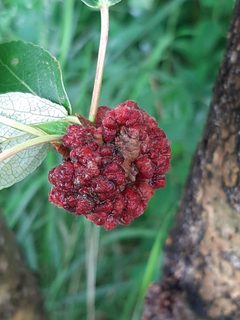
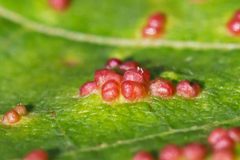
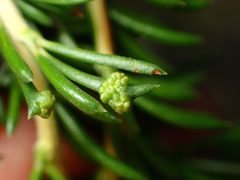
Identification requires microscopic examination. Key characteristics include: body with annular ridges; presence of only two leg pairs; featherclaw structure on leg ; and association with specific plant or gall formations. are distinguished from Nematalycidae (also worm-like with annular ridges) by their plant-parasitic lifestyle and associated morphological adaptations. Within the , and are distinguished by detailed morphometric measurements of body proportions, leg and setae lengths, and featherclaw ray number and arrangement. Field identification relies on characteristic plant damage : erineum (felt-like hair growth), pouch galls, finger galls, bud proliferation (witches' brooms), or rust-like discoloration.
Images
Habitat
Obligate of vascular plants. Microhabitats include: leaf surfaces (upper or lower, often as vagrants), within leaf galls, under leaf , within folded leaves, in leaf grooves, on stems, buds, flowers, or fruits. Specific microhabitat varies by and often provides protection from desiccation and . Some species are endoparasitic, living beneath the plant . Turfgrass-infesting species occupy protected within grass architecture. Storage mites persist on harvested plant material under controlled conditions.
Distribution
distribution across all continents except Antarctica. Documented in approximately 33 countries with continuous expansion due to human-mediated transport and wind . Established in temperate, tropical, and subtropical regions wherever suitable plants occur. Specific distributions vary based on host plant range; some are species well outside their native ranges.
Seasonality
Activity patterns closely tied to plant and environmental conditions. vary by : Aceria tulipae peaks in February (winter/spring) in some regions, declining with rising temperatures and rainfall. Many species show rapid increase during periods of active host growth. Development rates temperature-dependent: optimal around 25°C for many species, with lethal temperatures near 45°C. High relative humidity (near 100% RH) required for hatching in some species, though free water condensation can be hazardous. Multiple per year possible with development from egg to in 7-10 days under favorable conditions.
Diet
Obligate phytophagous feeding on plant sap. Stylets penetrate plant tissue to depths of approximately 5 µm to access phloem or parenchyma . Some consume plant . Several species are known of plant viruses: Aceria tulipae transmits allexiviruses; Phyllocoptes fructiphilus transmits the causal agent of Rose Rosette .
Host Associations
- Allium sativum - primary garlic mite (Aceria tulipae)
- Allium cepa - onion
- Allium ampeloprasum - leek
- Allium schoenoprasum - chives
- Allium ascalonicum - shallot
- Allium chinense - rakkyo
- Lycium chinense - primary Eriophyes kuko
- Mangifera indica - Eriophyes mangiferae, mango malformation
- Cocos nucifera - , coconut mite
- Cynodon dactylon - bermudagrass mite (Aceria cynodoniensis)
- Zoysia spp. - zoysiagrass mites
- Bouteloua dactyloides - buffalograss mites
- Rosa spp. - Phyllocoptes fructiphilus, of Rose Rosette
- Ribes spp. - Cecidophyopsis ribis, blackcurrant gall mite
- Prunus serotina - Eriophyes padi, cherry pouch galls
- Rubus spp. - Acalitus essigi, redberry mite on blackberries
- Saccharum officinarum - Abacarus sacchari, sugarcane rust mite
- Triticum aestivum - Abacarus hystrix, cereal rust mite
- Chondrilla juncea - Aceria chondrillae, agent
- Convolvulus arvensis - Aceria malherbae, agent
- Litchi chinensis - Aceria litchii
- Olea europaea - Aceria oleae
- Lactuca saligna - Aceria lactulignae
- Eclipta prostrata - Cosella kamengi
- Dendrophthoe pentandra - Cosella pentandrae
- Xylia xylocarpa - Cosella xyliae
- Stachyurus himalaicus - Neodicrothrix grandcaputus
- Psychotria asiatica - Latitudo asiaticis
Life Cycle
Development typically includes six stages: , , nymphochrysalis (quiescent stage), deutonymph, teleiochrysalis (quiescent stage), and . Egg-to-adult development averages 7.5-13.8 days under optimal conditions (25°C), with some completing egg-to-egg cycles in 18.4 days. All life stages typically occur together in protected locations on the plant. is sexual; males unknown for many species. Females lay eggs singly or in small numbers within galls or protected plant crevices. varies: approximately 44 eggs per female in Aceria tulipae over 25-day oviposition period. Multiple per year occur under favorable conditions.
Behavior
Primary method is passive wind transport. Mites stand upright on caudal setae to catch air currents. Phoretic dispersal on insects (aphids) has been observed in some . Crawling movement slow (4-5 cm per hour on surfaces). Gall-inducing species exhibit specific : emerge from mature galls, disperse to stem apices, locate young leaves, fix bodies along , penetrate tissue, and induce gall formation where they mature and oviposit. Some species are vagrant, moving freely over plant surfaces without inducing galls. common in protected microhabitats.
Ecological Role
Major plant representing one of the largest adaptive radiations of plant-feeding arthropods, with origins dating to at least the Triassic (230 million years ago). Function as primary consumers in terrestrial , transferring energy from plants to higher . Some serve as prey for predatory mites (e.g., Amblyseius swirskii) and other arthropods. Several species are species causing ecosystem disruption. agents used for weed suppression (Aceria chondrillae, Aceria malherbae). transmitting plant viruses, influencing plant composition and agricultural systems.
Human Relevance
Significant economic impact as agricultural and horticultural pests. Major pest cause yield losses up to 23% in affected crops. Damage includes: fruit scarring and distortion (coconut mite), bulb damage in storage (garlic mite), witches' brooms and turf thinning (bermudagrass mite), gall formation reducing plant vigor, and virus transmission. Management relies on synthetic miticides (abamectin, ), though these are often costly, marginally effective, and risk resistance development. Cultural practices include , proper irrigation, and scalping (low mowing). using predatory mites shows promise but requires further research. Some species are commercially valuable as biological control agents against weeds. Detection challenging due to microscopic size and resemblance to environmental stress or other pests.
Similar Taxa
- NematalycidaeAlso possesses worm-like body with annular ridges and reduced limb segmentation. Distinguished by deep soil , microbivorous diet, and lack of plant . Recent phylogenetic analysis suggests Eriophyoidea may have originated from within Nematalycidae.
- PhytoseiidaePredatory mites often found on plants alongside eriophyids. Distinguished by four pairs of legs, more compact body shape, and predatory rather than parasitic lifestyle. Includes important agents such as Amblyseius swirskii that prey on eriophyid mites.
- Tetranychidae (spider mites)Also plant-feeding mites of agricultural importance. Distinguished by four pairs of legs, rounded body shape, production of silk webbing, and larger size. Cause stippling damage rather than galls or erineum.
More Details
Taxonomic Uncertainty
Phylogenetic placement of Eriophyoidea remains unresolved. Recent morphological and molecular analyses suggest the superfamily may fall outside Trombidiformes, with Nematalycidae as the closest relative. Support for Eriophyoidea originating from within Nematalycidae rather than as sister group is preliminary and requires additional data.
Diversity Underestimate
With approximately 3,600 described but estimates of 100,000+ actual species, represents one of the most understudied major lineages. Nearly all species show high specificity, suggesting diversity parallels that of vascular plants (~300,000 species).
Research Challenges
Small size (<0.1-0.3 mm), cryptic habits, and specialized microhabitats make eriophyid mites difficult to study. Many remain undescribed, male stages unknown, and basic uncharacterized. and monitoring protocols are lacking for most pest species.
Sources and further reading
- BugGuide
- Wikipedia
- GBIF taxonomy match
- iNaturalist taxon
- NCBI Taxonomy
- Catalogue of Life
- Eriophyidae Archives - Entomology Today
- Try as One Mite: New Guide Reviews Management for Little-Known Turfgrass Pests
- A New Taxon for Worm-Like Mites: Eriophyoidea and Nematalycidae
- This Predatory Mite is a Rising Star in Pest Management
- Biology of Eriophyes kuko KISHIDA (Acarina: Eriophyidae)
- Garlic Mite, Aceria tulipae (Acarida: Eriophyidae): A Review
- Phostoxin™ for Control of Eriophyes mangiferae (Acarina: Eriophyidae) Associated with Malformation Disease in Mango Phostoxin trademark for Control of Eriophyes mangiferae (Acarina: Eriophyidae) Associated with Malformation Disease in Mango
- The bermudagrass mite Eriophyes cynodoniensis (Sayed) (Acari: Eriophyidae) in Florida with reference to its injury symptomology, ecology, and integrated control /
- Eriophyid mite vector of Rose Rosette Disease (RRD) Phyllocoptes fructiphilus Keifer (Arachnida: Acari: Eriophyidae)
- ACERIA LACTULIGNAE SP. NOV. (ACARI ERIOPHYIDAE) FROM NORTHWEST IRAN
- Three new species of the genus Cosella (Acari: Eriophyidae) from Thailand
- Contribution to the description. record and onomatology of Aceria oleae (Nalepa, 1900) (Acari: Eriophyidae)
- Two new species of eriophyid mites (Acari: Eriophyidae) from Malaysia
- Coconut Mite, Aceria guerreronis Keifer (Arachnida: Acari: Eriophyidae)
- Spatiotemporal infestation patterns of Aceria litchii Keifer (Acari: Eriophyidae) in a lychee orchard in South Florida.