
Phytoptus
Dujardin, 1851
Species Guides
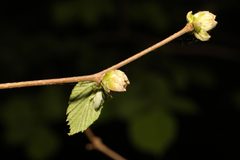
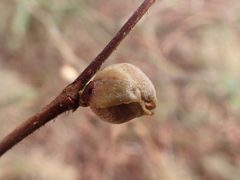
1Phytoptus is a of eriophyid mites in the Phytoptidae, comprising 35 described . Members are phytophagous and commonly known as gall mites or big bud mites due to their habit of inducing gall formation on plants. Several species are significant agricultural pests, including P. ribis on blackcurrant and P. avellanae on hazelnut. The genus exhibits complex involving seasonal between old and new buds, with some species showing distinct gall-forming and vagrant forms.
Pronunciation
How to pronounce Phytoptus: //faɪˈtɒptəs//
These audio files are automatically generated. While they are not always 100% accurate, they are a good starting point.
Identification
Identification to level requires microscopic examination of morphological features including body shape, annulation patterns, and setal arrangements. Gall-forming species can be tentatively identified by plant and gall . Distinguished from related eriophyoid by specific chaetotaxy and genital shield characteristics; precise identification requires acarological expertise.
Images
Appearance
Microscopic mites with elongated, worm-like bodies typical of eriophyoid mites. Body shape is (worm-like) with two pairs of legs located anteriorly. is soft and often with annulations. Possess characteristic eriophyoid mouthparts adapted for piercing plant .
Habitat
Associated with woody plants, primarily within vegetative and floral buds. occupy big bud galls, under bud , and on young foliage of plants. Some forms complete entire within single buds; others utilize multiple plant parts including leaves and flowers.
Distribution
Widespread across temperate regions with records from Europe (Denmark, Norway, Sweden), Turkey, Britain, and North America. Distribution is driven by plant availability, with -specific ranges tied to cultivated and wild hosts of Ribes, Corylus, and other woody .
Seasonality
Activity patterns tightly coupled to plant . Spring from sites to new growth occurs during blossom periods. Summer migration to newly formed buds for overwintering. Peak often occurs in early morning and evening under humid conditions. levels typically peak in autumn and decline through winter to minima in spring.
Diet
Phytophagous, feeding on plant contents of bud tissues, leaves, and floral structures. Specific feeding sites vary by and form.
Host Associations
- Ribes nigrum - blackcurrant; of P. ribis
- Corylus avellana - common hazelnut; of P. avellanae
- Corylus americana - American hazel; of P. avellanae
- Corylus avellana × Corylus americana hybrids - hybrid hazels developed for production in eastern North America
Life Cycle
Complex involving multiple per year. occurs within big bud galls or under bud . Spring generation migrates to young foliage for feeding and . Summer generation migrates to newly formed buds to establish overwintering colonies. Some exhibit two distinct forms: a gall form with simple life cycle and stationary , and a vagrant form with complex life cycle and two nymph forms that can complete development without big buds.
Behavior
Seasonal between old and new buds is the primary behavioral pattern. Migration occurs via crawling and wind , with wind being the primary long-distance mechanism. Dispersal timing is sensitive to temperature and humidity, with activity reduced below 10°C (50°F). Mites exhibit clumped distribution patterns within plants. Some show preference for hybrid host plants over native species.
Ecological Role
Herbivores that induce gall formation on plants, altering plant growth and . Act as for plant , including black currant reversion virus. Create structures (big buds) subsequently colonized by other mite such as Cecidophyopsis vermiformis. Serve as prey for predatory mites including Kampimodromus aberrans.
Human Relevance
Several are significant agricultural pests causing economic damage in fruit and nut production. P. ribis causes big bud in blackcurrant, reducing yields and vectoring reversion virus. P. avellanae causes serious damage in hazelnut cultivars worldwide. Control relies on timed chemical applications during periods, with lime sulfur and wettable sulfur powders showing efficacy when applied during blossom periods. using pathogenic fungi has been investigated.
Similar Taxa
- CecidophyopsisAlso eriophyoid gall mites in similar ; Cecidophyopsis vermiformis specifically inhabits big buds created by Phytoptus avellanae, making field identification difficult without microscopic examination
- AceriaLarge of eriophyoid mites with similar body plan and gall-forming habits; distinguished by specific morphological features of the gnathosoma and leg chaetotaxy
More Details
Synonymy
The has undergone taxonomic revision, with three synonyms recognized: Calycophthora Amerling, 1862; Phylloptus Amerling, 1858; and Phytocoptella Newkirk & Keifer, 1971.
Species diversity
As of February 2024, the contains 35 described with diverse associations across multiple plant .
Form polymorphism
P. avellanae exhibits intraspecific with distinct gall and vagrant forms differing in complexity, nymphal stages, and ecological requirements.
Sources and further reading
- BugGuide
- Wikipedia
- GBIF taxonomy match
- iNaturalist taxon
- NCBI Taxonomy
- Catalogue of Life
- LIFE CYCLES OF PHYTOPTUS AVELLANAE NAL. AND CECIDOPHYOPSIS VERMIFORMIS NAL. (ERIOPHYOIDEA: ACARINA)
- Ecology of the Black Currant Gall Mite (Phytoptus RibisNal.)
- The behaviour and control of the blackcurrant gall mite Phytoptus ribis (Nal.)
- Spatial patterns suggest movement of the filbert bud mite (Phytoptus avellanae) between plants and overwintering infestations in a hazelnut (Corylus spp.) orchard
- Life History of Kampimodromus aberrans as a predator of Phytoptus avellanae (Acari: Phytoseiidae, Phytoptidae)
- A comparative evaluation of the consequences of Phytoptus tetratrichus Nalepa (Acari: Eriophyoidea) feeding on the content and tissue distribution of polyphenolic compounds in leaves of different linden taxa
- Laboratory and Field Bioassays of Arthropod Pathogenic Fungi Application for the Control of the Hazelnut Big Bud Mite, Phytoptus avellanae s. l.
- Can Pest Management and Cultivar Affect Phytoptus avellanae Infestations on Hazelnut?