
Phytoptidae
Genus Guides
1Phytoptidae is a of eriophyoid mites in the order Trombidiformes, comprising approximately 75 described across 17 . These microscopic, four-legged mites are obligate phytophages that exhibit diverse life strategies including vagrant surface feeding, gall induction, and endoparasitism beneath plant . The family is primarily associated with angiosperms, though some lineages inhabit conifers. Notable genera include Phytoptus, Retracrus, Austracus, Novophytoptus, and Oziella. Many species are economically significant as agricultural pests of palms, hazelnuts, and other crops.
Pronunciation
How to pronounce Phytoptidae: /faɪˈtɒptɪˌdiː/
These audio files are automatically generated. While they are not always 100% accurate, they are a good starting point.
Identification
Phytoptidae are distinguished from other eriophyoid by a combination of morphological characters including specific prodorsal shield patterns, leg chaetotaxy, and internal genitalia structure. The family exhibits substantial variation in setal formulas, with some showing extreme reduction (e.g., Calventer possesses one of the most reduced chaetoms in the family). -level classification relies on associations and detailed microscopic examination of shield ornamentation, microtuberculation patterns, and spermathecal apparatus structure. Molecular based on COI, 18S, and 28S rDNA sequences supports subfamily delineation though reveals polyphyly in some genera such as Setoptus and Nalepella.
Images
Habitat
vary by and life strategy: vagrant inhabit exposed leaf surfaces (upper or lower), endoparasitic species live beneath plant in parenchymatous tissues of stems, leaves, or fruits, and gall-inducing species occupy plant galls. Specific microhabitats include needle of conifers, internal fruit tissues, basal leaf portions with sticky exudates, and buds. plants span diverse angiosperm including Arecaceae (palms), Fagaceae (Nothofagus), Rosaceae, Juncaceae, Cyperaceae, and Pinaceae among conifer associations.
Distribution
Global distribution with documented records from North America (Canada, USA), Central and South America (Mexico to Chile and Argentina), Europe (widespread including Scandinavia, Balkans, Russia), Asia (India, Vietnam, China, Crimea), and Africa (southern Africa). Distribution patterns are biased toward the Americas and Europe for Phytoptidae s. str. Some show Gondwanian distributions associated with Nothofagus in southern South America.
Seasonality
Seasonal dimorphism documented in some , with distinct corresponding to summer and winter conditions. Austracus havrylenkonis exhibits the first confirmed bisexual dimorphism in the , with MT-I (winter form) and MT-II (summer form) present in both sexes. timing varies by species; Retracrus johnstoni completes development in approximately 20.5 days at 25°C under laboratory conditions.
Diet
Obligate ; all feed on living plant tissues. Feeding modes include: vagrant surface feeding on leaf , endoparasitic consumption of parenchymatous beneath epidermis, and gall tissue feeding. Specific feeding damage includes leaf spot , bud swelling (big bud ), fruit deformation, and gall induction.
Host Associations
- Arecaceae (palms) - primary Bactris gasipaes, Syagrus romanzoffiana, Cocos nucifera, Arenga westerhoutii, Chamaedorea spp.
- Nothofagus spp. - primary N. antarctica, N. dombeyi, N. pumilio, N. alpina, N. alessandrii, N. glauca; Gondwanian relict association
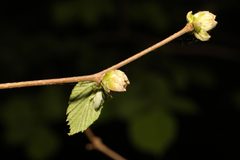
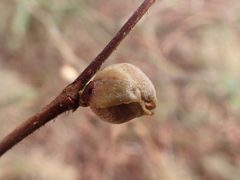
- Corylus avellana - primary hazelnut, big bud mite pest
- Juncaceae - primary Juncus maritimus, Luzula pilosa; endoparasitic
- Cyperaceae - primary Carex spp.; endoparasitic Novophytoptus
- Pinaceae - primary Tsuga heterophylla, Pinus spp.; primarily needle inhabitants
- Cupressaceae - primary documented for some Trisetacus
- Rosaceae - primary Potentilla spp., Alchemilla spp.
Life Cycle
Typical eriophyoid developmental sequence: → larva → nymph → . Eggs approximately 50 µm diameter, often covered with secreted waxy material. stages last approximately 7 days each in laboratory conditions (Retracrus johnstoni at 25°C), with total immature development around 20 days. primarily sexual with indirect sperm transfer via ; arrhenotokous (unfertilized females producing male offspring) documented in Retracrus johnstoni under laboratory conditions. Some exhibit complex seasonal with distinct .
Behavior
Low mobility in many ; individuals often remain near after . Endoparasitic species exhibit specialized locomotion: Oziella viscida moves through viscous plant exudates by bending the opisthosoma in serpentine fashion rather than using legs. Vagrant species may cluster in protected locations such as between fruit tissue folds or needle . Males deposit on substrate for indirect . Immatures and of some species secrete white waxy material covering the body.
Ecological Role
Phytophagous herbivores with varying impact: some are significant agricultural pests causing direct damage through feeding (leaf spots, bud deformation, fruit damage, premature leaf death), while others have minimal visible impact. Endoparasitic may serve as potential for plant , though this requires further investigation. Serve as prey for predatory mites (e.g., Phytoseiidae). Gall-inducing species modify plant tissue development. Some lineages associated with Gondwanian relict plants may represent ancient coevolutionary relationships.
Human Relevance
Economic pests of agricultural and horticultural importance: Retracrus damage palm production (Bactris gasipaes) and ornamental palms; Phytoptus avellanae causes big bud in hazelnut orchards; various species affect coconut and other palm crops. Damage include leaf spotting, bud deformation, fruit malformation, and premature defoliation. Management approaches include using predatory mites.
Similar Taxa
- EriophyidaeOther major eriophyoid ; distinguished by different chaetotaxy patterns, shield , and internal genitalia structure; Phytoptidae generally retain more plesiomorphic features
- NalepellidaeHistorically treated as separate or within Phytoptidae; distinguished by associations (primarily conifers) and specific morphological characters; current treats as Nalepellinae within Phytoptidae
- PentasetacidaeEarly-diverging eriophyoid lineage with distinct morphological features including five setae on I versus four in Phytoptidae
More Details
Taxonomic History
Phytoptidae has undergone substantial taxonomic revision. The formerly included groups now treated as separate families (Pentasetacidae) or (Nalepellinae, Sierraphytoptinae). Current classification recognizes Phytoptidae s. str. as angiosperm-associated lineages with separate subfamilies for conifer-associated groups.
Molecular Systematics
Phylogenetic studies using COI, 18S, and 28S rDNA sequences have revealed polyphyly in several traditionally recognized (Setoptus, Nalepella, Trisetacus) and questioned monophyly of tribes such as Mackiellini. Molecular data indicate that associations do not always predict phylogenetic relationships, with geographically proximate clustering regardless of host plant in some lineages (e.g., Novophytoptus).
Morphological Specializations
The exhibits remarkable morphological plasticity including extreme setal reduction, specialized adaptations for endoparasitism (modified gnathosoma potentially for epidermal penetration), and unique locomotory in viscous environments. The anal secretory apparatus (ASA), previously thought restricted to Eriophyidae, has been documented in Phytoptidae (Setoptus tsugivagus), suggesting this structure may be a synapomorphy for all Eriophyoidea.
Sources and further reading
- BugGuide
- Wikipedia
- GBIF taxonomy match
- iNaturalist taxon
- NCBI Taxonomy
- Catalogue of Life
- Life cycle of Retracrus johnstoni Keifer (Acari: Phytoptidae)
- First Bisexually Dimorphic Phytoptid Taxon (Eriophyoidea, Phytoptidae) from Gondwanian Angiosperm Host
- Life History of Kampimodromus aberrans as a predator of Phytoptus avellanae (Acari: Phytoseiidae, Phytoptidae)
- Traditional and geometric morphometrics supporting the differentiation of two new Retracrus (Phytoptidae) species associated with heliconias
- New species and records of phytoptids (Eriophyoidea, Phytoptidae) from cinquefoils (Rosaceae, Potentilla) from Serbia and southern Russia
- Hidden diversity of endoparasitic eriophyoid mites: two new Novophytoptus Roivainen, 1947 (Acari: Eriophyoidea: Phytoptidae) species from the parenchymatous tissues of rushes (Juncaceae)
- Morphological descriptions and DNA barcodes of Oziella viscida n. sp. (Eriophyoidea, Phytoptidae) and two infrequently reported Trisetacus species (Nalepellidae) from Crimea
- Adaptive Radiation of Four-Legged Mites of the Family Phytoptidae (Acariformes, Eriophyoidea) on Dicotyledons: Host–Parasite Relationships and Ability to Induce Gallogenesis
- Observations on intraplant distribution and life history of eriophyoid mites (Acari: Eriophyidae, Phytoptidae) inhabiting evergreen cypress,Cupressus sempervirensL.
- Comparative confocal microscopy of internal genitalia of phytoptine mites (Eriophyoidea, Phytoptidae): new generic diagnoses reflecting host-plant associations
- New Species and Records of Nothofagicola n. sp. (Eriophyoidea, Phytoptidae) from Chile and Updated Key to the World Genera of the Tribe Sierraphytoptini Keifer 1944
- Genetic and morphological diversity of Trisetacus species (Eriophyoidea: Phytoptidae) associated with coniferous trees in Poland: phylogeny, barcoding, host and habitat specialization
- A New Genus of Four-Legged Mites from Palms in Vietnam: The Morphology and Phylogeny of Calventer arengii n. g. & sp. (Eriophyoidea, Phytoptidae)
- Endoparasitic Gall Mites: Two New Novophytoptus Species (Eriophyoidea, Phytoptidae) from Southern African Sedges (Cyperaceae, Carex) and New Hypotheses on the Phylogeny of Novophytoptines
- <p class="Body">The description and molecular phylogenetic position of a new conifer-associated mite, Setoptus tsugivagus n. sp. (Eriophyoidea, Phytoptidae, Nalepellinae)<p align="center"><br />