
Vasates
Shimer, 1869
eriophyid gall mites
Species Guides
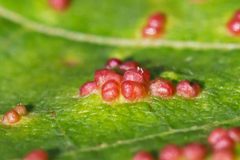
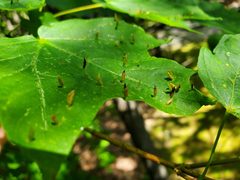
2- Vasates aceriscrumena(maple spindle-gall mite)
- Vasates quadripedes(Maple Bladdergall Mite)
Vasates is a of eriophyid mites ( Eriophyidae) that induce gall formation on plant leaves. in this genus are associated with diverse host plants including maple (Acer), black locust (Robinia), and lupine (Lupinus). The genus includes at least three described species: V. aceriscrumena, V. quadripedes, and V. lupini. Males exhibit specialized mate-guarding of quiescent female nymphs prior to their .

Pronunciation
How to pronounce Vasates: /væˈseɪtiːz/
These audio files are automatically generated. While they are not always 100% accurate, they are a good starting point.
Identification
Vasates are distinguished from other eriophyid by their association with specific gall morphologies on plants. Identification to species level requires examination of host plant association and gall type: V. aceriscrumena produces spindle galls on maple leaves, V. quadripedes produces maple bladder galls, and V. lupini induces rosette galls on lupine. Microscopic examination of morphological features is necessary for definitive identification.
Images
Habitat
Associated with the leaves of trees and herbaceous plants; specific microhabitat is the gall tissue induced on host plant foliage.
Distribution
Recorded from Denmark, Norway, Sweden, and the United States (Vermont and other states). Distribution is likely broader and follows the range of plant .
Host Associations
- Acer - gall induction of V. aceriscrumena and V. quadripedes
- Robinia - gall induction of V. robiniae
- Lupinus - gall induction of V. lupini
Behavior
Males guard quiescent female nymphs prior to their from the final , depositing around the nymph at a rate of approximately 0.8 per hour. Guarding males alternate between exploring the immediate vicinity of the nymph and remaining motionless in bodily contact with the nymph. Some males depart before the female emerges, while others remain until molting completes; males do not coerce females to pick up sperm after emergence.
Ecological Role
Induces gall formation on plant leaves, creating specialized microhabitats. The ecological impacts of these galls on host plant and broader interactions have not been quantified.
Human Relevance
Some are minor plant pests due to gall formation on ornamental trees such as maples. V. quadripedes produces conspicuous bladder galls on silver maple that may cause aesthetic concern but rarely significant tree damage.