
Erythrodiplax berenice
(Drury, 1773)
Seaside Dragonlet
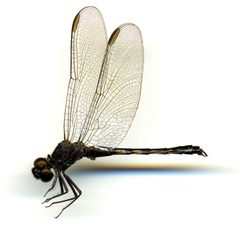
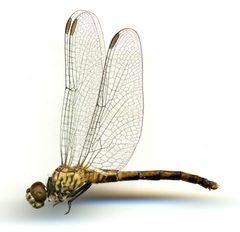
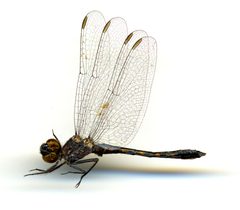
Erythrodiplax berenice, the seaside dragonlet, is a small in the Libellulidae. It is the only dragonfly in the western hemisphere capable of breeding in seawater, with nymphs tolerating salinities up to 260% of normal seawater concentration. The inhabits coastal salt marshes, mangrove swamps, and alkaline lakes along the Atlantic coast of North America.
Pronunciation
How to pronounce Erythrodiplax berenice: /ɛˌrɪθroʊdɪˈplæks bəˈrɛnɪsi/
These audio files are automatically generated. While they are not always 100% accurate, they are a good starting point.
Identification
Distinguished from similar dark by : black meadowhawk (Sympetrum danae) and double-ringed pennant (Celithemis verna) occur only in freshwater. Blue dasher (Pachydiplax longipennis) and slaty skimmer (Libellula incesta) have thicker, more robust and bluer coloration; slaty skimmer is much larger (50–52 mm) with no size overlap. Combination of small size, slender build, and exclusive association with saline habitats confirms identification.
Images
Habitat
Coastal salt marshes, mangrove swamps, and alkaline lakes. Nymphs develop in brackish to hypersaline waters including pools up to 48 ppm salt (seawater averages 35 ppm). In Maine salt marsh study, spent 99% of time perched on emergent vegetation and trees.
Distribution
Eastern North America: Atlantic coast from Nova Scotia to Florida, extending to Caribbean and West Indies. E. b. naeva in Florida Keys through West Indies.
Seasonality
Active during summer months; observed perching and flying in tandem during breeding season.
Diet
Feeds on smaller insects including lacewings and .
Life Cycle
Nymphal development occurs in brackish to saltwater environments, uniquely among western hemisphere . Laboratory studies show nymphs tolerate salinities up to 260% seawater concentration, but not 300%.
Behavior
Less territorial than other dragonlet ; males show limited aggression only at close range. spend majority of time perching on vegetation with oriented upwind, believed to assist lift-off. Pairs fly in tandem and perform tandem oviposition into floating algal mats—unique within Erythrodiplax. Large numbers gather at suitable breeding .
Ecological Role
Aerial of small insects in coastal marsh . Serves as prey for web-building spiders including pholcid spiders (daddy-long-legs) near human habitation.
Human Relevance
Subject of ecological and behavioral research due to unique saltwater . Attracted to artificial lighting at coastal developments, making them vulnerable to by spiders inhabiting illuminated structures.
Similar Taxa
- Sympetrum danae (black meadowhawk)Similar dark appearance but restricted to freshwater ; accidental overlap only through wind
- Celithemis verna (double-ringed pennant)Similar appearance but freshwater requirement eliminates true sympatry
- Libellula incesta (slaty skimmer)Similar coloration but much larger (50–52 mm vs. 31–35 mm) with thicker, more robust
- Pachydiplax longipennis (blue dasher)Similar coloration but thicker, more robust and bluer color
More Details
Saltwater tolerance mechanism
Only in western hemisphere capable of in marine environments; nymphs have been documented in waters up to 48 ppm salt and tolerate experimental salinities of 260% seawater
Regional variation
Northern more frequently show brown wing spots behind the nodus; tropical E. b. naeva has females lacking these spots and more frequently
Sources and further reading
- BugGuide
- Wikipedia
- GBIF taxonomy match
- iNaturalist taxon
- Catalogue of Life
- Dragonfly meets spider, spider eats dragonfly: Seaside Dragonlet, Erythrodiplax Berenice, and daddy-long-legs, Pholcus spp. — Bug of the Week
- Archive — Bug of the Week
- Erythrodiplax ana Archives - Entomology Today
- erythrodiplax-ana - Entomology Today
- A New Dragonfly Species Discovered in Brazil
- The Behavior of the Seaside Dragonlet, Erythrodiplax berenice (Odonata: Libellulidae), in a Maine Salt Marsh