
Celithemis verna
Pritchard, 1935
double-ringed pennant
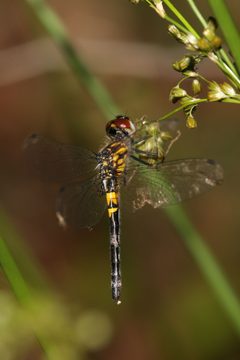
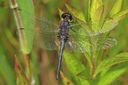
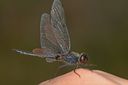
Celithemis verna, the double-ringed pennant, is a of (skimmer) in the Libellulidae. It is native to North America and has been assigned a conservation status of Least Concern by the IUCN, with a stable trend. The specific epithet 'verna' refers to spring, suggesting seasonal activity patterns.
Pronunciation
How to pronounce Celithemis verna: /ˌsɛlɪˈθɛmɪs ˈvɜrna/
These audio files are automatically generated. While they are not always 100% accurate, they are a good starting point.
Identification
The 'double-ringed pennant' refers to distinctive wing markings that separate this from . As a member of the Celithemis, it shares the characteristic pennant-like wing posture at rest with related species. Further diagnostic features distinguishing it from similar such as Celithemis elisa (calico pennant) and Celithemis eponina (halloween pennant) are not documented in available sources.
Images
Distribution
North America. Specific range details within this region are not documented in available sources.
Seasonality
The specific epithet 'verna' (Latin for 'spring') suggests spring activity, though explicit phenological records are not available in provided sources.
Similar Taxa
- Celithemis elisaAlso a North American pennant with patterned wings; distinguished by different wing markings (calico pattern vs. double-ringed pattern)
- Celithemis eponinaAnother congeneric pennant with orange and brown wing patterning; differs in coloration and specific wing banding
More Details
Conservation Status
The IUCN lists Celithemis verna as Least Concern () with no immediate threat to survival and a stable trend.