
Aeshna juncea
(Linnaeus, 1758)
Common Hawker, Moorland Hawker, Sedge Darner
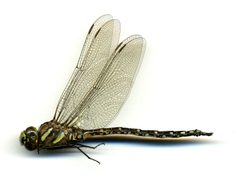
Aeshna juncea, known as the Common Hawker, Moorland Hawker, or Sedge Darner, is a large hawker with a Holarctic distribution spanning the Palearctic from Ireland to Japan and northern North America. It is one of the larger Aeshna and is strongly associated with acidic bog , particularly in Scotland where it is a prominent bog . The species has a period from June to early October. Recent genomic research has revealed that Alaskan underwent population bottlenecks during the most recent ice age, and the species has been used as a model for studying size variation in Odonata driven by and repetitive elements.
Pronunciation
How to pronounce Aeshna juncea: //ˈiːʃnə ˈdʒʌŋkiə//
These audio files are automatically generated. While they are not always 100% accurate, they are a good starting point.
Images
Habitat
Acidic bogs and peatlands, particularly in upland and moorland areas. In Scotland, it is described as one of the most prominent bog , frequently found in and around bog pools on peatland restoration sites. The requires acidic bog pools for -laying and is associated with Sphagnum moss and heather vegetation.
Distribution
Holarctic: Palearctic region from Ireland to Japan, and northern North America. Present in Europe and Northern Asia (excluding China), North America, and Southern Asia. Specifically documented in Scotland, Alaska, and Flanders, Belgium.
Seasonality
period from June to early October.
Diet
hunt small insects on the wing. Nymphs are predatory, feeding on small and potentially small fish and tadpoles.
Life Cycle
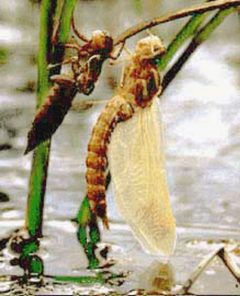
with three stages: , nymph (naiad), and . Eggs are laid in water, typically in aquatic vegetation or submerged debris in bog pools. Nymphs lead an entirely aquatic lifestyle and undergo a series of moults as they grow, with the nymphal stage lasting from a few months to several years depending on conditions. Mature nymphs climb out of water onto emergent vegetation to emerge as adults.
Behavior
are known for exceptional abilities and agility. They patrol territories, hunt insects on the wing, and engage in . In bog , adults fly low over Sphagnum moss and heather while hunting. Females have been observed -laying in bog pools.
Ecological Role
in both aquatic (nymphal) and terrestrial/aerial () . As a bog , it serves as an for healthy acidic peatland .
Human Relevance
Subject of genomic research as a model for understanding Arctic survival adaptations and evolution in Odonata. Featured in conservation efforts for peatland restoration in Scotland. Its presence indicates healthy bog that provide carbon and other ecosystem services.
Similar Taxa
- Aeshna caerulea (Azure Hawker)Both are Aeshna hawkers found in Scottish bogs; A. caerulea is distinguished by azure blue body coloration and dark wings, and is currently vulnerable with a restricted range in the Scottish Highlands, whereas A. juncea is more widespread and has yellow thoracic stripes
- Aeshna persephone (Persephone's Darner)Both are large Aeshna darners; A. persephone occurs in southwestern North America (New Mexico, Arizona) and can be distinguished by geographic range and subtle morphological differences in color pattern
Sources and further reading
- BugGuide
- GBIF taxonomy match
- iNaturalist taxon
- NCBI Taxonomy
- Catalogue of Life
- Grasshopper Collections and Survey
- Beauties in the Bog - Buglife Blog - Buglife
- Don't get bogged down with peat... - Buglife Blog - Buglife
- Hymenoptera | Beetles In The Bush | Page 8
- Bug Eric: New Mexico Dragonfly Blitz - Day 2
- First genomic insights into an Aeshnidae dragonfly: unveiling the genome of a Holarctic species, Aeshna juncea
- First Genomic Insights into an Aeshnidae Dragonfly: Unveiling the Genome of a Holarctic Species, Aeshna juncea