
Megalopyge opercularis bissesa
Dyar, 1910
Southern Flannel Moth, Puss Caterpillar
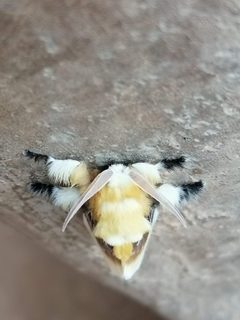
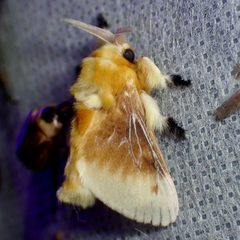
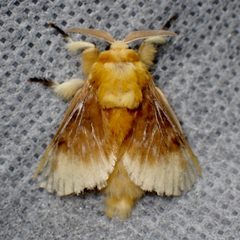
Megalopyge opercularis bissesa is a of southern flannel , commonly known as the puss caterpillar in its larval stage. The caterpillar is covered in dense, soft-looking hair that conceals venomous urticating spines capable of delivering painful stings. Found in the southeastern United States from the Mid-Atlantic to Florida and Texas, this insect feeds on various woody plants including oak, hickory, and apple. The caterpillar's distinctive appearance—resembling a tiny, hairy cat or 'Cousin Itt' from The Addams —belies its defensive capabilities.
Pronunciation
How to pronounce Megalopyge opercularis bissesa: /ˌmɛɡəloʊˈpaɪdʒi oʊˌpɜrkˈjʊlərɪs bɪˈsiːsə/
These audio files are automatically generated. While they are not always 100% accurate, they are a good starting point.
Identification
Distinguished from other Megalopyge by geographic range and subtle morphological differences; M. opercularis bissesa occurs in the southeastern US while nominate M. opercularis opercularis occurs further south. Distinguished from other stinging caterpillars by dense, uniformly distributed long hair completely concealing body form, lacking the prominent paired horns of saddleback caterpillars or the branched spines of io moth caterpillars. White flannel moth (Norape ovina) caterpillar similar but with different hair arrangement and coloration.
Images
Appearance
Caterpillar covered in long, dense, blondish to tan hair giving a soft, furry appearance resembling a small cat or toupee. Concealed beneath the hair are venomous urticating spines that break off and embed in skin. has wings but caterpillar form is most commonly encountered. Later instars of related described as resembling 'a tiny Trump toupee'.
Habitat
Found in diverse including restored tallgrass prairie remnants, oak-hickory forests, and urban landscapes. Associated with plants in open woodlands, forest edges, and areas with mixed hardwood vegetation.
Distribution
Southeastern United States from the DMV (DC-Maryland-Virginia) region south to Florida and west to Texas.
Seasonality
active during warmer months; caterpillars present summer through autumn. Multiple per year in southern portions of range.
Diet
Caterpillars feed on leaves of various woody plants including oak (Quercus), apple (Malus), birch (Betula), hickory (Carya), pecan, persimmon (Diospyros), and rose (Rosa).
Host Associations
- Quercus - plantoak
- Malus - plantapple
- Betula - plantbirch
- Carya - planthickory
- Diospyros virginiana - plantpersimmon
Life Cycle
Complete with , larval (caterpillar), pupal, and stages. Caterpillar is the distinctive, hairy, stinging stage. occurs in a cocoon incorporated with caterpillar hairs. Multiple annually in southern range, fewer in northern portions.
Behavior
Caterpillar feeds solitarily on foliage. Defensive relies on venomous spines rather than active escape. are and attracted to light.
Ecological Role
Herbivore feeding on woody plant foliage; serves as for including Calliephialtes grapholithae.
Human Relevance
Medical significance due to painful, sometimes severe stings from caterpillar urticating spines. Reactions include burning pain, swelling, redness, blisters, and potential allergic reactions requiring medical attention. and nasal contact particularly dangerous. Popular curiosity due to unusual appearance but should not be handled.
Similar Taxa
- Megalopyge crispataBlack-waved flannel moth caterpillar similar in appearance and also possesses urticating spines; distinguished by wavy dark lines on lighter background in later instars
- Norape ovinaWhite flannel moth caterpillar also densely hairy with stinging spines; differs in hair coloration and arrangement
- Automeris ioIo moth caterpillar has prominent branched spines rather than dense concealing hair
- Acharia stimuleaSaddleback caterpillar has distinctive paired fleshy horns and saddle-shaped marking, not uniformly hairy
More Details
Parasitoid relationships
Documented for the ichneumon Calliephialtes grapholithae, which parasitizes the caterpillar stage. This wasp typically attacks concealed larvae.
Venom composition
Urticating spines contain venom that produces immediate and intensifying pain described as burning, stinging, and 'white hot'; medical attention recommended for reactions.
Sources and further reading
- BugGuide
- GBIF taxonomy match
- iNaturalist taxon
- NCBI Taxonomy
- Look but do not touch: puss caterpillar, Megalopyge opercularis; White flannel moth, Norape ovina; Io moth, Automeris io; buck moth Hemileuca spp.; and hag moth, Phobetron pithecium — Bug of the Week
- Bug Eric: A Potential New Host Record for Calliephialtes grapholithae (Hymenoptera: Ichneumonidae) from a Paper Wasp nest (Hymenoptera: Vespidae: Polistes metricus)
- Archive — Bug of the Week
- Megalopygidae | Beetles In The Bush