
Megalopygidae
New World Flannel Moths, Flannel Moths, Crinkled Flannel Moths
Genus Guides
4- Lagoa(Flannel Moths)
- Megalopyge(flannel moths)
- Norape
- Trosia
is a of occurring in North America and the New World tropics, with larvae commonly known as puss caterpillars or asps. The caterpillars are covered in long, soft hairs that conceal hollow venomous spines capable of delivering severe stings. The family contains two in the United States: Megalopyginae ( Megalopyge, 7 ) and Trosiinae (genera Norape and Trosia, 5 species). The venom system is unique among Lepidoptera, consisting of aerolysin-like pore-forming toxins called megalysins that were recruited via from bacteria.
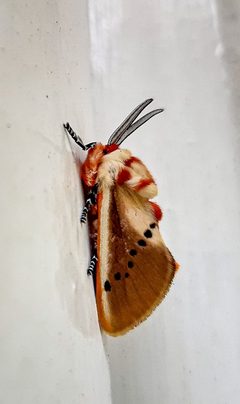
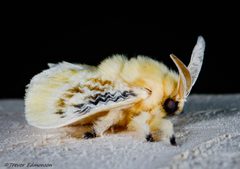
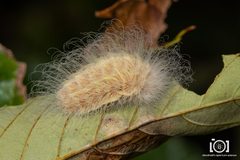
Pronunciation
How to pronounce Megalopygidae: /ˌmɛɡəloʊˈpɪdʒɨˌdiː/
These audio files are automatically generated. While they are not always 100% accurate, they are a good starting point.
Identification
caterpillars are distinguished from similar-appearing tussock moths (Erebidae: Lymantriinae) and tiger moths (Erebidae: Arctiinae) by their concealed hollow venom spines beneath soft hairs rather than or setae. They differ from Limacodidae (slug caterpillars) in body shape—flannel larvae are more cylindrical and hair-covered, while slug caterpillars are flattened and slug-like. Within the , M. opercularis and M. crispata are differentiated by leg coloration: M. o. opercularis has black setae along the entire , while M. crispata has black setae only on tarsomeres (excluding tarsomere 1).
Images
Habitat
Temperate deciduous and mixed forests, disturbed land, upland , pine-dominated forests (less common), subtropical forest, bayou systems, arid shrubland at moderate elevations, wet tropical forest, Madrean Sky Islands at high elevations, Florida Everglades, Chisos Mountains, Guadalupe Mountains.
Distribution
North America, South America, Central America, and the Caribbean. In the United States: eastern, southeastern, south-central, Mid-Atlantic, southern Great Plains, Florida coastal plain, Texas, Arizona, and New Mexico. Ranges extend into Mexico (Sierra Madre Occidental, Veracruz, northern Sonora) and Central America. Puerto Rico M. krugii in tropical forests and M. opercularis (first documented in 2023).
Seasonality
Larval stages most commonly observed. Megalopyge opercularis shows peak larval abundance in September (southeastern US) and October (south-central US), with two peaks in south-central US. observed year-round in tropical regions; temperate show seasonal activity corresponding to plant availability.
Diet
Larvae feed on leaves of woody plants including oak (Quercus), hickory (Carya), apple (Malus), birch (Betula), pecan (Carya illinoinensis), persimmon (Diospyros), black locust (Robinia pseudoacacia), and rose (Rosa). Specific associations vary by and region.
Host Associations
- Quercus - larval food plantoak widely used across range
- Carya - larval food plantmockernut hickory and other hickory
- Malus - larval food plantapple
- Betula - larval food plantbirch
- Diospyros - larval food plantpersimmon
- Robinia pseudoacacia - larval food plantblack locust
- Rosa - larval food plantrose
Life Cycle
Complete with , larva, pupa, and stages. Eggs laid on foliage. Larvae pass through multiple instars; early instars typically white and densely hairy. occurs in silk cocoon. Adults are short-lived and do not feed; their primary function is . The larval stage is the longest and most conspicuous phase.
Behavior
Caterpillars are slow-moving and rely on via their hairy appearance. When disturbed, venom spines inject defensive venom causing immediate and building pain. Envenomation produces characteristic grid-like skin patterns. Pain radiates from contact site and may persist for hours or days, accompanied by regional lymph node ache. are and attracted to light.
Ecological Role
Larvae function as herbivores on woody plants, contributing to nutrient cycling. They serve as prey for various , though their venomous defense reduces pressure. The has been documented as for including Calliephialtes grapholithae (Ichneumonidae), which attacks concealed larvae.
Human Relevance
Medically significant due to severe envenomations from caterpillar contact. Stings cause intense burning pain, localized swelling, redness, and blistering; reactions including headache, nausea, and shock-like may occur. Contact with or nasal is particularly dangerous. Medical attention is advised for systemic symptoms. The puss caterpillar (Megalopyge opercularis) is considered among the most venomous caterpillars in North America.
Similar Taxa
- LimacodidaeSlug caterpillars also possess venomous spines, but differ in flattened, slug-like body form rather than cylindrical hairy shape. Limacodidae venom system evolved independently and contains different toxins.
- Erebidae: LymantriinaeTussock moths have hairy larvae but lack hollow venom spines; their cause irritation through mechanical means and different chemical compounds.
- Erebidae: ArctiinaeTiger moth larvae often hairy but lack the concealed hollow spine venom apparatus; setae may cause irritation but not the severe envenomation of .
Misconceptions
The soft, hairy appearance of puss caterpillars leads many to assume they are harmless, resulting in unnecessary stings. The name 'flannel ' suggests a soft, benign nature that belies the medical significance of larval envenomation. Some believe all hairy caterpillars sting similarly, but venom is distinct in mechanism and severity.
More Details
Venom Evolution
venom toxins (megalysins) were recruited via from bacteria to ancestors of ditrysian Lepidoptera, representing a convergent recruitment of aerolysin-like proteins also found in , cnidarians, and fish venoms. This evolutionary origin differs markedly from related Limacodidae.
Taxonomic Complexity
Identification of larvae to is often difficult due to cryptic and variable coloration. Some species remain undescribed or poorly known in the larval stage. Reduced wing patterns in some complicates identification.
Medical Research
Venom components have been studied for their potent activation of mammalian through permeabilization, making them subjects of interest for pain research and potential therapeutic applications.
Sources and further reading
- BugGuide
- GBIF taxonomy match
- iNaturalist taxon
- NCBI Taxonomy
- Catalogue of Life
- Megalopygidae | Beetles In The Bush
- Bug Eric: A Potential New Host Record for Calliephialtes grapholithae (Hymenoptera: Ichneumonidae) from a Paper Wasp nest (Hymenoptera: Vespidae: Polistes metricus)
- Look but do not touch: puss caterpillar, Megalopyge opercularis; White flannel moth, Norape ovina; Io moth, Automeris io; buck moth Hemileuca spp.; and hag moth, Phobetron pithecium — Bug of the Week
- Bug of the Week
- Bacterial Communities Associated with Megalopyge opercularis (Smith) (Lepidoptera: Megalopygidae): Exploring Poisonous Lepidopterans
- Horizontal gene transfer underlies the painful stings of asp caterpillars (Lepidoptera: Megalopygidae)
- Geographical and temporal distribution of Megalopygidae in the United States and Puerto Rico
- New insights and renewed focus on the behavioural and mechanical traits of the larvae of the limacodid-group and related families (Lepidoptera: Aididae, Anomoeotidae, Dalceridae, Himantopteridae, Limacodidae, Megalopygidae, and Somabrachyidae)