
Platynota viridana
Barnes & Busck, 1920
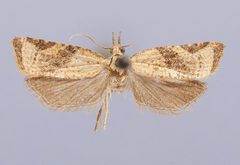
A small tortricid with a wingspan of 13–18 mm, known from limited records in the southwestern and southeastern United States. First described in 1920 by William Barnes and August Busck. The epithet 'viridana' suggests green coloration, though specific color pattern details are not documented in available sources.

Pronunciation
How to pronounce Platynota viridana: //plæˈtɪnəʊtə vɪˈɹɪdənə//
These audio files are automatically generated. While they are not always 100% accurate, they are a good starting point.
Images
Distribution
Documented from three U.S. states: Arizona, Texas, and South Carolina. This disjunct distribution pattern suggests either scattered or incomplete survey coverage.
Human Relevance
Larvae of the related Platynota stultana ( leafroller) are documented as prey for the mason wasp Monobia quadridens. Whether P. viridana serves similarly as prey for or other natural enemies has not been recorded.
Similar Taxa
- Platynota stultanaBoth are small tortricid moths in the same ; P. stultana is the well-known leafroller with documented economic impact and relationships, while P. viridana remains poorly known with no recorded economic significance.