
Platynota
Clemens, 1860
leafroller moths
Species Guides
21- Platynota blanchardi
- Platynota calidana
- Platynota cf. exasperatana-oklahoma-species
- Platynota exasperatana-complex
- Platynota flavedana(Black-shaded Platynota Moth)
- Platynota idaeusalis(Tufted Apple Bud Moth)
- Platynota islameconae
- Platynota labiosana
- Platynota larreana
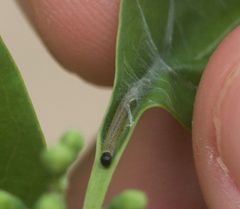
Platynota is a of tortricid moths in the Tortricidae, Tortricinae, tribe Sparganothini. The genus contains approximately 40 described distributed primarily in the Nearctic region, with several species of significant economic importance as agricultural pests. The most notorious member, Platynota stultana ( Leafroller), is a highly native to southwestern North America that has established in Europe (Spain, Italy, Portugal, France, Malta, Switzerland, Germany, Greece) and Hawaii. Other economically important species include P. flavedana and P. idaeusalis (Tufted Apple Bud ). Larvae are leafrollers that construct silk-webbed shelters within rolled or folded leaves, feeding on a wide range of plants.
Pronunciation
How to pronounce Platynota: /ˌplætɪˈnoʊtə/
These audio files are automatically generated. While they are not always 100% accurate, they are a good starting point.
Identification
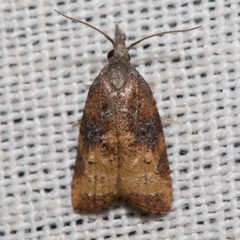
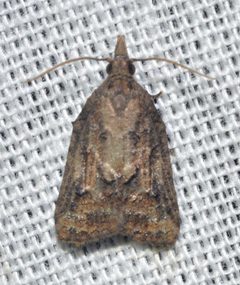
in this are characterized by forewings that are typically broad and somewhat rectangular with rounded apices. Wing patterns vary by but often include combinations of brown, gray, and cream coloration with distinct fasciae or mottling. P. stultana specifically shows grayish-brown forewings with darker markings and a distinctive pattern that aids in identification. Male genitalia feature unique valvae and structures diagnostic for the genus. are small to medium-sized tortricids with wingspans generally ranging 15-25 mm. Accurate species identification typically requires examination of genitalia or .
Images
Habitat
vary by but generally include agricultural areas, orchards, vineyards, greenhouses, and natural vegetation . P. stultana occupies both field and greenhouse environments in its native range and has established in similar agricultural settings in Europe. Coastal and low-elevation sites appear preferred for some . Development occurs above temperature thresholds of approximately 8.9°C, limiting outdoor winter survival in northern latitudes but permitting establishment in Mediterranean climates.
Distribution
Native distribution centered in North America, particularly the southwestern United States and adjacent northwestern Mexico. P. stultana has expanded to Hawaii (mid-1980s) and multiple European countries including Spain (2009), Italy (2020, 2022), Portugal, France, Malta, Switzerland, Germany, and Greece. Records exist from across the United States including North Carolina, Oklahoma, Colorado, Oregon, Florida, Virginia, Washington D.C., and Ontario, Canada. The as a whole is primarily Nearctic in distribution.
Seasonality
activity varies by and latitude. P. stultana produces 5+ overlapping annually in Southern California and the Central Valley (adults active from March), 3 generations in Almeria, Spain (peaks March, July, September), and shows bimodal activity in Italy (August and October captures). Adults are attracted to UV light and traps. No true occurs in P. stultana, permitting continuous breeding in suitable climates.
Diet
Larvae are highly herbivores. P. stultana alone feeds on plants from over 100 in 30+ . Documented include: alfalfa (Medicago sativa), citrus, corn (Zea mays), cotton (Gossypium), grapes (Vitis), peaches (Prunus persica), pears (Pyrus), peppers (Capsicum annuum), pomegranates (Punica granatum), carnations (Dianthus caryophyllus), roses (Rosa), aubergines (Solanum melongena), basil (Ocimum), strawberries (Fragaria), and numerous wild Asteraceae and Fabaceae. Feeding damage includes external fruit scarring, internal tunneling in pepper fruits, and grape bunch rot from skin breakage enabling fungal .
Life Cycle
are small, flattened, disk-shaped, greenish, and deposited in masses of 50-100 on leaf surfaces; females produce >300 eggs lifetime. Egg hatch occurs in approximately one week. Larvae pass through 5-6 instars, reaching 12-18 mm at maturity. Newly hatched larvae move to plant apices, feeding in buds or between leaves; young larvae may balloon on silk threads to disperse. Later instars construct characteristic shelters from rolled or folded leaves bound with silk. occurs within the rolled leaf shelter; pupae are 12-15 mm and dark brown. lifespan averages 10.5 days for females. No true occurs in P. stultana.
Behavior
Larvae are cryptic, remaining hidden within silk-webbed leaf shelters during feeding. Young larvae exhibit ballooning on silk threads for to new plants. show limited natural dispersal ability with no documented long-distance migratory ; spread occurs primarily through human-mediated transport via plant trade. Adults are and attracted to UV light sources. Males respond strongly to -specific .
Ecological Role
Native function as herbivores in natural . of P. stultana function as significant agricultural pests causing economic damage to diverse crops. The species has potential to impact wild plant in invaded regions. Natural enemies include and , though specific agents for invasive populations remain under investigation.
Human Relevance
Multiple are economically important agricultural pests. P. stultana causes significant damage to greenhouse and field crops in Europe, with potential for up to 80% grape loss from associated bunch rot. Management relies on combining monitoring ( traps), cultural controls (, removal of sites), , and chemical applications. techniques using synthetic pheromones are employed. The is subject to regulations in multiple countries due to invasion risk.
Sources and further reading
- BugGuide
- Wikipedia
- GBIF taxonomy match
- iNaturalist taxon
- NCBI Taxonomy
- Catalogue of Life
- What Will You See at Bohart Museum Open House | Bug Squad
- Oh, What a (Moth) Night! | Bug Squad
- Like a Moth to a Flame... | Bug Squad
- Bug Eric: Wasp Wednesday: Four-toothed Mason Wasp
- Observations on the Biology and Control of Platynota flavedana1
- Foraminiferen aus dem unteren Kimmeridge (Platynota-Schichten) der Nördlichen und Mittleren Frankenalb—Faunenbestand und Palökologie Foraminifera from the Lower Kimmeridgian (Platynota beds) of the Northern and Middle Franconian Alb, Germany—Fauna and Palecology
- PLATYNOTA STULTANA WALSINGHAM, 1884 (LEPIDOPTERA TORTRICIDAE) FOUND IN ITALY, INVASIVE PEST IN EUROPE
- THE INVASIVE PLATYNOTA STULTANA WALSINGHAM INCREASES ITS SPREAD IN EUROPE (LEPIDOPTERA TORTRICIDAE)
- Observations on The Life History of Platynota Stultana WLSM. on Greenhouse Rose
- The Life History of Platynota flavedana, A Leaf Roller of Strawberry12
- The Invasive Nearctic Pest Platynota stultana Walsingham (Lepidoptera: Tortricidae) Is Established in Southern Italy.
- An emerging Platynota sp. (Lepidoptera: Tortricidae) infesting blueberry (Vaccinium corymbosum) in the central coast of Peru.
- The Genome Sequences of Baculoviruses from the Tufted Apple Bud Moth, Platynota idaeusalis, Reveal Recombination Between an Alphabaculovirus and a Betabaculovirus from the Same Host.