
Choristoneura
Lederer, 1859
spruce budworms
Species Guides
17- Choristoneura albaniana
- Choristoneura argentifasciata
- Choristoneura carnana
- Choristoneura conflictana(large aspen tortrix)
- Choristoneura fractivittana(broken-banded leafroller)
- Choristoneura fumiferana(eastern spruce budworm)
- Choristoneura houstonana(Juniper Budworm Moth)
- Choristoneura lambertiana(sugar pine tortrix)
- Choristoneura obsoletana(Obsolete-banded Leafroller Moth)
Choristoneura is a of tortricid moths comprising nearly forty distributed across North America and Eurasia. Most species are serious pests of conifers, with several causing major forest defoliation events. The genus includes notable forest pests such as the eastern spruce budworm (C. fumiferana) and western spruce budworm (C. occidentalis), which undergo periodic that can devastate spruce-fir forests. The genus exhibits complex and is extensively studied for its economic and ecological impacts.

Pronunciation
How to pronounce Choristoneura: /kɔːˌrɪstoʊˈnʊərə/
These audio files are automatically generated. While they are not always 100% accurate, they are a good starting point.
Identification
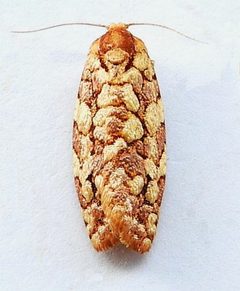
are small to medium-sized with highly variable coloration, ranging from gray to brown to reddish tones, making -level identification difficult based on appearance alone. Wing patterns are often mottled or banded. The belongs to the leafroller moth Tortricidae, and adults can be confused with other tortricid genera; identification typically requires examination of genitalia or trapping. Larvae are caterpillars that feed on conifer needles or deciduous leaves depending on species.
Images
Habitat
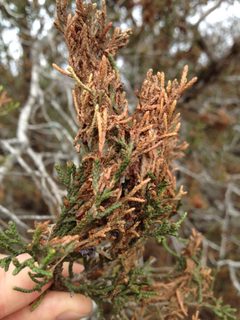
Forested landscapes dominated by coniferous trees, particularly spruce-fir forests, as well as mixed woodlands with poplar, willow, alder, and other broad-leaved trees for non-conifer-feeding . Some species inhabit juniper woodlands.
Distribution
North America (Canada, USA including Alaska) and Eurasia. Specific distributions vary by : C. fumiferana occurs across eastern and central North America; C. occidentalis in western North America; C. rosaceana throughout much of North America; C. conflictana in northern and western North America; C. houstonana in regions with juniper.
Diet
Larvae feed on conifer needles (spruce, fir, pine) for most ; some species feed on deciduous trees including aspen, poplar, willow, alder, and Rosaceae (apple, pear, peach). Specific associations vary considerably among species.
Host Associations
- Picea - larval food plantspruce , primary for many conifer-feeding species
- Abies - larval food plantfir , particularly balsam fir for C. fumiferana
- Pinus - larval food plantpine , for C. pinus pinus
- Populus - larval food plantaspen and poplar, for C. conflictana
- Salix - larval food plantwillow, for C. conflictana
- Alnus - larval food plantalder, for C. conflictana
- Malus - larval food plantapple, for C. rosaceana
- Pyrus - larval food plantpear, for C. rosaceana
- Prunus - larval food plantpeach, for C. rosaceana
- Juniperus - larval food plantjuniper, for C. houstonana
Life Cycle
Complete with , larva (5-6 instars), pupa, and stages. Many overwinter as diapausing second-instar larvae in silk on trees. First-instar larvae have been observed to feed, contrary to earlier assumptions. occurs in silken cocoons on host foliage or in bark crevices. Adults emerge in late spring to midsummer depending on species and latitude. Some exhibit dynamics with dramatically fluctuating densities over multi-year cycles.
Behavior
Larvae are leaf-rollers or bud-feeders, constructing silken shelters. Second-instar larvae of many enter in . communicate via , with species-specific blends documented for North American species. densities can fluctuate dramatically between and phases, with epidemic populations causing extensive defoliation.
Ecological Role
Major defoliator of and montane forests, capable of altering forest composition and through selective mortality of trees. Serves as host for diverse —230 parasitoid in 106 documented from Nearctic species alone. influence fire risk through accumulated dead fuels. Provides food source for insectivorous birds and other .
Human Relevance
Significant forest pest causing timber losses, tree mortality, and economic impacts to forestry industries. The eastern spruce budworm is among the most destructive forest insects in North America. Management includes application, using , and silvicultural practices to reduce availability. Extensively studied as a model system for forest insect and climate change impacts.
Similar Taxa
- ArchipsBoth are tortricid with leaf-rolling larvae and similar ; Archips typically feed on deciduous trees and lack the conifer specialization of most Choristoneura
- CydiaTortricid containing codling moth and related ; similar size and wing shape but with distinct wing patterns and different larval habits (internal fruit feeding versus external foliage feeding)
- EpinotiaTortricid with conifer-feeding ; similar and use but generally smaller and with different larval shelter construction
Sources and further reading
- BugGuide
- Wikipedia
- GBIF taxonomy match
- iNaturalist taxon
- NCBI Taxonomy
- Catalogue of Life
- Choristoneura houstonana - Entomology Today
- Choristoneura-fumiferana-2252020-LGPT - Entomology Today
- Bug Eric: My Personal National Moth Week, 2017
- This Artificial Diet May Make Insect Rearing Easier
- Researchers Propose Standardized Naming of Lab-Reared Insect Stocks
- Bug Eric: September 2017
- Choristoneura conflictana . [Distribution map].
- Choristoneura rosaceana . [Distribution map].
- Braconid parasitoids (Hymenoptera: Braconidae) of NearcticChoristoneuraspecies (Lepidoptera: Tortricidae), with a summary of other parasitoid families attackingChoristoneura
- Differences in activity enhancement of a baculovirus by an optical brightener between Choristoneura fumiferana and Choristoneura occidentalis (Lepidoptera: Tortricidae)
- FEEDING BEHAVIOUR OF THE FIRST-INSTAR CHORISTONEURA FUMIFERANA AND CHORISTONEURA PINUS PINUS (LEPIDOPTERA: TORTRICIDAE)
- Infection of Spodoptera frugiperda and Choristoneura fumiferana cell lines with the baculovirus Choristoneura fumiferana nuclear polyhedrosis virus
- PARASITOIDS OF ENDEMIC AND EPIDEMIC POPULATIONS OF CHORISTONEURA OCCIDENTALIS FREEMAN AND CHORISTONEURA RETINIANA (WALSINGHAM) (LEPIDOPTERA: TORTRICIDAE) IN SOUTHERN OREGON
- Sex Pheromones And Behavioral Biology Of The Coniferophagous Choristoneura
- Outbreak regulation mechanisms play different roles at different stages of an Eastern spruce budworm (Choristoneura fumiferana) outbreak.
- New Insights into the Evolution of Entomopoxvirinae from the Complete Genome Sequences of Four Entomopoxviruses Infecting Adoxophyes honmai, Choristoneura biennis, Choristoneura rosaceana, and Mythimna separata
- Effect of starvation on the accumulation of CfDAP and CfDAP-like proteins in post-diapause Choristoneura fumiferana and diapause-free Choristoneura occidentalis
- 18. Pheromone Communication, Behavior, and Ecology in the North American Choristoneura genus