
Ancylis
Hübner, [1825], 1816
Species Guides
32- Ancylis albacostana
- Ancylis apicana(Raspberry Leaffolder Moth)
- Ancylis brauni
- Ancylis burgessiana(Oak Leaffolder Moth)
- Ancylis columbiana
- Ancylis comptana(Strawberry leafroller)
- Ancylis cordiae
- Ancylis definitivana
- Ancylis diminuatana
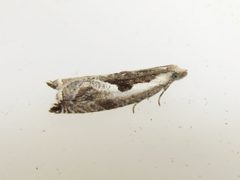
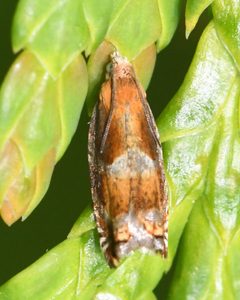
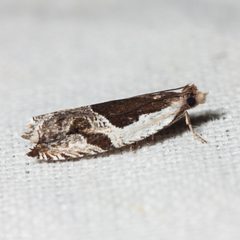
Ancylis is a of tortricid moths in the Olethreutinae, tribe Enarmoniini. are commonly known as leafrollers or leaf folders, with larvae that construct silk shelters by folding or rolling plant leaves. The genus has a Holarctic distribution with some species also recorded from the Oriental region and South America. Several species are economically significant agricultural pests, including the strawberry leafroller (A. comptana) and the jujube leafroller (A. sativa). Taxonomic revision using has clarified species boundaries, revealing that presumed Holarctic distributions were often due to misidentification.
Pronunciation
How to pronounce Ancylis: //ˈæn.sɪ.lɪs//
These audio files are automatically generated. While they are not always 100% accurate, they are a good starting point.
Images
Habitat
Forested and agricultural environments; specific varies by plant association. Larvae of A. discigerana occur in yellow birch forests with in leaf litter. Agricultural of A. comptana occur in strawberry fields and orchards with perimeter plantings of rose and strawberry.
Distribution
Holarctic distribution confirmed for A. unguicella and A. uncella; other have more restricted ranges. Recorded from Europe (Austria, Germany, Scandinavia, Denmark, Norway, Sweden), North America (USA: Vermont, Oregon, Florida, Kansas, Washington; Canada), and Asia (China: Heilongjiang and other provinces; Pakistan). A. ecuadorica reported from Ecuador and Venezuela.
Seasonality
A. discigerana: with in early June; mid-April to mid-May. A. sativa: multiple per year in Pakistan jujube orchards with activity coinciding with plant .
Host Associations
- yellow birch (Betula alleghaniensis) - primary A. discigerana
- strawberry (Fragaria spp.) - primary A. comptana
- rose (Rosa spp.) - or enhancing plant for A. comptana; perimeter plantings enhance activity
- jujube (Ziziphus mauritiana) - primary A. sativa
Life Cycle
Larval development includes five instars in A. sativa. A. discigerana: first two instars skeletonize lower leaf surface beneath silk webbing between lateral ; third instar moves to upper leaf surface and folds leaf longitudinally, feeding on upper within fold until leaf fall. as final instar larva in leaf litter (A. discigerana). timing varies: mid-April to mid-May for A. discigerana.
Behavior
Leaf-rolling and leaf-folding using silk webbing. First instar larvae construct protective silk shelters on leaf undersides; later instars create longitudinal leaf folds. deposited individually on upper leaf surfaces, typically on major or slight epidermal depressions.
Ecological Role
Herbivores on woody and herbaceous plants; serve as for including Trichogramma minutum ( parasitoid) and Apanteles polychrosidis (larval parasitoid) in A. discigerana . target in systems.
Human Relevance
Several are agricultural pests causing economic damage to fruit crops. A. comptana is a significant pest of strawberry in North America. A. sativa causes major yield losses in jujube orchards in Pakistan. Management strategies include through conservation of via perimeter plantings.
Misconceptions
Previous literature presumed several Ancylis to be Holarctic based on morphological similarity, particularly in the A. unguicella and A. geminana groups. and morphological revision demonstrated that only A. unguicella and A. uncella are truly Holarctic; A. geminana group species are not Holarctic. This resolved inconsistencies in European and North American taxonomic treatments.
Sources and further reading
- BugGuide
- Wikipedia
- GBIF taxonomy match
- NCBI Taxonomy
- Catalogue of Life
- BIOLOGY OF ANCYLIS DISCIGERANA (LEPIDOPTERA: TORTRICIDAE)
- Strawberry Leafroller Ancylis comptana (Frölich) (Insecta: Lepidoptera: Tortricidae)
- Different continents, same species? Resolving the taxonomy of some Holarctic Ancylis Hübner (Lepidoptera: Tortricidae)
- The Biology and Synonomy of the Parasites of the Strawberry Leaf Roller, Ancylis comptana Froel (Lepidoptera, Tortricidae), Found in Kansas
- Description of a new species, records of five previously unrecorded species, and rediscovery of a lost species in the genus Ancylis Hübner (Lepidoptera: Tortricidae) from China
- Studies on the Biology of Leaf Roller, Ancylis sativa (Liu) (Lepidoptera: Tortricidae) a Major Pest of Jujube (Ziziphus mauritiana)
- Descriptions of Males ofRhopobota tungurahuanaRazowski & Pelz andAncylis ecuadoricaRazowski & Wojtusiak (Lepidoptera: Tortricidae) with New Distribution Records from Venezuela
- The complete mitochondrial genome of jujube leaf roller, Ancylis sativa (Lepidoptera: Tortricidae) with phylogenetic implications.
- The genome sequence of the Triangle-marked Roller, Ancylis achatana (Denis & Schiffermüller), 1775.