
Ancylis apicana
(Walker, 1866)
Raspberry Leaffolder Moth
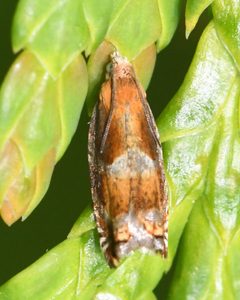
Ancylis apicana, commonly known as the Raspberry Leaffolder , is a small tortricid moth in the Tortricidae. The is distributed across central and western Canada and the northern United States. Larvae are associated with Rubus species, particularly raspberry, where they fold leaves and feed within. are active during the summer months.
Pronunciation
How to pronounce Ancylis apicana: /ˈænsɪlɪs əˈpaɪkənə/
These audio files are automatically generated. While they are not always 100% accurate, they are a good starting point.
Identification
Forewing with costal fold and brown ground color with darker fasciate markings; apex slightly hooked. Similar to other Ancylis but distinguished by specific genitalia and larval association. Confusion most likely with A. comptana (Strawberry Leafroller), which has slightly different wing pattern and different host preference. Identification from photographs alone is often unreliable; dissection and examination of genitalia recommended for certainty.
Images
Habitat
Found in areas where Rubus grow, including cultivated raspberry patches, woodland edges, and disturbed with berry-producing shrubs. Associated with temperate deciduous and mixed forest regions.
Distribution
Recorded from Alberta, Manitoba, and Saskatchewan in Canada, and Vermont in the United States. Distribution likely extends through suitable in the northern United States and southern Canada, though records are sparse.
Seasonality
have been observed from June through August, with peak activity in July. Single per year is inferred based on related , though not confirmed.
Diet
Larvae feed on Rubus , particularly raspberry (Rubus idaeus and related ). They fold leaves and feed on the enclosed foliage and possibly developing fruit.
Host Associations
- Rubus idaeus - larval primary , cultivated and wild raspberry
- Rubus - larval -level association reported
Life Cycle
are laid on plant foliage. Larvae hatch and fold leaves, feeding within the shelter. occurs within the folded leaf or in debris. emerge in early to mid-summer. Specific timing of stage is not documented but likely occurs as larva or pupa based on related .
Behavior
Larvae are leaf-folders, constructing shelters by folding or rolling leaves of the plant and securing them with silk. are and attracted to light.
Ecological Role
Herbivore on Rubus ; minor pest in cultivated raspberry plantings. Serves as prey for including birds and .
Human Relevance
Minor agricultural pest of raspberry. Larval feeding can reduce photosynthetic capacity of plants and occasionally damage fruit. Control rarely required; managed through standard horticultural practices if occur.
Similar Taxa
- Ancylis comptanaSimilar size and wing pattern; distinguished by genitalia and preference for strawberry (Fragaria) rather than raspberry as larval .
- Ancylis gallivanaOverlapping distribution and similar appearance; distinguished by association with apple (Malus) and genitalia characters.
More Details
Taxonomic history
Originally described as Grapholita apicana by Walker in 1866, later transferred to Ancylis. The Ancylis belongs to the tribe Enarmoniini within Olethreutinae.
Observation data
iNaturalist records (91 observations as of source date) suggest the is underreported relative to its likely actual distribution, possibly due to identification challenges and nondescript appearance.