
Ancylis burgessiana
(Zeller, 1875)
Oak Leaffolder Moth
Ancylis burgessiana is a small tortricid commonly known as the Oak Leaffolder Moth. It belongs to the Tortricidae, a large group of moths often called leafroller moths. The is associated with oak and has been recorded across parts of North America. are active during the growing season, with larvae that fold or roll leaves of their plants.
Pronunciation
How to pronounce Ancylis burgessiana: /ˈæn.sɪ.lɪs ˌbɜːr.dʒɛˈsiː.ɑː.nə/
These audio files are automatically generated. While they are not always 100% accurate, they are a good starting point.
Identification
Distinguished from similar Ancylis by the combination of forewing pattern with a pale costal patch and the specific arrangement of darker markings. A. burgessiana is smaller than many related tortricids and shows more pronounced wing hooking at the apex. Genitalia examination may be required for definitive separation from A. discigerana and A. divisana, which share similar coloration. The references larval of folding oak leaves, which can aid field identification when reared from material.
Images
Appearance
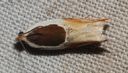
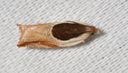
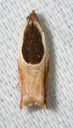
are small with wingspan approximately 12-16 mm. Forewings are brownish with variable lighter and darker markings, often with a distinct pale costal patch. The wing pattern includes fine striations and a somewhat hooked or angled apex typical of the Ancylis. Hindwings are grayish-brown and narrower than forewings. Body is slender with a slightly tufted .
Habitat
Associated with oak-dominated forests and woodlands. Larvae develop on oak (Quercus), requiring intact leaf for feeding and shelter construction. Found in both deciduous and mixed hardwood forests where oaks are present.
Distribution
Recorded from Alberta and Manitoba in Canada, and Vermont in the United States. Distribution appears centered in northern North American oak ranges, though records may be incomplete due to undercollection.
Seasonality
have been observed from late spring through summer, with peak activity likely in June and July. Larval stages occur during the growing season when oak leaves are available.
Diet
Larvae feed on oak leaves (Quercus ), folding or rolling leaves to create shelters. Specific oak species utilized have not been documented in detail.
Host Associations
- Quercus - larval oak
Life Cycle
Complete with , larva, pupa, and stages. Larvae are leaf folders, constructing shelters by folding or rolling individual oak leaves. likely occurs within the folded leaf or in leaf litter. Number of per year is not established.
Behavior
Larvae are solitary and construct individual leaf shelters by folding or rolling oak leaves, securing them with silk. are and attracted to light. Mating and oviposition have not been described.
Ecological Role
As a folivore on oaks, larvae contribute to minor leaf damage and nutrient cycling. They serve as prey for and other natural enemies. The is not considered economically significant.
Human Relevance
No direct economic importance. Occasionally encountered by lepidopterists and naturalists. The reflects its association with oaks rather than any horticultural impact.
Similar Taxa
- Ancylis discigeranaSimilar size and brownish forewing coloration with pale markings; requires genitalia examination or larval confirmation for separation
- Ancylis divisanaOverlapping wing pattern elements and geographic range; distinguished by more extensive dark markings and different genitalia structure
- Ancylis comptanaShares hooked wing apex and general appearance; usually has more contrasting wing pattern and different associations
More Details
Nomenclature
Originally described as Anchylopera burgessiana by Zeller in 1875, later transferred to Ancylis. The specific epithet honors an individual, likely an early American entomologist or collector.
Taxonomic Placement
Classified in tribe Enarmoniini within Olethreutinae, a group characterized by diverse larval feeding habits including leaf rolling and boring.