
Ancylis unguicella
(Linnaeus, 1758)
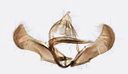
Ancylis unguicella is a small tortricid first described by Linnaeus in 1758. It is one of only two in its group with a confirmed Holarctic distribution, spanning both the Palearctic and Nearctic regions. The species has been subject to taxonomic revision due to difficulties in distinguishing it from closely related using genitalic characters alone.
Pronunciation
How to pronounce Ancylis unguicella: /ˈæŋ.kɪ.lɪs ʌŋ.ɡwiˈsɛl.ə/
These audio files are automatically generated. While they are not always 100% accurate, they are a good starting point.
Identification
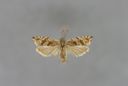
Wingspan 13-18 mm. Forewings whitish ground colour, sprinkled or suffused with light fuscous and striated with brown; strigulated with dark fuscous and whitish. Basal patch with obliquely rounded edge, less marked towards costa. Narrow central fascia with short projection. Subapical transverse streak triangularly dilated towards termen; fascia and streak ochreous-fuscous to dark fuscous. Hindwings grey. Distinguished from similar Ancylis by combination of wing pattern and confirmed through barcode analysis.
Images
Distribution
Holarctic: native to the Palearctic and Northern America. Confirmed present in Belgium.
Seasonality
fly between May and July.
Diet
Larvae feed on Calluna vulgaris (common heather) and Erica cinerea (bell heather).
Similar Taxa
- Ancylis uncellaAlso Holarctic in distribution; historically confused with A. unguicella due to similar genitalic , now distinguished by barcodes and morphological analysis.
- Ancylis geminanaSimilar appearance but not Holarctic; distribution restricted to single region unlike A. unguicella.
- Ancylis carbonanaSynonymized with A. uncella; previously treated as distinct but not separable from A. uncella based on current evidence.