
Neoleucinodes
Capps, 1948
Species Guides
2- Neoleucinodes prophetica(potato tree borer)
- Neoleucinodes torvis
Neoleucinodes is a of snout moths in the Spilomelinae, Crambidae. The genus was established by H.W. Capps in 1948 as a Neotropical split from the Old World genus Leucinodes. It contains at least nine described distributed across the Neotropics. The genus is best known for N. elegantalis, a major agricultural pest of Solanaceae crops including tomato, eggplant, and naranjilla.
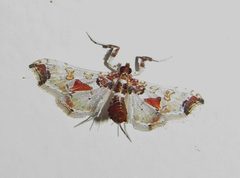
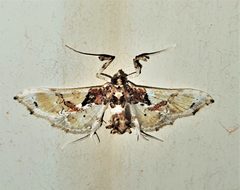
Pronunciation
How to pronounce Neoleucinodes: /ˈnɛoʊljuːˈsɪnoʊdiːz/
These audio files are automatically generated. While they are not always 100% accurate, they are a good starting point.
Identification
Distinguished from the Old World Leucinodes by genitalic characters established by Capps (1948). -level identification requires examination of male and female genitalia, particularly the structure of the ostium bursae, cornuti length, and seventh abdominal segment measurements. N. elegantalis shows -associated genitalic differentiation, with individuals from Solanum betaceum having larger ostium bursae in females and longer cornuti in males compared to those from S. quitoense.
Images
Habitat
Neotropical regions; agricultural and natural with Solanaceae plants. N. elegantalis occurs in tomato fields, naranjilla plantations in tropical old-growth forest areas, and other Solanaceae cropping systems.
Distribution
Neotropical distribution. N. elegantalis: widespread across South America (Argentina, Bolivia, Brazil, Colombia, Ecuador including Galápagos Islands, Guyana, Paraguay, Peru, Suriname, Uruguay, Venezuela), Central America ( Rica, Guatemala, Honduras, Panama), Caribbean (Cuba, Grenada, Jamaica, Trinidad and Tobago), and Mexico. Other : N. galapagensis to Galápagos Islands; remaining species distributed across Central and South America.
Host Associations
- Solanum lycopersicum - tomato; primary for N. elegantalis
- Solanum melongena - eggplant
- Solanum quitoense - naranjilla; highest diversity recorded on this
- Solanum betaceum - tree tomato; -associated genitalic differentiation documented
- Capsicum annuum - pepper
- Solanum gilo - higher larval growth rate than on tomato
Ecological Role
Agricultural pest ; N. elegantalis is a significant pest of Solanaceae fruits causing direct damage to marketable produce. Serves as for diverse including parasitoids (Trichogramma spp.), larval parasitoids (Copidosoma spp., Apanteles spp., Bracon spp., Chelonus spp., Lixophaga spp.), and pupal parasitoids (Conura spp., Pimpla sanguinipes, Brachymeria spp., Trichospilus diatraea).
Human Relevance
N. elegantalis causes substantial economic losses in tomato, eggplant, naranjilla, and pepper production across the Neotropics. Management relies on combining monitoring, (Trichogramma pretiosum, T. galloi, Bacillus thuringiensis), cultural practices (fruit bagging), and reduced use. The has evolved races with reproductive incompatibility, complicating management strategies.
Similar Taxa
- LeucinodesOld World sister from which Neoleucinodes was split; distinguished by genitalic and geographic distribution
- Crambidae (other Spilomelinae)Similar general ; requires genitalic examination for definitive identification
Sources and further reading
- BugGuide
- Wikipedia
- GBIF taxonomy match
- iNaturalist taxon
- NCBI Taxonomy
- Catalogue of Life
- Neoleucinodes elegantallis . [Distribution map].
- Parasitoids of Neoleucinodes elegantalis Gueneé (Lepidoptera: Crambidae) in Ecuador
- Management of the Neoleucinodes elegantalis (Lepidoptera: Crambidae) using different techniques
- Estudios biológicos de Copidosoma N. Sp. (Hymenoptera: Encyrtidae) parasitoide de Neoleucinodes Elegantalis (Lepidoptera: Crambidae) en tomate de árbol, en Cundinamarca
- A new species of Lixophaga Townsend (Diptera: Tachinidae) from Colombia, a parasitoid of Neoleucinodes elegantalis (Guenée) (Lepidoptera: Crambidae)
- The tomato fruit borer, Neoleucinodes elegantalis (Guenée) (Lepidoptera: Crambidae), an insect pest of neotropical Solanaceous fruits.
- Genitalic Differentiations in Neoleucinodes elegantalis (Gueneé) (Lepidoptera: Crambidae) Associated with Solanaceae Crops in Ecuador
- Eclosion time and larval behavior of the tomato fruit borer, Neoleucinodes elegantalis (Guenée) (Lepidoptera: Crambidae)
- Calling behaviour and evaluation of sex pheromone glands extract of Neoleucinodes elegantalis Guenée (Lepidoptera: Crambidae) in wind tunnel
- Biology of Neoleucinodes elegantalis (Guenée 1854) (Lepidoptera: Crambidae): pest of economic importance of naranjilla, an Amazonian fruit of Ecuador
- Reproductive incompatibility and fitness components in Neoleucinodes elegantalis races (Lepidoptera, Crambidae) from three Solanaceae hosts
- Effect off host plant species on immature development and adult size of <em>Neoleucinodes elegantalis</em> (Guenée 1854) (Lepidoptera: Crambidae)
- Geographical Distribution of Neoleucinodes Elegantalis (Lepidoptera: Crambidae) In Colombia
- Parasitoids Associated with the Fruit Borer of the Solanaceus Neoleucinodes Elegantalis (Lepidoptera: Crambidae) In Colombia
- Performance of Trichograma spp in small tomato borer (Neoleucinodes elegantalis Guenée): Pest management with egg parasitoid