
Conura
Spinola, 1837
Species Guides
11Conura is a large of chalcidid wasps comprising over 300 described , with approximately 295 species occurring in the New World. The genus is divided into three subgenera and 63 species groups based on morphological patterns. Species exhibit diverse strategies including primary of lepidopteran pupae and hyperparasitism through other .
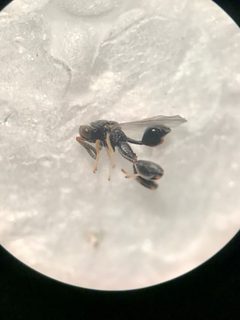
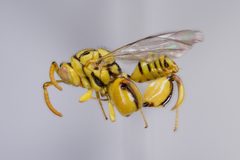
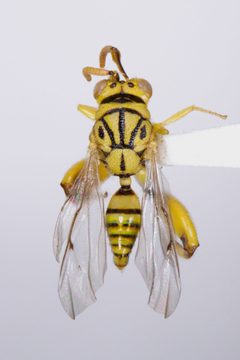
Pronunciation
How to pronounce Conura: //kəˈnʊrə//
These audio files are automatically generated. While they are not always 100% accurate, they are a good starting point.
Images
Habitat
Primarily associated with the Neotropical region; specific associations include palm trees (native and ) where occur.
Distribution
Mostly distributed in the New World, with approximately 279 in the Neotropical region. Documented from Argentina (Corrientes province), Brazil (Amazon rainforest, Ceará), Panama, California, Florida, and Venezuela.
Host Associations
- Opsiphanes invirae amplificatus - Primary of chrysalides; 85 emerged from 3 chrysalides indicating gregarious
- Cotesia congregata - hyperparasitoidHyperparasitoid of pupae; 16 individuals emerged from 296 pupal cocoons of this braconid
- Zatypota riverai - hyperparasitoidHyperparasitoid of spiders through this ichneumonid primary (Theridion spp.)
Life Cycle
Gregarious observed in some , with multiple emerging from single pupae or chrysalides. Development occurs within host pupal cocoons or chrysalides.
Behavior
Exhibits swarming at specific sites. Some show gregarious with multiple individuals developing per . Hyperparasitoid species demonstrate multi- interactions involving spiders and intermediate hosts.
Ecological Role
Functions as a natural enemy in multiple : as a primary of lepidopteran pests (particularly of palm-feeding ) and as a hyperparasitoid of other parasitoid . Potential candidate for programs.
Human Relevance
Some parasitize pests of agricultural and ornamental palms. Considered for inclusion in programs to reduce use.
Misconceptions
The name 'Conura' has been used historically in different taxonomic contexts; 'Tephritis conura' is a tephritid fruit fly (Diptera) and unrelated to the chalcidid Conura (Hymenoptera). These represent homonyms from different orders with no close relationship.
Sources and further reading
- BugGuide
- Wikipedia
- GBIF taxonomy match
- iNaturalist taxon
- NCBI Taxonomy
- Catalogue of Life
- Morphological adaptation in host races of Tephritis conura
- First record of Conura (Conura) maculata (Fabricius, 1787) (Hymenoptera, Chalcididae) parasitizing Opsiphanes invirae amplificatus Stichel, 1904 (Lepidoptera, Nymphalidae) in the province of Corrientes, Argentina
- Host Race Formation in Tephritis conura: Determinants from Three Trophic Levels
- Speciation via Differential Host–Plant Use in the Tephritid Fly Tephritis conura
- First record of Conura (Conura) maculata (Fabricius, 1787) (Hymenoptera, Chalcididae) parasitizing Opsiphanes invirae amplificatus Stichel, 1904 (Lepidoptera, Nymphalidae) in the province of Corrientes, Argentina
- Phylogeographic patterns of host‐race evolution in Tephritis conura (Diptera: Tephritidae)
- Hiperparasitismo de Conura sp. (Ceratomiscra) (Hymenoptera: Chalcididae) sobre pupas de Cotesia congregata (Hymenoptera: Braconidae) en larva de Hypercompe muzina (Lepidoptera: Erebidae)
- Review of the leucotela species-group of Conura (Hymenoptera: Chalcididae) from Amazon rainforest
- The role of geographic setting on the diversification process among Tephritis conura (Tephritidae) host races
- Spatial and Seasonal Patterns in the Egg Distribution of Tephritis conura (Diptera: Tephritidae)
- Conura baturitei sp. nov. (Hymenoptera: Chalcididae): a hyperparasitoid of spiders through Zatypota riverai (Hymenoptera: Ichneumonidae)
- Infestation of a novel host plant by Tephritis conura (Diptera: Tephritidae) in northern Britain: host-range expansion or host shift?
- Swarming Behavior of Two Parasitic Wasps, Leurus caeruliventris (Hymenoptera: Ichneumonidae) and Conura sp. (Hymenoptera: Chalcididae), at the Same Site
- Genetic structure of Cirsium palustre (Asteraceae) and its role in host diversification of Tephritis conura (Diptera: Tephritidae)
- Performance of Host-Races of the Fruit Fly,Tephritis conuraon a Derived Host Plant, the Cabbage ThistleCirsium oleraceum: Implications for the Original Host Shift