
Lixophaga
Townsend, 1908
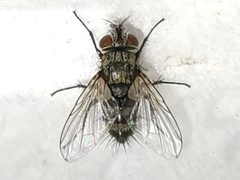
Lixophaga is a of tachinid flies in the tribe Blondeliini. in this genus are , primarily attacking lepidopteran including stem borers in the genus Diatraea and other larvae. The genus has been recorded from the Americas, Asia, and the Pacific, with some species studied for potential against agricultural pests. Lixophaga diatraeae has been particularly well-studied as a parasitoid of sugarcane borers.
Pronunciation
How to pronounce Lixophaga: /ˌlɪksoʊˈfɑɡə/
These audio files are automatically generated. While they are not always 100% accurate, they are a good starting point.
Images
Distribution
Recorded from the Americas (North, Central, and South America including the Caribbean), Asia (China, Korea, Japan), and the Pacific region (New Caledonia).
Host Associations
- Diatraea saccharalis - sugarcane borer; primary for L. diatraeae
- Diatraea spp. - stem borers in sugarcane and other grasses
- Galleria mellonella - laboratory substitute used for rearing L. diatraeae in laboratory studies
- Neoleucinodes elegantalis - tomato fruit borer; of L. puscolulo
- Diaphania nitidalis - ; of Lixophaga sp. in Brazil
- Ptecticus testaceus - soldier fly; of L. stratiophaga in Amazon rainforest
Behavior
Lixophaga diatraeae deposits (first-instar larvae) onto larvae. Multiple planidia may enter a single host, resulting in . Competition between developing larvae occurs within the host, with survival depending on host size, , and larval positioning on the host's longitudinal tracheal trunk. Larvae undergo two within the host before emerging to pupate.
Ecological Role
agent of lepidopteran agricultural pests, particularly stem borers in sugarcane and other crops.
Human Relevance
Lixophaga diatraeae has been investigated and mass-reared for of sugarcane borers in Jamaica and other regions. Malathion applications for other pests can kill flies, though recover due to the 's short residual action.
Sources and further reading
- BugGuide
- Wikipedia
- GBIF taxonomy match
- iNaturalist taxon
- NCBI Taxonomy
- Catalogue of Life
- Host Location Behavior by the Tachinid, Lixophaga diatraeae12
- Lixophaga Townsend (Diptera: Tachinidae: Blondeliini), a newly recorded parasitoid taxon in Korea
- Preliminary Report on a Study of the Biology of Lixophaga Diatraeae TNS1
- Variability in morphological and biological characteristics in two strains of the parasitoid Lixophaga diatraeae (Diptera: Tachinidae)
- A new species of Lixophaga Townsend (Diptera: Tachinidae) from Colombia, a parasitoid of Neoleucinodes elegantalis (Guenée) (Lepidoptera: Crambidae)
- Plant, Host, and Parasite Interactions in the Host Selection Sequence of the Tachinid Lixophaga diatraeae 13
- SOME EFFECTS OF SUPERPARASITISM BY LIXOPHAGA DIATRAEAE OF SUGARCANE BORER LARVAE IN THE LABORATORY
- Possible effects of the application of malathion on the small moth borer, Diatraea saccharalis (F.), and its parasite Lixophaga diatraeae (Tns.) in Jamaica
- OCORRÊNCIA DE LIXOPHAGA SP. (DIPTERA: TACHINIDAE) PARASITANDO LAGARTAS DE DIAPHANIA NITIDALIS (L.) (LEPIDOPTERA: CRAMBIDAE) EM CUCURBITA MOSCHATA NO BRASIL
- INFLUENCE DU SUPERPARASITISME SUR LA DURÉE DU DÉVELOPPEMENT LARVAIRE ET LE POIDS DU PARASITOÏDE LIXOPHAGA DIATRAEAEÉLEVÉ DANS UN HÔTE DE SUBSTITUTION GALLERIA MELLONELLA
- DEVELOPPEMENT EMBRYONNAIRE IN VITRO, EN MILIEU ARTIFICIEL DEFINI DE DEUX PARASITOIDES OVOLARVIPARES, PHRYXE CAUDATA ET LIXOPHAGA DIATRAEAE (DIPTERA, TACHINIDAE)
- First record of parasitism in soldier flies by tachinids:Lixophaga stratiophagaGudin, sp. nov. (Diptera: Tachinidae), reared fromPtecticus testaceus(Fabricius) (Diptera: Stratiomyidae) in Amazon rainforest and updated catalogue of dipteran hosts of Tachinidae