
Pierini
Genus Guides
9- Ascia(great southern white (for sole species))
- Ganyra
- Glutophrissa
- Itaballia
- Melete
- Neophasia
- Pieriballia(painted white)
- Pieris(Garden Whites)
- Pontia(whites)
Pierini is a tribe of butterflies within the Pieridae, one of the largest and most widespread groups of white and yellow butterflies. The tribe includes numerous distributed across most continents, with commonly known as whites, sulphurs, and orange-tips. Members are characterized by predominantly white, yellow, or orange wing coloration with relatively simple wing patterns. Pierini butterflies are and frequently observed in gardens, meadows, and open .
Pronunciation
How to pronounce Pierini: /pɪˈɛrɪnaɪ/
These audio files are automatically generated. While they are not always 100% accurate, they are a good starting point.
Identification
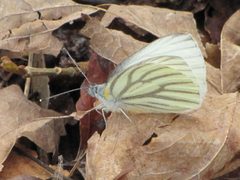
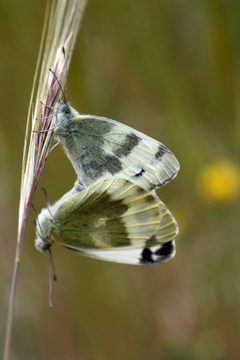
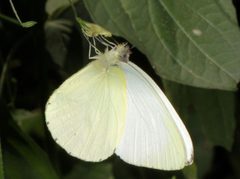
Pierini butterflies generally exhibit white, yellow, or orange ground color on wings, often with black marginal markings or spots. Many display in color intensity or pattern. The tribe includes groups with distinctive features: orange-tip butterflies (Anthocharis, Euchloe) have orange or yellow patches on forewings; cabbage whites (Pieris) are predominantly white with black forewing tips; sulphurs (Colias) are yellow to orange with black wing borders. are clubbed with rounded tips. Wing shape varies from rounded to somewhat angular, with forewings typically larger than hindwings.
Images
Habitat
Members of Pierini occupy diverse open including meadows, grasslands, gardens, agricultural fields, forest edges, and alpine zones. Many thrive in disturbed or human-modified landscapes. Specific habitat associations vary by : some Colias species prefer moist meadows and tundra, while Pieris species are strongly associated with cultivated and areas.
Distribution
distribution with greatest diversity in the Holarctic region. Present on all continents except Antarctica. Well-represented in North America, Europe, Asia, and Africa; less diverse in Australia and South America. Several have been introduced to regions outside their native ranges.
Seasonality
Activity periods vary by and latitude. Temperate zone species typically fly from spring through autumn, with some as pupae and emerging in early spring. Tropical and subtropical species may be active year-round. Multivoltine species produce two or more per year in favorable climates.
Life Cycle
Holometabolous development with four stages: , larva, pupa, and . Eggs are usually laid singly or in small clusters on plant leaves or stems. Larvae are cylindrical, often green or yellow-green with fine hairs, and feed externally on foliage. occurs on host plants or nearby vegetation, with the pupa (chrysalis) attached by and silk girdle. Many temperate overwinter as pupae. Adults emerge and seek nectar sources and mates.
Behavior
are strong, direct fliers with a characteristic fluttering pattern. Males frequently engage in and patrolling to locate females. Courtship involves aerial pursuit and ground-based interactions. Some exhibit mud-puddling behavior to obtain minerals. Adults are primarily with peak activity in mid-morning to afternoon.
Ecological Role
Larvae function as herbivores, consuming leaves of plants primarily in the Brassicaceae and related families. serve as while visiting flowers for nectar. Larvae and provide food for , predatory insects, and birds. Some , particularly Pieris rapae, are significant agricultural pests of cruciferous crops.
Human Relevance
Several Pierini are economically important as pests of cabbage, broccoli, and other Brassicaceae crops. Pieris rapae (cabbage white) and Pieris brassicae (large white) are major agricultural pests worldwide. Some species are used as model organisms in ecological and evolutionary research. are familiar garden butterflies and contribute to citizen science monitoring programs. A few species have been introduced outside native ranges, sometimes disrupting local .
Similar Taxa
- ColiadiniAnother tribe within Pieridae; distinguished by generally brighter yellow or orange coloration, more angular wing margins, and often by presence of in ultraviolet wing patterns not typical of Pierini.
- Dismorphiinae of Pieridae containing mimicry ; distinguished by more complex wing patterns including transparent or mimetic forms, and by different larval plant associations.
More Details
Taxonomic composition
Pierini contains approximately 40-50 depending on classification system used. Major genera include Pieris, Colias, Anthocharis, Euchloe, Pontia, and Belenois. The tribe has undergone significant taxonomic revision, with some former subgenera elevated to generic status.
Evolutionary history
Molecular phylogenetic studies indicate Pierini originated in the Eocene, with diversification associated with expansion of temperate and Brassicaceae plants. The tribe shows extensive in wing coloration and pattern across different continental radiations.