
Neophasia
Behr, 1869
Species Guides
2- Neophasia menapia(pine white)
- Neophasia terlooii(Chiricahua White)
Neophasia is a of pierid butterflies to western North America, comprising two recognized : N. menapia (pine white) and N. terlooii (Chiricahua white or Mexican pine white). Both species exhibit unusual traits for pierids, including conifer-feeding larvae and, in N. terlooii, striking with orange-and-black females that have been proposed as mimics of . The genus is notable for exposed placement and desiccation- eggs, adaptations to arid environments.

Pronunciation
How to pronounce Neophasia: /ˌniː.əˈfeɪ.ziə/
These audio files are automatically generated. While they are not always 100% accurate, they are a good starting point.
Identification
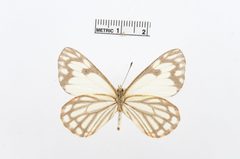
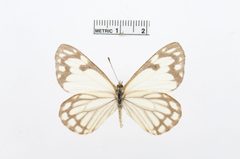
Neophasia are medium-sized white butterflies with black wing markings. N. menapia is entirely white with black and wing margins in both sexes. N. terlooii shows pronounced : males are white with black markings similar to N. menapia, while females are orange with black wing veins, superficially resembling . Both species have relatively weak and are associated with coniferous .
Images
Habitat
Coniferous forests and woodlands. N. menapia occurs in pine and fir forests from British Columbia to the Rocky Mountains and southwestern United States. N. terlooii is restricted to 'sky island' mountain ranges of southeastern Arizona and adjacent Mexico, specifically associated with ponderosa pine and Engelmann spruce.
Distribution
Western North America. N. menapia ranges from southwestern British Columbia through California, Nevada, and the Rocky Mountains to northern Arizona and extreme western Texas (Guadalupe Mountains). N. terlooii occurs in the isolated mountain ranges of southeastern Arizona and southward into central Mexico.
Seasonality
N. menapia produces one in summer. N. terlooii has two : a small brood in early summer and a larger brood in autumn (September-November).
Diet
Larvae feed on conifers. N. menapia larvae feed on various pine (Pinus spp.) and related conifers. N. terlooii larvae are restricted to ponderosa pine and Engelmann spruce. diet not documented in sources.
Life Cycle
are laid exposed on live pine needles rather than concealed, an unusual trait for Pieridae. Eggs enter (developmental arrest) for and exhibit exceptional desiccation resistance, maintaining mass within 2% over 10 days at relative humidity below 10% and 5°C. Larvae feed on conifer needles. occurs in spring, with emerging in summer (N. menapia) or in two pulses (N. terlooii).
Behavior
of both are known for weak, clumsy . Males of N. terlooii have been observed actively crawling through leaf litter to reach water in dry streambeds, a that may put them at risk of drowning. Females of N. terlooii are rarely encountered, with males typically outnumbering females. Adults may be found nectaring at flowers or on moist ground.
Ecological Role
Larvae function as conifer herbivores. of N. terlooii have been evaluated as potential Batesian mimics of the unpalatable monarch butterfly (Danaus plexippus), though experimental evidence indicates they are readily consumed by avian and at most weakly unpalatable. The mimicry system, if valid, would represent a quasi-Batesian intermediate rather than classical Müllerian mimicry.
Human Relevance
N. terlooii is sought by enthusiasts and photographers due to its restricted range, seasonal abundance, and the striking appearance of orange females. The has been studied for its unusual physiology and proposed mimicry relationships.
Similar Taxa
- Pieris spp.Similar white coloration with black markings, but Pieris lack conifer association, show no in wing color, and conceal on plants rather than laying them exposed.
- Danaus plexippusFemale N. terlooii superficially resembles monarchs in orange-and-black coloration, but monarchs are larger, have distinctive wing venation patterns, and are strongly unpalatable to —traits used to distinguish the proposed mimicry system.
Sources and further reading
- BugGuide
- Wikipedia
- GBIF taxonomy match
- iNaturalist taxon
- NCBI Taxonomy
- Catalogue of Life
- Rising from the Ashes--Some Day | Bug Squad
- Bug Eric: December 2010
- Bug Eric: Chiricahua Whites
- Exposed Neophasia terlooii (Lepidoptera: Pieridae) Eggs are Resistant to Desiccation During Quiescence
- Evaluating an Alleged Mimic of the Monarch Butterfly: Neophasia (Lepidoptera: Pieridae) Butterflies are Palatable to Avian Predators