
Neophasia terlooii
Behr, 1869
Chiricahua White, Chiricahua Pine White, Mexican Pine White
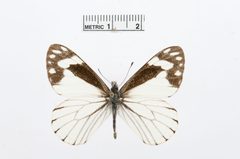
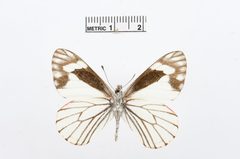
Neophasia terlooii is a in the Pieridae to the sky islands of southeastern Arizona and Mexico. Males are white with black markings while females are orange with black wing , exhibiting pronounced . The has two annually, with a small summer and larger fall . Larvae feed on conifers, specifically Ponderosa Pine and Engelmann Spruce, and are laid exposed on pine needles where they overwinter in a desiccation- quiescent state.

Pronunciation
How to pronounce Neophasia terlooii: //niː.oʊˈfeɪ.ziə ˈtɛr.luː.i.aɪ//
These audio files are automatically generated. While they are not always 100% accurate, they are a good starting point.
Identification
Males resemble the related Pine White (Neophasia menapia) but are geographically separated; N. terlooii occurs in southeastern Arizona sky islands while N. menapia ranges from British Columbia to northern Arizona. Females distinguished from all similar by orange ground color with black wing , resembling monarch butterfly coloration. Distinguished from monarch (Danaus plexippus) by smaller size, different wing shape, and black wing tip pattern.
Images
Appearance
Medium-sized with wingspan 45–58 mm. Males white with black and costal margin on forewing upperside; wing tip black with white spots. Females orange with black wing . Both sexes share black wing tip pattern with white spots. pronounced with radically different ground coloration between sexes.
Habitat
Forests of needled conifers in the Pinaceae, specifically Ponderosa Pine and Engelmann Spruce stands. Occupies mountainous sky island in southeastern Arizona and adjacent Mexico. are laid on live pine needles where they overwinter exposed to ambient conditions.
Distribution
Southeastern Arizona (high mountains including Huachuca and Santa Rita Mountains, Madera Canyon), New Mexico, and south into central Mexico. Restricted to isolated sky island mountain ranges in the U.S. portion of range.
Seasonality
with two annually: early summer (small ) and autumn brood (larger population). active in late spring through fall depending on elevation and generation.
Diet
Larvae feed on conifers, specifically Ponderosa Pine (Pinus ponderosa) and Engelmann Spruce (Picea engelmannii). diet not documented.
Host Associations
- Pinus ponderosa - larval plantPonderosa Pine
- Picea engelmannii - larval plantEngelmann Spruce
Life Cycle
laid exposed on live pine needles without protective covering; enter during winter. Eggs exhibit significant desiccation resistance, maintaining mass within 2% over 10 days at relative humidity below 10% at 5°C. Two annually with partial voltinism; summer smaller than fall brood.
Behavior
Males have been observed actively crawling into leaf litter to reach water sources, suggesting ground-seeking for hydration. described as weak and clumsy; individuals may become entangled in vegetation. Males tend to outnumber females in field observations. overwinter in quiescent state on exposed pine needles.
Ecological Role
Larval herbivore on coniferous trees. are palatable prey for avian despite resemblance to unpalatable monarch butterfly. Proposed as Batesian mimic of Danaus plexippus based on female orange-and-black coloration, though experimental evidence indicates weak to no unpalatability.
Human Relevance
Subject of conservation interest due to restricted sky island distribution and potential vulnerability to loss. NatureServe conservation status ranked G4 (apparently secure globally but with cause for long-term concern). Observed by naturalists and enthusiasts in Madera Canyon and other southeastern Arizona mountain localities.
Similar Taxa
- Neophasia menapiaMales resemble N. terlooii males in white coloration with black markings, but geographically separated; N. menapia ranges from British Columbia to California and northern Arizona, not reaching southeastern Arizona sky islands
- Danaus plexippusFemales resemble monarch in orange and black coloration, but N. terlooii is smaller with different wing shape and black wing tips; experimental evidence shows N. terlooii is palatable while monarch is unpalatable to avian
More Details
Egg Desiccation Resistance
possess remarkable resistance to water loss during winter , an to exposed oviposition on pine needles without protective covering. This allows survival in arid mountain environments where daytime relative humidity among pine needles can drop to 14.5%.
Nomenclatural Variants
name has appeared in literature as terlooti and terlootii, which are considered misspellings of the valid terlooii (Behr, 1869).
Sources and further reading
- BugGuide
- Wikipedia
- GBIF taxonomy match
- iNaturalist taxon
- NCBI Taxonomy
- Catalogue of Life
- Rising from the Ashes--Some Day | Bug Squad
- Bug Eric: December 2010
- Bug Eric: Chiricahua Whites
- Exposed Neophasia terlooii (Lepidoptera: Pieridae) Eggs are Resistant to Desiccation During Quiescence
- Evaluating an Alleged Mimic of the Monarch Butterfly: Neophasia (Lepidoptera: Pieridae) Butterflies are Palatable to Avian Predators