
Ascia
Scopoli, 1777
great southern white (for sole species)
Species Guides
1- Ascia monuste(Great Southern White)
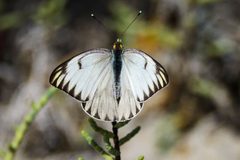
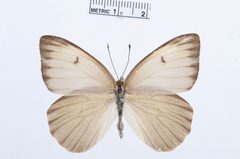
Ascia is a of butterflies in the Pieridae, containing only the Ascia monuste (great southern white). The genus is distributed from the Atlantic and Gulf coasts of the United States south through tropical America to Argentina. The sole species exhibits and seasonal patterns along the southeastern United States coast.
Pronunciation
How to pronounce Ascia: /ˈæsiə/
These audio files are automatically generated. While they are not always 100% accurate, they are a good starting point.
Identification
The Ascia is distinguished from other Pieridae genera by being , containing only A. monuste. The sole can be identified by its medium size (wingspan 63–86 mm) and the presence of in females, which occur in both light and dark color morphs.
Images
Habitat
Coastal and subtropical environments including Atlantic and Gulf coasts of the United States, peninsular Florida, southern Texas, and tropical America south to Argentina. Migratory utilize coastal corridors.
Distribution
Atlantic and Gulf coasts of the United States; south through tropical America to Argentina. Migratory along the southeastern United States coast with strays recorded to Maryland, Kansas, and Colorado.
Seasonality
are on wing year-round in southern Texas, peninsular Florida, and along the Gulf Coast. Migratory movements occur along the southeastern United States coast.
Host Associations
- Brassicaceae - larval plantsIncludes Cakile maritima, cultivated cabbage, radish, and Lepidium
- Capparidaceae - larval plantsIncludes nasturtium
Life Cycle
development: 4–5 days in field conditions, 3.4 days in laboratory conditions. Larval development: 11.0–17.4 days for first five instars (varies by ). : 5.9–10 days. lifespan: 4.3–5 days for males, 8–10 days for females.
Behavior
Migratory that moves in one direction within its lifespan without returning. Breeds in Florida with coastal up to 160 km to more suitable breeding areas. feed on nectar from saltwort, , and verbena.
Ecological Role
function as while feeding on nectar. Larvae are herbivorous feeders on Brassicaceae and Capparidaceae.
Human Relevance
Larvae are sporadic pests of crucifer vegetables in southern Texas, with potential for up to 100% crop loss. Known in Brazil as "cabbage caterpillars" or "kale caterpillars." Subject to control and development of strategies.
Similar Taxa
- Other Pieridae generaAscia is , distinguishing it from polytypic in the . A. monuste's in females (light and dark morphs) and specific wing pattern separate it from congeneric in other genera.