
Pieriballia
Klots, 1933
painted white, viardi white
Species Guides
1- Pieriballia viardi(Painted White)
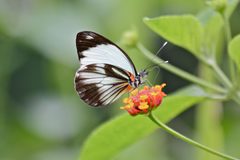
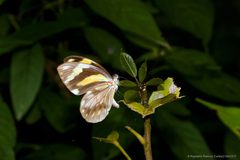
Pieriballia is a of pierid butterflies erected by Alexander Barrett Klots in 1933. Its sole , Pieriballia viardi, occurs from Mexico southward through Central and South America to Bolivia and Paraguay. The genus is characterized by moderate size, with wingspans around 57 mm, and association with rainforest and cloud forest . Larval development has been documented on Capparis pseudocacao.
Pronunciation
How to pronounce Pieriballia: //ˌpaɪəˈrɪbəljə//
These audio files are automatically generated. While they are not always 100% accurate, they are a good starting point.
Identification
Distinguished from other Neotropical pierid by combination of: status (only P. viardi included), geographic distribution from Mexico to southern South America, and association with rainforest and transitional cloud forest . The eleven recognized show regional variation across this broad range. Separation from similar white pierids such as Ascia and Leptophobia requires examination of genitalic characters and wing pattern details not fully specified in general sources.
Images
Appearance
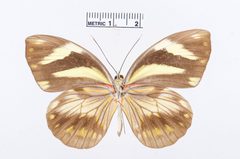
Medium-sized pierid with wingspan approximately 57 mm. As a member of Pieridae, possess white or pale wings with possible dark markings typical of the , though specific color pattern details for the are not explicitly documented in available sources.
Habitat
Rainforests and transitional cloud forests. The shows strong association with humid tropical forest environments rather than open or disturbed .
Distribution
Mexico to Bolivia and Paraguay. Stray individuals have been recorded in southern Texas, United States.
Diet
Larvae feed on Capparis pseudocacao (Capparaceae). feeding habits are not documented.
Host Associations
- Capparis pseudocacao - larval plantConfirmed larval food plant
Similar Taxa
- AsciaBoth are Neotropical pierid with white ; Ascia is more widespread and associated with disturbed rather than primary forest
- LeptophobiaOverlapping geographic range and similar white wing coloration; Leptophobia often show more pronounced dark wing markings
- ItaballiaNeotropical pierid with similar preferences; requires careful examination of wing venation and genitalia for separation
More Details
Taxonomic history
The was erected by Alexander Barrett Klots in 1933, separating P. viardi from previously broader classifications. The was originally described as Papilio viardi by Jean Baptiste Boisduval in 1836.
Subspecies diversity
Eleven are recognized, reflecting substantial geographic variation across the broad Neotropical range: P. v. viardi (Mexico, Honduras), P. v. locusta (Colombia), P. v. mandela (Venezuela), P. v. noctipennis ( Rica, Panama), P. v. apicalis (Ecuador), P. v. tithoreides (Ecuador), P. v. rubecula (Peru, Bolivia), P. v. molione (Paraguay, Argentina), P. v. decorata (Peru), and P. v. interposita (Peru).