
Chlosyne gabbii
(Behr, 1863)
Gabb's Checkerspot
Species Guides
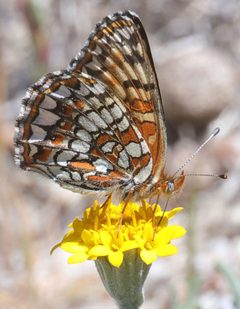
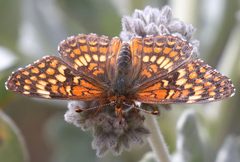
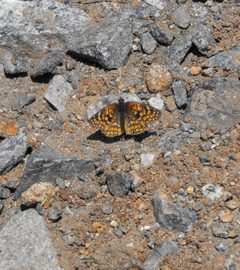
2Chlosyne gabbii is a rare checkerspot to California. have a wingspan of 32–45 mm with bright orange-brown and black checkered uppersides; females are lighter than males. The is threatened throughout its range and is known from only a small geographic area in the western United States.
Pronunciation
How to pronounce Chlosyne gabbii: //kləˈsaɪni ˈɡæbi.aɪ//
These audio files are automatically generated. While they are not always 100% accurate, they are a good starting point.
Identification
Distinguished from similar checkerspots by the combination of: pearly-white spots on the underside of the hindwing; bright orange-brown (not deep orange or red-orange) ground color on upperside; and smaller overall size compared to related like Chlosyne lacinia. Females are noticeably paler than males.
Images
Habitat
Coastal and inland areas of California where larval plants grow. Specific microhabitat requirements are poorly documented due to the ' rarity.
Distribution
to California, western United States. Historical records indicate a restricted range within the state; current distribution is fragmented and declining.
Seasonality
active from May to July.
Diet
Larvae feed on Corethrogyne filaginifolia, Heterotheca grandiflora, and Haplopappus squarrosus (all Asteraceae). diet not documented.
Life Cycle
Complete with , larva, pupa, and stages. Specific details of pupal stage and strategy not documented.
Ecological Role
as ; herbivore as larva. Specific functions not studied due to rarity.
Human Relevance
Subject of conservation concern due to threatened status throughout its range. Rarity makes it a target for enthusiasts and conservation biologists.
Similar Taxa
- Chlosyne laciniaLarger size, more extensive black markings, and different geographic range (widespread in southwestern U.S. and Mexico)
- Chlosyne pallaSimilar checkered pattern but different plant associations and more northerly distribution