
Melitaeini
checkerspots, crescents, crescentspots, fritillaries
Genus Guides
6- Anthanassa(crescents)
- Chlosyne(Patches and Allies)
- Euphydryas(checkerspot butterflies)
- Microtia(elf)
- Phyciodes(crescents)
- Poladryas
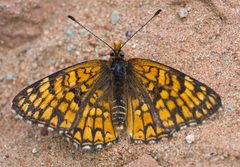
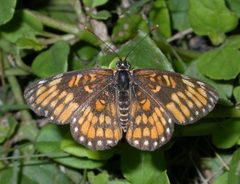
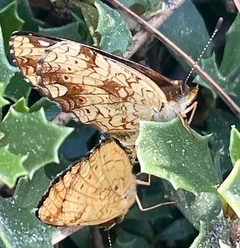
Melitaeini is a tribe of brush-footed butterflies (Nymphalidae), commonly known as checkerspots, crescents, or crescentspots. The tribe comprises 20–25 divided among five subtribes. Members are distributed across diverse including steppe and taiga forest regions. Larvae exhibit gregarious and feed on specific plants, with documented associations including Veronica incana, Scabiosa comosa, and Stemmacantha uniflora. The tribe serves as host for specialized , particularly in the genus Cotesia.
Pronunciation
How to pronounce Melitaeini: //ˌmɛlɪˈtaɪəˌnaɪ//
These audio files are automatically generated. While they are not always 100% accurate, they are a good starting point.
Identification
Distinguished from other Nymphalinae tribes by wing pattern characteristics that yield the checkerspots and crescents; however, specific diagnostic features for the tribe as a whole are not well-documented in available sources. The name "fritillaries" is highly ambiguous, also applied to some Heliconiinae, and should not be used for identification.
Images
Habitat
Steppe and taiga forest regions, based on observations of post- larvae in the Russian Republic of Buryatia. Also occurs in north-eastern Spain.
Distribution
Russian Republic of Buryatia; north-eastern Spain. Wider distribution implied by large observation count (561,248 records on iNaturalist) but specific geographic range not detailed in available sources.
Diet
Herbivorous: larvae feed on specific plants including Veronica incana (Plantaginaceae), Scabiosa comosa (Dipsacaceae), and Stemmacantha uniflora (Asteraceae). Multiple may share the same host plant.
Host Associations
- Veronica incana - larval plantPlantaginaceae; used by multiple
- Scabiosa comosa - larval plantDipsacaceae; used by Euphydryas aurinia
- Stemmacantha uniflora - larval plantAsteraceae; used by Melitaea phoebe
- Cotesia - Braconidae: Microgastrinae; specialized associated with Melitaeini
Life Cycle
Includes ; post-diapause larvae have been observed.
Behavior
Larval gregarious documented in multiple .
Ecological Role
for , including five of hymenopteran parasitoids and three species of dipteran parasitoids reared from larvae in Buryatia . Specialized host for Cotesia wasps (Braconidae) in Spain.
Similar Taxa
- HeliconiinaeShares ambiguous "fritillaries"; Heliconiinae fritillaries are distinct from Melitaeini checkerspots/crescents
- other Nymphalinae tribesMelitaeini distinguished by wing patterns and larval associations, though specific diagnostic features require further study
Misconceptions
The "fritillaries" is highly ambiguous and applied to both Melitaeini and some Heliconiinae; this creates potential confusion in identification and communication.
Sources and further reading
- BugGuide
- Wikipedia
- iNaturalist taxon
- NCBI Taxonomy
- Catalogue of Life
- Molecular phylogeny of Cotesia Cameron, 1891 (Insecta: Hymenoptera: Braconidae: Microgastrinae) parasitoids associated with Melitaeini butterflies (Insecta: Lepidoptera: Nymphalidae: Melitaeini)
- Natural history of some Siberian melitaeine butterfly species (Nymphalidae: Melitaeini) and their parasitoids
- Host specialization by Cotesia wasps (Hymenoptera: Braconidae) parasitizing species-rich Melitaeini (Lepidoptera: Nymphalidae) communities in north-eastern Spain
- The parasitoid complex attacking coexisting Spanish populations ofEuphydryas auriniaandEuphydryas desfontainii(Lepidoptera: Nymphalidae, Melitaeini)