
Anthanassa
Scudder, 1875
crescents, crescent butterflies
Species Guides
4- Anthanassa argentea(Chestnut Crescent)
- Anthanassa frisia(Cuban Crescent)
- Anthanassa texana(Texan crescentspot)
- Anthanassa tulcis(Pale-banded Crescent)
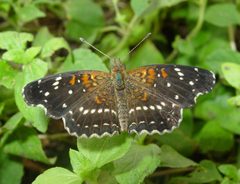
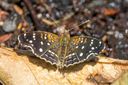
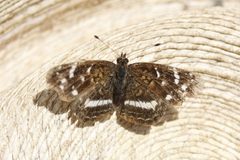
Anthanassa is a of brush-footed butterflies in the Nymphalidae, found from the United States through Central America to South America. The genus comprises approximately 17 described , many bearing with "crescent" (e.g., Texan crescent, orange-patched crescent, chestnut crescent). Taxonomic placement remains debated; one authority treats Anthanassa as a subgenus of Phyciodes. typically display orange and black patterned wings with crescent-shaped markings.
Pronunciation
How to pronounce Anthanassa: /ænˈθænəsə/
These audio files are automatically generated. While they are not always 100% accurate, they are a good starting point.
Identification
Anthanassa are distinguished from similar crescent (Phyciodes) primarily by genitalia and subtle wing pattern differences; reliable field identification to species level often requires examination of specimens. Most species exhibit orange and black wing patterns with marginal crescent spots. The is characterized by reduced forelegs typical of Nymphalidae.
Images
Distribution
United States to South America; recorded from Rica and throughout Central America. Specific distribution varies by : Anthanassa texana occurs in the southwestern United States, while other species range more broadly through tropical regions.
Diet
Larvae feed on plants in the Acanthaceae; feed on nectar.
Host Associations
- Acanthaceae - larval plantconfirmed from Rican study
Life Cycle
Complete with , larva, pupa, and stages. Larvae are known to feed on Acanthaceae plants. Specific developmental timing varies by and region.
Behavior
Females exhibit oviposition on Acanthaceae plants. are and visit flowers for nectar.
Ecological Role
Pollination of flowering plants through nectar feeding; herbivory as larvae on Acanthaceae vegetation.
Similar Taxa
Sources and further reading
- BugGuide
- Wikipedia
- GBIF taxonomy match
- iNaturalist taxon
- NCBI Taxonomy
- Catalogue of Life
- Ebony Grasshopper
- Stylish Lepidoptera: Ermine Moth, Atteva aurea; Yellow-Collared Scape Moth, Cisseps fulvicollis; Pearl Crescent, Phyciodes tharos; Variegated Fritillary, Euptoieta claudia — Bug of the Week
- Bug Eric: Butterfly Love
- Hungry, Hungry Hawaiian Caterpillar: Program Aims to Restore the Endemic Kamehameha Butterfly
- Ellipsoptera lepida – ghost tiger beetle | Beetles In The Bush
- Bug Eric: March 2011
- Oviposition Behavior, Host Plant Use, and Diet Breadth of Anthanassa Butterflies (Lepidoptera: Nymphalidae) Using Plants in the Acanthaceae in a Costa Rican Community