
Apamea devastator
Brace, 1819
glassy cutworm moth, glassy cutworm
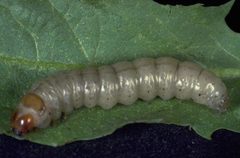
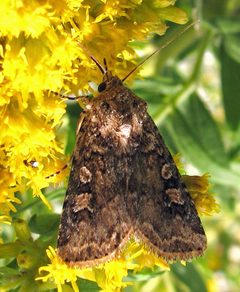
Apamea devastator, commonly known as the glassy , is a noctuid moth of northeastern North America. The has a wingspan of 35–40 mm and flies from May to September. The larva is a subterranean cutworm that feeds on grasses, attacking roots and basal stems. The is economically significant as a pest of turfgrass and agricultural grasses.

Pronunciation
How to pronounce Apamea devastator: /əˈpeɪ.mi.ə ˌdɛ.vəˈsteɪ.tɔr/
These audio files are automatically generated. While they are not always 100% accurate, they are a good starting point.
Identification
Images
Habitat
Grassland including lawns, pastures, meadows, and agricultural fields where grasses are abundant. The subterranean larval stage requires suitable soil conditions for burrowing.
Distribution
Northeastern North America, including Nova Scotia, New Brunswick, Quebec, Ontario, Manitoba, Saskatchewan, Alberta, and the northeastern United States (New York, Ohio, Massachusetts, Vermont).
Seasonality
fly from May to September, with timing varying by location. The extended period suggests multiple or prolonged .
Diet
Larva feeds on various grasses (Poaceae), attacking roots and basal stems from a subterranean position. Specific grass are not documented in available sources.
Behavior
Larvae are subterranean, feeding below the soil surface on grass roots and basal stems. are fliers.
Human Relevance
Larva is a pest of turfgrass and agricultural grasses, causing damage by cutting plants at or below ground level. The '' refers to this feeding damage pattern.
Similar Taxa
- Melanoplus devastatorSimilar but belongs to order Orthoptera (), not Lepidoptera. M. devastator is a devastating grasshopper of western North America, while A. devastator is a noctuid of northeastern North America with entirely different .