
Catocala frederici
Grote, 1872
Catocala frederici is a of underwing in the Erebidae, first described by Augustus Radcliffe Grote in 1872. It belongs to the Catocala, a diverse group of moths known for their cryptic forewings that conceal brightly patterned hindwings. The species occurs in the southwestern United States and is active during the summer months.
Pronunciation
How to pronounce Catocala frederici: /ˌkætəˈkeɪlə frɪˈdɛrɪkaɪ/
These audio files are automatically generated. While they are not always 100% accurate, they are a good starting point.
Identification
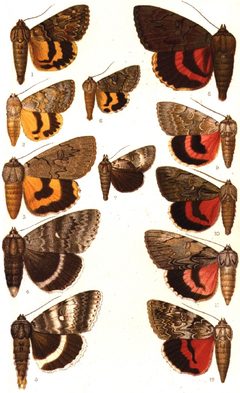
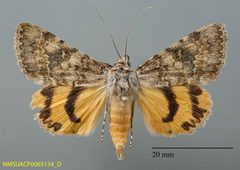
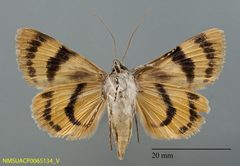
Distinguished from other Catocala by geographic range (southwestern U.S.) and specific wing pattern details. Identification to species level typically requires examination of hindwing coloration and pattern, as well as genitalia dissection for definitive determination. Similar to other underwing moths in general and resting posture with forewings held together over the back.
Images
Habitat
Specific preferences not documented. Based on characteristics and regional occurrence, likely associated with wooded or forested areas where plants for larvae occur. The related observation context from New Mexico describes dry, mixed conifer forest with oaks at 7,000 feet elevation as suitable habitat for underwing moths generally.
Distribution
United States: Texas, Oklahoma, New Mexico, and Arizona.
Seasonality
active from June to September, with timing varying by location. Probably one per year.
Behavior
are and attracted to light, though underwing moths typically remain on the periphery of lighted areas rather than landing directly on sheets. They have been observed flushed from daytime resting sites on tree trunks.
Ecological Role
likely serve as and as prey for including bats, birds, and spiders. Larval ecological role unknown due to lack of documented plant associations.
Human Relevance
Subject of citizen science observation during National Week and similar moth-focused events. Of interest to lepidopterists and moth enthusiasts for its contribution to regional biodiversity documentation.
Similar Taxa
- Catocala epioneAnother underwing with similar size range and general ; distinguished by specific hindwing pattern and different geographic distribution (eastern and central North America, with some overlap in range).
- Catocala amestrisSimilar underwing with cryptic forewings and patterned hindwings; distinguished by hindwing coloration (orange and black bands) and more northerly and westerly distribution.
- Catocala aholibahLarger underwing with similar resting posture and general appearance; distinguished by larger size and specific hindwing pattern with orange and black coloration.
More Details
Taxonomic History
Originally described by Grote in 1872. The Catocala was formerly placed in Noctuidae but is now classified in Erebidae based on molecular phylogenetic studies.
Etymology
Specific epithet 'frederici' likely honors an individual, though the exact namesake is not documented in available sources.
Observation Notes
Based on iNaturalist data, the has relatively few documented observations (54 records), suggesting it may be genuinely uncommon, underreported, or difficult to identify from photographs alone.
Sources and further reading
- BugGuide
- Wikipedia
- GBIF taxonomy match
- iNaturalist taxon
- NCBI Taxonomy
- Catalogue of Life
- A Gathering of Lepidopterists: Who's Who of the Butterfly, Moth Experts | Bug Squad
- Got Moths? Celebrate National Moth Week and Global Citizen Science
- Bug Eric: National Moth Week Recap, 2015
- Bug Eric: National Moth Week Recap for Colorado Springs
- Bug Eric: National Moth Week 2024 Recap from Kansas City
- Bug Eric: New Mexico Night Bugs