
Catocala similis
Edwards, W.H., 1864
Similar Underwing
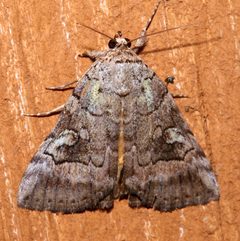
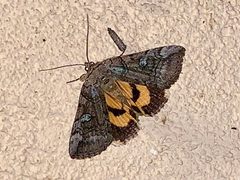
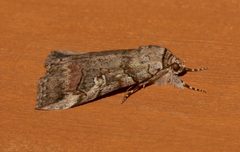
Catocala similis, commonly known as the similar underwing, is a in the Erebidae first described by William Henry Edwards in 1864. The species is characterized by its cryptic forewings that conceal brightly patterned hindwings, a trait common to the Catocala. are active during late spring and early summer across eastern North America, with larvae feeding on specific hardwood trees.
Pronunciation
How to pronounce Catocala similis: /ˌkætoʊˈkɑːlə ˈsɪmɪlɪs/
These audio files are automatically generated. While they are not always 100% accurate, they are a good starting point.
Identification
As an underwing , Catocala similis possesses dull-colored forewings that serve as camouflage when at rest, hiding the more vivid hindwing patterns beneath. The can be distinguished from other Catocala species by specific wing pattern characteristics, though precise diagnostic features require expert examination. The wingspan ranges from 35–45 mm. The specific epithet "similis" suggests resemblance to other species, indicating potential identification challenges with closely related underwings.
Images
Habitat
Associated with supporting its larval plants, including areas with hickory and oak . The species occurs in eastern deciduous forest and adjacent environments where Carya illinoinensis (pecan) and Quercus stellata (post oak) grow.
Distribution
Eastern North America, ranging from Ontario and Quebec south through Maine and Connecticut to Florida, westward to Texas and Oklahoma, and north to Minnesota.
Seasonality
are on wing from May to July, with timing varying by location. The appears to have one per year.
Diet
Larvae feed on Carya illinoinensis (pecan) and Quercus stellata (post oak). feeding habits are not documented in available sources.
Host Associations
- Carya illinoinensis - larval plantpecan
- Quercus stellata - larval plantpost oak
Life Cycle
The likely undergoes complete with , larval, pupal, and stages typical of Lepidoptera. Available information indicates one per year, though detailed documentation is limited.
Ecological Role
Larvae function as herbivores on hardwood trees. may contribute to pollination, though specific ecological roles are not well documented. As with other , they likely serve as prey for various including birds, bats, and insects.
Similar Taxa
- Other Catocala speciesThe "similar underwing" and specific epithet "similis" indicate close resemblance to other underwing moths in the , requiring careful examination of wing patterns and other morphological features for accurate identification.
More Details
Taxonomic history
First described by William Henry Edwards in 1864, a prominent American entomologist known for his work on butterflies and moths of North America.
Genus characteristics
The name Catocala is derived from Greek meaning "beautiful below," referring to the striking hindwing patterns concealed by cryptic forewings at rest.
Sources and further reading
- BugGuide
- Wikipedia
- GBIF taxonomy match
- iNaturalist taxon
- NCBI Taxonomy
- Catalogue of Life
- A Gathering of Lepidopterists: Who's Who of the Butterfly, Moth Experts | Bug Squad
- Bug Eric: A Jumping Spider, Tutelina similis
- Study Shows American Dog Ticks in Western U.S. Are a Separate Species
- springtails | Blog
- Got Moths? Celebrate National Moth Week and Global Citizen Science
- Bug Eric: National Moth Week Recap, 2015