
Catocala aholibah
Strecker, 1874
Aholibah Underwing Moth
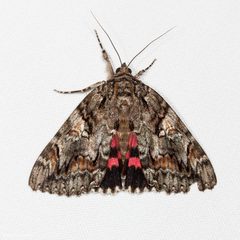
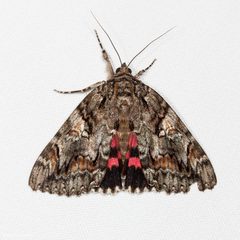
Catocala aholibah, the Aholibah Underwing , is a large underwing moth in the Erebidae. Like other Catocala , it possesses cryptic, speckled gray-black forewings that conceal bright orange hindwings used as a startle display against . The species has been documented at light stations in Colorado and is among the larger underwing moths in its .
Pronunciation
How to pronounce Catocala aholibah: /ˌkætəˈkeɪlə əˈhɒlɪbɑː/
These audio files are automatically generated. While they are not always 100% accurate, they are a good starting point.
Identification
Distinguished from other Catocala by combination of large size and specific forewing pattern. C. verilliana is smaller and occurs sympatrically. Hindwing color pattern separates it from species with red, yellow, or blue underwings. Forewing pattern details require expert examination for definitive identification; genitalia dissection may be necessary for certain separation from similar species.
Images
Appearance
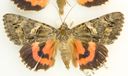
Large underwing with forewings mottled gray and black, providing camouflage against tree bark. Hindwings bright orange with black bands, typically concealed at rest. Forewing pattern consists of irregular dark speckling and wavy transverse lines.
Habitat
Associated with wooded . Observed at light stations in montane settings with mixed conifer forest and in cottonwood groves near wetlands.
Distribution
North America. Documented in Colorado (Cheyenne Mountain State Park, El Paso County; Pinos Altos, Grant County, New Mexico region). GBIF records indicate presence in North America broadly.
Seasonality
active in July. Observed at light stations on July 25 and July 29 during National Week events in Colorado.
Behavior
. attracted to light, though underwing moths typically remain on the periphery of light stations rather than landing directly on sheets. When disturbed, reveals bright orange hindwings in a startle display to deter .
Ecological Role
likely serve as prey for including bats and birds. Startle display using bright hindwings is an anti-predator . Specific larval plant relationships not documented in available sources.
Human Relevance
Subject of citizen science observation during National Week events. Featured as one of the spotlight highlighting underwing moth diversity. Attracts moth enthusiasts due to large size and striking hindwing coloration.
Similar Taxa
- Catocala verillianaSmaller sympatric underwing ; C. aholibah described as likely the larger species when both occur together
- Catocala amestrisAnother underwing in same region, distinguished by hindwing pattern and forewing markings
- Catocala delilahUnusual underwing for southern Colorado region, distinguished by specific wing patterns
More Details
Light station behavior
At Cheyenne Mountain State Park, two specimens made a dramatic entrance, flying erratically around the lighted area before settling—atypical for underwing moths, which usually avoid direct light exposure
Taxonomic note
Formerly placed in Noctuidae; now classified in Erebidae following molecular phylogenetic revisions of Noctuoidea
Sources and further reading
- BugGuide
- GBIF taxonomy match
- iNaturalist taxon
- NCBI Taxonomy
- Catalogue of Life
- A Gathering of Lepidopterists: Who's Who of the Butterfly, Moth Experts | Bug Squad
- Bug Eric: National Moth Week Recap for Colorado Springs
- Got Moths? Celebrate National Moth Week and Global Citizen Science
- Bug Eric: National Moth Week Recap, 2015
- Bug Eric: National Moth Week 2024 Recap from Kansas City
- Bug Eric: New Mexico Night Bugs