
Catocala epione
Drury, 1773
Epione Underwing
Catocala epione, the Epione Underwing, is a in the Erebidae first described by Dru Drury in 1773. It is one of over 250 in the Catocala, commonly known as underwing moths, recognized for their cryptic forewings that conceal brightly colored hindwings. The species occurs in eastern and central North America and has been documented in forested .

Pronunciation
How to pronounce Catocala epione: /kætəˈkeɪlə ˌɛpiˈoʊni/
These audio files are automatically generated. While they are not always 100% accurate, they are a good starting point.
Identification
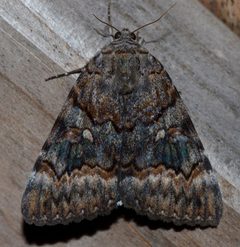
Distinguished from other Catocala by specific hindwing coloration and pattern. Forewings are held together over the back at rest, completely hiding the hindwings beneath—a posture typical of underwing moths. Accurate identification to species level may require examination of hindwing markings and comparison with reference materials or expert consultation.
Images
Habitat
Occupies forested environments. Documented observations include wooded parks and forest trails with tree cover providing suitable surfaces for camouflage.
Distribution
Eastern and central North America: Quebec and Ontario south through Connecticut to Florida, and west to Texas and Oklahoma. GBIF records confirm presence in Vermont and broader United States distribution.
Seasonality
are active from August to September. Probably one per year.
Diet
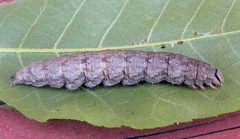
Larvae feed on Carya ovata (shagbark hickory). feeding habits not documented in available sources.
Host Associations
- Carya ovata - larval food plantshagbark hickory
Life Cycle
Probably (one per year). Larval stage feeds on hickory foliage. and details not documented in available sources.
Behavior
are and attracted to light. When disturbed, adults may flash their brightly colored hindwings as a startle defense before taking —a common in the Catocala. Adults typically rest on tree trunks where cryptic forewings provide camouflage.
Ecological Role
Larval herbivore on hickory trees. may serve as prey for including bats and birds. Specific ecological functions beyond herbivory not documented.
Human Relevance
Subject of citizen science observation during National Week and similar events. Attracted to artificial light sources, making it accessible for public engagement and photographic documentation. No documented economic or agricultural significance.
Similar Taxa
- Other Catocala speciesAll underwing moths share the characteristic of cryptic forewings concealing brightly colored hindwings. Specific hindwing patterns and geographic distribution help distinguish C. epione from such as C. verilliana and C. aholibah.
More Details
Taxonomic history
Originally described as Phalaena epione by Dru Drury in 1773, later transferred to Catocala.
Observation notes
An individual observed in Havens Park, Kansas in July 2024 remained only briefly before departing, suggesting may be relatively mobile or easily disturbed at light sources.
Sources and further reading
- BugGuide
- Wikipedia
- GBIF taxonomy match
- iNaturalist taxon
- NCBI Taxonomy
- Catalogue of Life
- A Gathering of Lepidopterists: Who's Who of the Butterfly, Moth Experts | Bug Squad
- Bug Eric: National Moth Week 2024 Recap from Kansas City
- Got Moths? Celebrate National Moth Week and Global Citizen Science
- Bug Eric: National Moth Week Recap, 2015
- Bug Eric: National Moth Week Recap for Colorado Springs
- Conservation Translocations: It’s Not Just Beavers - Buglife Blog - Buglife