
Lophocampa
Harris, 1841
Species Guides
12- Lophocampa annulosa(Santa Ana tussock moth)
- Lophocampa argentata(Silver-spotted Tiger Moth)
- Lophocampa bicolor
- Lophocampa caryae(Hickory Tussock Moth)
- Lophocampa indistincta
- Lophocampa ingens
- Lophocampa maculata(spotted tussock moth)
- Lophocampa mixta(Speckled Tussock Moth)
- Lophocampa pura
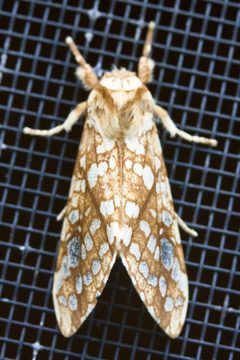
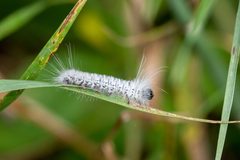
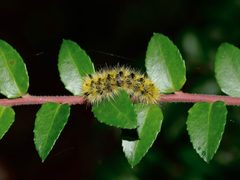
Lophocampa is a of arctiine tussock moths in the Erebidae, erected by Thaddeus William Harris in 1841. The genus contains approximately 75 distributed primarily in North America. Larvae are commonly known as tussock moths and typically exhibit gregarious , forming aggregated colonies on trees. Several species are notable for their distinctive larval coloration with tufts of hair-like setae.
Pronunciation
How to pronounce Lophocampa: /ˌlɒfəˈkæmpə/
These audio files are automatically generated. While they are not always 100% accurate, they are a good starting point.
Identification
Lophocampa can be recognized by their tussock characteristics: larvae possess dense tufts of hair-like setae (tussocks) arranged in distinct patterns, often with contrasting colors. typically show muted coloration with spotted or streaked forewings. The is distinguished from related tussock moth genera by specific arrangements of larval setae and adult wing venation patterns, though species-level identification often requires examination of genitalia.
Images
Habitat
Forest , particularly coniferous and mixed forests. Larval colonies have been documented in old-growth Douglas-fir and Western Hemlock forest , specifically on south and east aspects of tree crowns receiving higher solar radiation. No colonies found below 25m height in studied .
Distribution
North America; records from Vermont, across the United States, and into Mexico. Specific documented locations include Cascade Mountains in Washington State, Colorado Springs area in Colorado, and southwestern U.S. regions.
Life Cycle
Larvae form aggregated colonies; colony size averages 43 larvae (range 1-190). Complete with , larval, pupal, and stages. Specific developmental timing varies by and latitude.
Behavior
Larvae exhibit gregarious , forming aggregated colonies on trees. Colony placement is strongly associated with solar radiation exposure, with south and east crown aspects preferred.
Similar Taxa
- HalysidotaBoth are of tussock moths in the Arctiinae with similar larval ; Halysidota often have more uniformly colored larvae and different wing patterns.
- OrgyiaAnother tussock with hairy larvae; Orgyia typically have more prominent and tussocks and different plant associations.
Sources and further reading
- BugGuide
- Wikipedia
- GBIF taxonomy match
- iNaturalist taxon
- NCBI Taxonomy
- Catalogue of Life
- Bug Eric: Blodgett Peak Bioblitz Report
- Bug Eric: July 2011
- Chrysididae | Beetles In The Bush
- Distribution of larval colonies of Lophocampa argentata Packard, the Silver Spotted Tiger Moth (Lepidoptera: Arctiidae) in an old-growth Douglas-fir, Pseudotsuga menziesii/Western Hemlock, Tsuga heterophylla, forest canopy, Cascade Mountains, Washington State