
Lophocampa ingens
Edwards, 1881
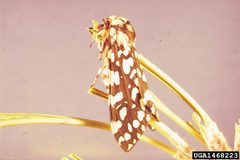
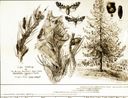
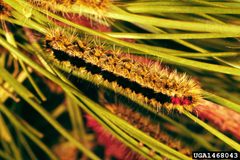
Lophocampa ingens is a tiger moth in the Erebidae, described by Henry Edwards in 1881. It is to the southern Rocky Mountains of the United States and Mexico. are active in late spring, while larvae feed on several pine . The species is distinguished by its patterned forewings with multiple rows of white spots on a dark brown background.
Pronunciation
How to pronounce Lophocampa ingens: /lofoʊˈkæmpə ˈɪndʒɛnz/
These audio files are automatically generated. While they are not always 100% accurate, they are a good starting point.
Identification
Distinguished from other Lophocampa by the six distinct rows of white spots on dark brown forewings, with the fifth row consisting of eight lunate submarginal spots decreasing in size toward the . The combination of pale hindwings with limited dark spotting and the specific pattern of forewing maculation separates it from in the southern Rocky Mountain region.
Images
Habitat
Montane coniferous forests dominated by ponderosa pine, lodgepole pine, and piñon pine. Occurs at elevations typical of these pine in the southern Rocky Mountains.
Distribution
Southern Rocky Mountains of the United States (Arizona, Colorado, New Mexico, Utah) and Mexico.
Seasonality
fly in May and June.
Diet
Larvae feed on Pinus ponderosa (ponderosa pine), Pinus contorta (lodgepole pine), and Pinus edulis (piñon pine). diet not documented.
Host Associations
- Pinus ponderosa - larval food plantponderosa pine
- Pinus contorta - larval food plantlodgepole pine
- Pinus edulis - larval food plantpiñon pine
Life Cycle
Complete with , larval, pupal, and stages. Larvae are present on pines; specific timing of other stages not documented.
Behavior
are or . Larvae feed externally on pine foliage.
Ecological Role
Herbivore in montane pine ; larvae consume pine needles.
Human Relevance
Minor potential as a defoliator of pine ; no significant economic impact documented.
Similar Taxa
- Other Lophocampa speciesSimilar general appearance as tiger moths with spotted forewings, but distinguished by specific pattern of six rows of white spots and geographic restriction to southern Rocky Mountains.
More Details
Taxonomic history
Originally described as Halesidota ingens by Henry Edwards in 1881; later transferred to Lophocampa.