
Lophocampa argentata
Packard, 1864
Silver-spotted Tiger Moth
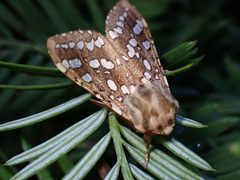
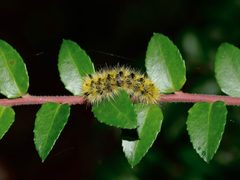
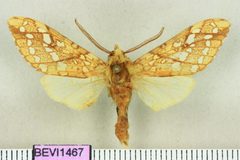
Lophocampa argentata, the silver-spotted tiger , is a moth in the Erebidae, native to western North America. Caterpillars are densely hairy with distinctive black and yellow hair tufts and feed on conifer needles, particularly Douglas-fir. have reddish-brown wings marked with silvery spots. The species has been documented forming larval colonies in forest and can cause noticeable defoliation of trees.
Pronunciation
How to pronounce Lophocampa argentata: /ˌloʊfəˈkæmpə ˌɑrdʒənˈteɪtə/
These audio files are automatically generated. While they are not always 100% accurate, they are a good starting point.
Identification
distinguished from similar tiger moths by the combination of reddish-brown ground color and silvery spotting on wings. Caterpillars recognized by the pattern of black and yellow hair tufts along the dorsum; similar hairy caterpillars in the region lack this specific color arrangement. L. a. subalpina and L. a. sobrina differ in geographic range and associations rather than obvious external .
Images
Habitat
Coniferous forests of western North America, particularly old-growth Douglas-fir and Western Hemlock stands. Larvae occur in the forest , where they construct silken tents for . are found in forested areas near larval plants.
Distribution
Western North America from British Columbia south to southern California, extending eastward through Arizona, Nevada, New Mexico, Colorado, Utah, and Wyoming; possibly present in northern Mexico. L. a. subalpina occurs in the Rocky Mountain region, and L. a. sobrina in California.
Seasonality
: active in mid-summer (-laying period). Larvae hatch within approximately three weeks, feed through late summer and autumn, overwinter in tents, resume feeding in spring, and pupate in late spring.
Diet
Larvae feed on needles of coniferous plants, notably Douglas-fir (Pseudotsuga menziesii), and also utilize Western Hemlock (Tsuga heterophylla), pinyon, juniper, and Monterey pine depending on and locality.
Host Associations
- Pseudotsuga menziesii - primary Douglas-fir; major throughout core range
- Tsuga heterophylla - Western Hemlock; documented in old-growth Washington forests
- Pinus - Monterey pine (Pinus radiata) for sobrina
- Pinus edulis - Pinyon pine; for subalpina
- Juniperus - Juniper; for subalpina
Life Cycle
One per year. laid in clusters on needles and small branches in mid-summer. Larvae hatch in approximately three weeks, feed gregariously initially, construct silken tents for , and re-emerge in spring. Spring feeding occurs individually. in late spring in brown cocoons attached to vegetation or on the forest floor. emerge in mid-summer to complete the cycle.
Behavior
Larvae are gregarious, forming communal tents for protection. Groups of larvae remain in tents through winter and resume activity in spring. Defensive on caterpillars and pupae can irritate human skin. are and attracted to light.
Ecological Role
Herbivore in coniferous forest ; larval feeding can cause defoliation of trees, though and overall ecosystem impact not well quantified. Serves as prey for including birds and .
Human Relevance
Caterpillar and pupal hairs can cause skin irritation upon contact, representing a minor health concern for forest and recreationists. Larval defoliation of Douglas-fir and other conifers may have economic significance for forestry operations in some years.
Similar Taxa
- Lophocampa maculataSimilar hairy caterpillars with yellow and black markings; distinguished by specific hair tuft arrangement and wing pattern
- Halysidota harrisiiAnother densely hairy caterpillar in Erebidae; differs in color pattern and associations
More Details
Subspecies variation
Three recognized: L. a. argentata (nominate), L. a. subalpina (Rocky Mountains, associated with pinyon-juniper), and L. a. sobrina (California, associated with Monterey pine). Subspecies differ primarily in geographic range and plant associations rather than .
Canopy ecology
A study in Washington State documented larval colony distribution in old-growth Douglas-fir/Western Hemlock forest , indicating specialized use of mature forest vertical structure.
Sources and further reading
- BugGuide
- Wikipedia
- GBIF taxonomy match
- iNaturalist taxon
- NCBI Taxonomy
- Catalogue of Life
- Return to Guatuso, Costa Rica: Trouble for stingless bees - the silver orb weaver, 'Argiope argentata' — Bug of the Week
- Tiger beetles in Argentina’s Chaco forest | Beetles In The Bush
- Stalking tigers in Argentina | Beetles In The Bush
- Beetle Research Roundup | Beetles In The Bush
- A non-black background is better… often! | Beetles In The Bush
- Distribution of larval colonies of Lophocampa argentata Packard, the Silver Spotted Tiger Moth (Lepidoptera: Arctiidae) in an old-growth Douglas-fir, Pseudotsuga menziesii/Western Hemlock, Tsuga heterophylla, forest canopy, Cascade Mountains, Washington State