
Halysidota harrisii
Walsh, 1864
Sycamore Tussock Moth, Sycamore Tiger Moth
Halysidota harrisii, commonly known as the sycamore tussock or sycamore tiger moth, is a of tiger moth in the Erebidae. It produces two annually and is closely associated with American sycamore trees. The species is notable for its distinctive hairy caterpillars with orange and white hair-pencils, and that are difficult to distinguish from the related Halysidota tessellaris.
Pronunciation
How to pronounce Halysidota harrisii: /həˈlɪsɪˌdoʊtə ˌhærɪˈsaɪ.aɪ/
These audio files are automatically generated. While they are not always 100% accurate, they are a good starting point.
Identification
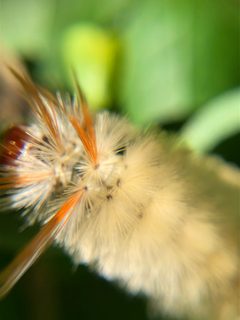
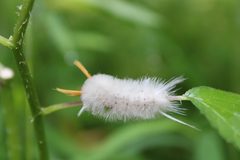
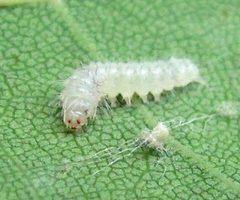
are distinguished from Halysidota tessellaris primarily by geographic association with sycamore trees and subtle differences in wing patterning; the two are otherwise almost identical in appearance. Larvae are recognized by the specific arrangement of orange and white hair-pencils: two pairs of orange and two pairs of white anteriorly, plus one pair of white posteriorly. The yellow-orange coloration and association with Platanus occidentalis foliage further support identification.
Images
Habitat
Associated with deciduous forests and riparian areas where American sycamore (Platanus occidentalis) occurs. Larvae feed on sycamore foliage; are found in wooded near trees.
Distribution
Southeastern Canada, eastern United States (excluding Florida), and northeastern Mexico. Records include Vermont and other eastern states.
Seasonality
with two periods annually: emerge from cocoons May–June, with second adults appearing July–August. Larvae present late spring through early fall; final generation pupates September–October and overwinters.
Diet
Larvae feed exclusively on foliage of American sycamore (Platanus occidentalis). feeding habits are not documented.
Host Associations
- Platanus occidentalis - obligate larval sole documented food plant
Life Cycle
Complete with two per year. are laid in masses on bark and leaf undersides. Larvae feed on sycamore foliage, then pupate in cocoons. First generation pupates June–July and emerges July–August. Second generation spins cocoons September–October, as pupae until spring .
Behavior
Larvae feed gregariously on sycamore foliage. are and attracted to light. occurs as pupae within silk cocoons.
Ecological Role
herbivore on American sycamore. Serves as prey for birds and other natural . can cause localized defoliation of trees.
Human Relevance
Caterpillars have been documented causing (hives) in humans upon contact. may require intervention to protect ornamental or timber sycamore trees. Otherwise of minor economic importance.
Similar Taxa
- Halysidota tessellaris are almost indistinguishable morphologically; separation relies on association (tessellaris occurs on diverse hardwoods including hickory and walnut, not exclusively sycamore) and subtle wing pattern differences.
- Halysidota cinctipesSimilar appearance; geographic range and associations differ.
More Details
Nomenclature
described by Benjamin Dann Walsh in 1864. The epithet harrisii honors an individual, though the specific honoree is not detailed in available sources.
Population Dynamics
Natural , particularly birds, typically control ; chemical intervention is occasionally necessary during years.
Sources and further reading
- BugGuide
- Wikipedia
- GBIF taxonomy match
- iNaturalist taxon
- NCBI Taxonomy
- Catalogue of Life
- Megalopygidae | Beetles In The Bush
- Bug Eric: New Mexico Dragonfly Blitz - Day 3
- Bug Eric: National Moth Week 2024 Recap from Kansas City
- 🌿 Botanizing w/ the WGNSS Botany Group at Victoria Glades Preserve | Beetles In The Bush