
Halysidota tessellaris
Smith, J.E., 1797
Banded Tussock Moth, Pale Tiger Moth, Tessellated Halisidota
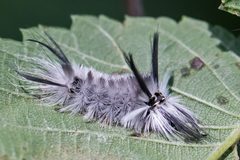
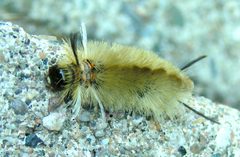
A tiger moth in the Erebidae, described by James Edward Smith in 1797. acquire defensive alkaloids from plants. Caterpillars are conspicuous, with distinctive tufted setae and extra-long hair-pencils at both ends. The species is in northern parts of its range and multivoltine in the south.
Pronunciation
How to pronounce Halysidota tessellaris: //ˌhæ.lɪˈsaɪ.doʊ.tə ˌtɛs.əˈlɛər.ɪs//
These audio files are automatically generated. While they are not always 100% accurate, they are a good starting point.
Identification
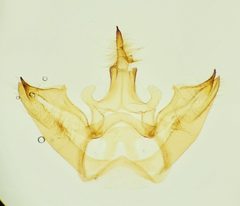
closely resemble Halysidota harrisii (sycamore tussock moth) and can be distinguished by differences in genitalia. Caterpillars are distinguished by the combination of bright orange capsules, extra-long hair-pencils at both ends, and . The conspicuous resting posture on upper leaf surfaces and non-gregarious but highly visible are notable.
Images
Habitat
Deciduous forests and woodlands. Associated with a broad range of trees including alder, ash, birch, blueberry, chestnut, elm, grape, hackberry, hazel, oak, walnut, and willow.
Distribution
North America from southern Canada (Alberta, Manitoba, Saskatchewan, Vermont) south through Texas and central Florida.
Seasonality
One per year in northern range; two or more generations in southern range. Northern caterpillars mature from July until frost. attracted to decaying plants containing .
Diet
Larvae feed on leaves of alder, ash, birch, blueberry, chestnut, elm, grape, hackberry, hazel, oak, walnut, willow, and other woody plants. have been observed regurgitating on and drinking fluids from decaying plants containing to acquire defensive chemicals.
Host Associations
- Ulmus rubra - larval slippery elm
- Carya tomentosa - larval mockernut hickory
- Alnus spp. - larval alder
- Fraxinus spp. - larval ash
- Betula spp. - larval birch
- Vaccinium spp. - larval blueberry
- Castanea spp. - larval chestnut
- Ulmus spp. - larval elm
- Vitis spp. - larval grape
- Celtis spp. - larval hackberry
- Corylus spp. - larval hazel
- Quercus spp. - larval oak
- Juglans spp. - larval walnut
- Salix spp. - larval willow
Life Cycle
laid in masses on undersides of leaves. Caterpillars develop through summer, maturing July to frost in northern range. Pupae overwinter in gray cocoons laced with larval hairs. emerge in following season.
Behavior
Caterpillars frequently rest conspicuously on upper leaf surfaces despite not being gregarious. are attracted to decaying plant material containing , which they regurgitate on and drink to acquire defensive chemicals.
Ecological Role
Late-season folivore on diverse woody plants. No serious injury to trees has been reported. participate in chemical from plants, contributing to defensive compound flow in .
Human Relevance
Caterpillar hairs are urticating and can cause irritation. No serious economic impact on trees. Occasionally encountered by naturalists and entomologists due to conspicuous caterpillar .
Similar Taxa
- Halysidota harrisii appear very similar; distinguished by differences in genitalia.
- Halysidota schausiSimilar banded tussock appearance; requires careful examination.