
Sabulodes aegrotata
(Guenée, [1858])
Omnivorous Looper
Sabulodes aegrotata, commonly known as the looper, is a geometrid native to northwestern North America. The is notable for its broad larval diet spanning multiple plant , including alder, willow, and California bay laurel. are active year-round and possess a wingspan of 35–44 mm. The species serves as a for in the families Mymaridae and Trichogrammatidae.
Pronunciation
How to pronounce Sabulodes aegrotata: /sæˈbuːloʊdiːz iːˌɡroʊˈtɑːtə/
These audio files are automatically generated. While they are not always 100% accurate, they are a good starting point.
Images
Appearance
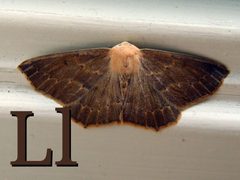
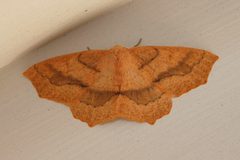
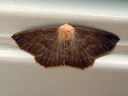
have a wingspan of 35–44 mm. The wings exhibit cryptic patterning typical of geometrid moths, with variable brown and gray tones that provide camouflage against bark and leaf litter. Larvae are loopers (inchworms) with reduced , moving with characteristic looping gait. Body form and coloration of larvae vary with plant.
Distribution
Northwestern North America, ranging south to northern California. Records indicate presence in forested and woodland of the Pacific Northwest and California.
Seasonality
are on wing year-round, indicating continuous or overlapping without distinct seasonal dormancy.
Diet
Larvae feed on foliage of various flowering trees and shrubs. Documented include Alnus (alder), Holodiscus discolor (oceanspray), Rubus spectabilis (salmonberry), Salix (willow), and Umbellularia californica (California bay laurel).
Host Associations
- Alnus - larval food plant
- Holodiscus discolor - larval food plant
- Rubus spectabilis - larval food plant
- Salix - larval food plant
- Umbellularia californica - larval food plant
Ecological Role
Larval herbivore that consumes foliage of woody plants; serves as for hymenopteran including of Telenomus (Scelionidae), Trichogramma (Trichogrammatidae), and potentially Mymaridae.
Human Relevance
Subject of research. of this have been studied for potential use in managing related pest species. The broad range of larvae may occasionally bring them into conflict with cultivated plants.
Similar Taxa
- Other Sabulodes speciesGeneric placement requires examination of genitalia and wing pattern details; S. aegrotata distinguished by specific forewing markings and male genital structure.
- Other geometrid loopersLarval identification difficult; requires rearing to or molecular analysis. Adult identification relies on wing pattern and genital .
More Details
Egg parasitoid research
Honda & Triapitsyn (1995) described a new of Telenomus (Hymenoptera: Scelionidae) and compared its with Trichogramma platneri as of S. aegrotata, providing detailed biological data for biocontrol applications.