
Antaeotricha schlaegeri
(Zeller, 1854)
Schlaeger's Fruitworm Moth
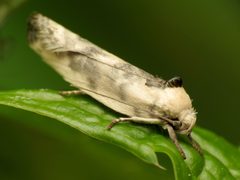
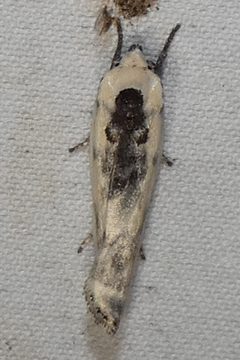
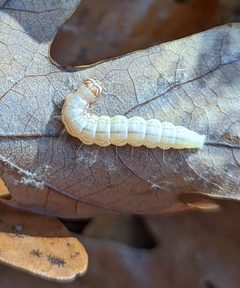
Antaeotricha schlaegeri, commonly known as Schlaeger's Fruitworm , is a small moth in the Depressariidae (formerly placed in Oecophoridae). have a wingspan of 21–30 mm and are notable for their resemblance to bird droppings, a form of camouflage. The species occurs in northeastern North America, ranging from southern Canada south to North Carolina and west to Kansas and Texas. Larvae feed on oak species, particularly Quercus alba, and have also been recorded on birch (Betula species).
Pronunciation
How to pronounce Antaeotricha schlaegeri: //ˌæn.teɪ.oʊˈtraɪ.kə ˈʃleɪɡə.ri//
These audio files are automatically generated. While they are not always 100% accurate, they are a good starting point.
Identification
can be distinguished from similar pale-winged Antaeotricha by their bird-dropping mimicry appearance. The species was historically confused with related before dissection and detailed examination revealed its distinct status. Forewing patterns and genitalia structure provide definitive separation from . Similar species in the Antaeotricha may share general appearance but differ in specific wing markings and geographic distribution.
Images
Habitat
Associated with deciduous forests containing trees, particularly oak woodlands. Larval consists of leaves of Quercus alba and related oak , as well as Betula species. habitat includes forested areas where host plants occur.
Distribution
Northeastern North America. Range extends from southern Canada (Manitoba, Saskatchewan, Vermont) south to North Carolina, and west to Kansas and Texas. Core distribution centers on eastern deciduous forest biome.
Seasonality
period and specific are not documented in available sources. As a with larval feeding on deciduous trees, activity likely coincides with the growing season of plants.
Diet
Larvae feed on Quercus alba (white oak) and related oak . Also recorded on Betula (birch) species. do not feed; their mouthparts are reduced or non-functional for feeding.
Host Associations
- Quercus alba - larval food plantPrimary
- Quercus - larval food plantRelated oak also used
- Betula - larval food plantSecondary record
Life Cycle
Complete with , larva, pupa, and stages. Larvae are leaf-feeders on oaks and birches. occurs in concealed locations, likely in leaf litter or soil. Specific details of voltinism (number of per year) and stage are not documented.
Behavior
are . Larvae are solitary leaf-feeders. The bird-dropping mimicry of adults represents a defensive behavioral against visual such as birds. No other specific are documented.
Ecological Role
Larvae function as primary consumers, feeding on oak and birch foliage. They serve as prey for , including Monobia quadridens (Four-toothed Mason Wasp), which hunts caterpillars as food for its own larvae. The participates in nutrient cycling in deciduous forest .
Human Relevance
Minor economic significance. Not considered a major forest pest. The has been used as a research subject in studies of prey selection. No direct agricultural or horticultural impacts documented.
Similar Taxa
- Antaeotricha albulellaSimilar pale-winged appearance; distinguished by wing pattern details and genitalia structure. A. albulella has one or two black spots on forewings, while A. schlaegeri lacks such spots in its bird-dropping mimicry pattern.
- Antaeotricha floridellaAnother recently described Antaeotricha with pale wings; distinguished by white forewings and restricted to Florida sandhills scrub .
More Details
Taxonomic History
Originally described as Cryptolechia schlaegeri by Zeller in 1854. Later transferred to Antaeotricha. placement has varied, with some sources listing Oecophoridae and others Depressariidae; current consensus places the genus in Depressariidae, Stenomatinae.
Predator-Prey Relationships
Documented as prey of Monobia quadridens (Four-toothed Mason Wasp), a solitary vespid that paralyzes caterpillars and provisions them in nest for its own larval development. This represents an important ecological interaction linking the to higher .