
Antaeotricha albulella
(Walker, 1864)
vestal moth
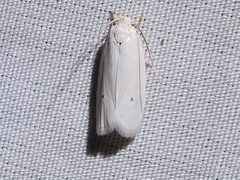
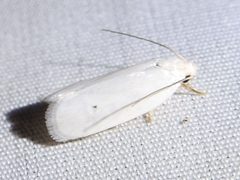
Antaeotricha albulella, commonly known as the vestal , is a small moth in the Depressariidae. First described by Francis Walker in 1864, it is distributed across the southeastern and mid-Atlantic United States. The species is characterized by predominantly white forewings with distinctive dark markings. It has been historically confused with the closely related Antaeotricha floridella, which occurs in drier sandhill of peninsular Florida.
Pronunciation
How to pronounce Antaeotricha albulella: /ænˌtiːoʊˈtrɪkə ælˌbjuːˈlɛlə/
These audio files are automatically generated. While they are not always 100% accurate, they are a good starting point.
Identification
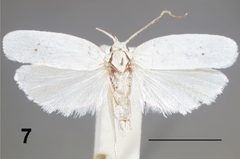
Distinguished from Antaeotricha floridella by presence of black spots on forewings (A. floridella has white forewings). A. floridella also has pale gray hindwings versus white or pale gray in A. albulella. Genitalia dissection may be required for definitive identification. Forewing spotting pattern distinguishes it from other pale Antaeotricha in eastern North America.
Images
Appearance
Small with wingspan approximately 15 mm. Forewings white with one or two black spots. Hindwings white or pale gray. Minute, indistinct ochreous spot present at end of disc. Scattered dark brown on wings.
Habitat
Occurs in diverse across its range; not restricted to xeric environments. Found in areas supporting oaks and related vegetation. Specific microhabitat preferences poorly documented.
Distribution
United States: Alabama, Florida, Georgia, Louisiana, Maryland, Mississippi, New Jersey, North Carolina, Oklahoma, South Carolina, Texas, West Virginia. Primarily southeastern and mid-Atlantic distribution with western extension to Oklahoma and Texas.
Similar Taxa
- Antaeotricha floridella white forewings without black spots; pale gray hindwings; restricted to peninsular Florida sandhills and scrub; requires genitalia dissection for reliable separation
More Details
Taxonomic history
Originally described as Cryptolechia albulella by Walker in 1864, later transferred to Antaeotricha. The concept was clarified through comparison with the newly described A. floridella in 2015, which helped define diagnostic characters for A. albulella.
Specimen verification
Reliable identification may require examination of genitalia, particularly for specimens from peninsular Florida where sympatry with A. floridella is possible.