
Aspilanta
van Nieukerken & Eiseman, 2020
Species Guides
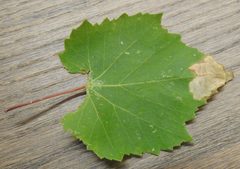
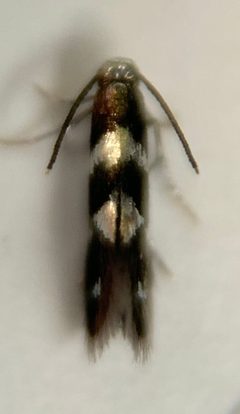
6Aspilanta is a of minute leaf-mining in the Heliozelidae, erected in 2020 to accommodate North American previously assigned to Antispila. are distinguished by reduced wing venation and small size (wingspan 4.0–6.2 mm). Larvae feed internally in leaves of woody plants, primarily Vitaceae (grape family), with two species known from Hydrangeaceae and Myricaceae. The genus name is a partial anagram of Antispila.
Pronunciation
How to pronounce Aspilanta: //æs.pɪˈlæn.tə//
These audio files are automatically generated. While they are not always 100% accurate, they are a good starting point.
Identification
Distinguished from the closely related Antispila by reduced wing venation. Within Heliozelidae, Aspilanta can be separated from Coptodisca (its sister genus) and other genera using Nearctic genus keys. -level identification requires examination of genitalia and often plant association.
Images
Habitat
Associated with woody plants in temperate and subtropical regions. Larvae inhabit leaf mines on living leaves of vines and shrubs.
Distribution
Native to North America and Central America; possibly extending to South America. Aspilanta oinophylla is established as an on grapevine in Italy.
Diet
Larvae feed on leaf tissue of plants. Most specialize on Vitaceae; Aspilanta hydrangaeella feeds on Hydrangea species (Hydrangeaceae), and Aspilanta argentifera feeds on Myricaceae.
Host Associations
- Vitaceae - primary most
- Hydrangeaceae - A. hydrangaeella on Hydrangea
- Myricaceae - A. argentifera
Life Cycle
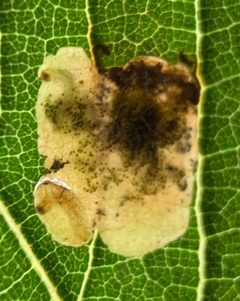
are inserted into leaf tissue. Larvae develop as leaf miners, creating mines that may begin as narrow linear tracks widening into blotches or start directly as blotches. All remains within the mine. Mature larvae cut an elliptical shield-shaped case from the leaf surface, descend to the ground, and pupate within this case. Some overwinter as pupal cases.
Behavior
are presumably or given tendencies, but specific activity patterns are unreported. Larval is constrained to feeding within leaf mines; mature larvae exhibit case-cutting behavior for .
Ecological Role
Leaf miners on woody plants. Serve as to including Chalcidoidea, Braconidae (Microgastrinae), and Eulophidae.
Human Relevance
Aspilanta oinophylla is an pest on cultivated grapevine (Vitis) in Italy, potentially impacting viticulture. Other have minimal direct economic impact.
Similar Taxa
- AntispilaHistorically confused with Aspilanta; distinguished by more complete wing venation and different forewing pattern elements.
- CoptodiscaSister to Aspilanta; separation requires examination of wing venation and genitalia.
More Details
Etymology
The name Aspilanta is a partial anagram of Antispila, reflecting its taxonomic origin from that genus.
Taxonomic history
Established in 2020 following phylogenetic analysis supporting monophyly of the reduced-venation Nearctic group previously placed in Antispila.
Invasive potential
The introduction of A. oinophylla to Italian vineyards demonstrates capacity for long-distance and establishment on cultivated .