
Antispila
Hübner, 1825
shield-bearer moths
Species Guides
5Antispila is a of leaf-mining in the Heliozelidae, established by Jacob Hübner in 1825. The genus comprises approximately 50 described distributed across North America, Europe, and Asia. Larvae feed internally on leaves of plants, creating distinctive serpentine or blotch mines that terminate in oval cutouts ('shields') used for . Several species are economically significant as pests of grapevines, dogwoods, and ornamental shrubs. Taxonomic revisions using have resolved longstanding , particularly among Cornus-feeding species in Europe.
Pronunciation
How to pronounce Antispila: /ˌæntɪˈspaɪlə/
These audio files are automatically generated. While they are not always 100% accurate, they are a good starting point.
Identification
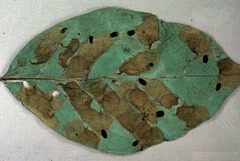
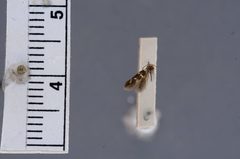
are small with wingspans typically under 10 mm. Diagnostic features include paired tufts of on the 7th abdominal segment in males. Larvae are recognized by their leaf-mining habit: creating tunnels in leaves that end in oval cutout shields where occurs. -level identification requires examination of male and female genitalia, larval chaetotaxy, and barcodes. Leaf mine patterns and plant associations provide field identification cues.
Images
Habitat
Larval is the interior of leaves of plants, where mining occurs in the mesophyll tissue. are associated with wooded areas, vineyards, and ornamental plantings where host plants occur.
Distribution
North America, Europe, and Asia. Documented from USA (including Vermont), Canada, Denmark, Norway, Sweden, Netherlands, Germany, Italy, and China (Shandong Peninsula, mainland records). Some have expanded ranges through human-mediated of plants.
Host Associations
- Vitis - plantgrapevines; A. oinophylla is a significant pest
- Cornus - plantdogwoods; multiple feed on C. mas and C. sanguinea
- Nyssa - planttupelos; A. nysaefoliella
- Hydrangea - planttwo from China
- Ampelopsis - plantA. kunyuensis on A. humulifolia
Life Cycle
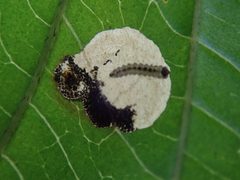
Holometabolous. Larvae hatch from laid on leaves and immediately enter leaf tissue to form mines. Development occurs entirely within the leaf mine. Final instar larvae cut an oval shield from the leaf, which remains attached by a hinge; occurs within this portable case. Some have one per year (), others have two ().
Behavior
Larvae produce seismic signals using and body movements. In A. nysaefoliella, three distinct signal types have been documented: tapping, scraping, and trembling. These vibrations function in territorial defense against competitors and in sexual communication between individuals. Signals are -specific.
Ecological Role
Leaf-mining activity creates entry points for secondary and reduces photosynthetic capacity of plants. Larvae serve as food for and other natural enemies. Some have become outside native ranges, affecting native and cultivated plant .
Human Relevance
Several are economically significant agricultural and horticultural pests. Antispila oinophylla, native to North America, has invaded Italian vineyards and causes damage to grape foliage. European Cornus-feeding species (A. treitschkiella, A. petryi) damage ornamental dogwoods and have expanded ranges through horticultural trade. The has been subject to taxonomic confusion that delayed recognition of .
Similar Taxa
- Heliozelaalso in Heliozelidae and creates leaf mines with oval cutout shields; distinguished by genitalia and patterns
- Coptodiscaleaf-mining heliozelids with similar mine ; distinguished by associations and male abdominal tufts
Sources and further reading
- BugGuide
- Wikipedia
- GBIF taxonomy match
- iNaturalist taxon
- NCBI Taxonomy
- Catalogue of Life
- Invasive moth overlooked in EU for decades | Blog
- Seismic Behaviors of a Leafminer, Antispila nysaefoliella (Lepidoptera: Heliozelidae)
- Two new species of Antispila Hübner (Lepidoptera: Adeloidea: Heliozelidae) associated with Hydrangea (Hydrangeaceae) from China
- An Experimental Test of the Seismic Behaviors of Antispila Nysaefoliella (Lepidoptera: Heliozelidae) to Vibrational Stimuli
- The leaf-mining genus Antispila Hübner, 1825 feeding on Vitaceae in Shandong Peninsula, China with one new species (Lepidoptera, Heliozelidae)
- Antispila oinophylla new species (Lepidoptera, Heliozelidae), a new North American grapevine leafminer invading Italian vineyards: taxonomy, DNA barcodes and life cycle
- First report of the leaf-mining genus Antispila Hübner, [1825] from mainland China, with the description of a new species feeding on Cornus (Lepidoptera, Heliozelidae)
- Figures 42–47 from: van Nieukerken E, Wagner D, Baldessari M, Mazzon L, Angeli G, Girolami V, Duso C, Doorenweerd C (2012) Antispila oinophylla new species (Lepidoptera, Heliozelidae), a new North American grapevine leafminer invading Italian vineyards: taxonomy, DNA barcodes and life cycle. ZooKeys 170: 29-77. https://doi.org/10.3897/zookeys.170.2617
- Figures 33–41 from: van Nieukerken E, Wagner D, Baldessari M, Mazzon L, Angeli G, Girolami V, Duso C, Doorenweerd C (2012) Antispila oinophylla new species (Lepidoptera, Heliozelidae), a new North American grapevine leafminer invading Italian vineyards: taxonomy, DNA barcodes and life cycle. ZooKeys 170: 29-77. https://doi.org/10.3897/zookeys.170.2617
- Figures 6–7 from: van Nieukerken E, Wagner D, Baldessari M, Mazzon L, Angeli G, Girolami V, Duso C, Doorenweerd C (2012) Antispila oinophylla new species (Lepidoptera, Heliozelidae), a new North American grapevine leafminer invading Italian vineyards: taxonomy, DNA barcodes and life cycle. ZooKeys 170: 29-77. https://doi.org/10.3897/zookeys.170.2617
- Figures 54–61 from: van Nieukerken E, Wagner D, Baldessari M, Mazzon L, Angeli G, Girolami V, Duso C, Doorenweerd C (2012) Antispila oinophylla new species (Lepidoptera, Heliozelidae), a new North American grapevine leafminer invading Italian vineyards: taxonomy, DNA barcodes and life cycle. ZooKeys 170: 29-77. https://doi.org/10.3897/zookeys.170.2617
- Figure 29 from: van Nieukerken E, Wagner D, Baldessari M, Mazzon L, Angeli G, Girolami V, Duso C, Doorenweerd C (2012) Antispila oinophylla new species (Lepidoptera, Heliozelidae), a new North American grapevine leafminer invading Italian vineyards: taxonomy, DNA barcodes and life cycle. ZooKeys 170: 29-77. https://doi.org/10.3897/zookeys.170.2617
- Figure 62 from: van Nieukerken E, Wagner D, Baldessari M, Mazzon L, Angeli G, Girolami V, Duso C, Doorenweerd C (2012) Antispila oinophylla new species (Lepidoptera, Heliozelidae), a new North American grapevine leafminer invading Italian vineyards: taxonomy, DNA barcodes and life cycle. ZooKeys 170: 29-77. https://doi.org/10.3897/zookeys.170.2617
- Figures 1–5 from: van Nieukerken E, Wagner D, Baldessari M, Mazzon L, Angeli G, Girolami V, Duso C, Doorenweerd C (2012) Antispila oinophylla new species (Lepidoptera, Heliozelidae), a new North American grapevine leafminer invading Italian vineyards: taxonomy, DNA barcodes and life cycle. ZooKeys 170: 29-77. https://doi.org/10.3897/zookeys.170.2617
- Figure 63 from: van Nieukerken E, Wagner D, Baldessari M, Mazzon L, Angeli G, Girolami V, Duso C, Doorenweerd C (2012) Antispila oinophylla new species (Lepidoptera, Heliozelidae), a new North American grapevine leafminer invading Italian vineyards: taxonomy, DNA barcodes and life cycle. ZooKeys 170: 29-77. https://doi.org/10.3897/zookeys.170.2617
- Figures 48–53 from: van Nieukerken E, Wagner D, Baldessari M, Mazzon L, Angeli G, Girolami V, Duso C, Doorenweerd C (2012) Antispila oinophylla new species (Lepidoptera, Heliozelidae), a new North American grapevine leafminer invading Italian vineyards: taxonomy, DNA barcodes and life cycle. ZooKeys 170: 29-77. https://doi.org/10.3897/zookeys.170.2617