
Heliozela
Herrich-Schäffer, 1853
Species Guides
1Heliozela is a of small in the Heliozelidae, described by Herrich-Schäffer in 1853. are leaf miners as larvae, feeding internally on plant leaves. The genus has a Holarctic distribution with records from Europe and North America, and has been reported from southern Brazil. Heliozelidae are among the most primitive lineages of Lepidoptera.
Pronunciation
How to pronounce Heliozela: /hɛlioʊˈzɛlə/
These audio files are automatically generated. While they are not always 100% accurate, they are a good starting point.
Images
Habitat
Forest and woodland ; larvae occur within leaves of plants. In southern Brazil, associated with Atlantic forest vegetation.
Distribution
Europe (Denmark, Norway, Sweden), North America (Vermont, United States), and southern Brazil (first record for the in South America).
Seasonality
active in summer; larval mining begins in summer, with occurring in autumn-winter.
Diet
Leaf parenchyma of plants. At least one , Heliozela pitangavora, feeds on Eugenia uniflora (Myrtaceae).
Life Cycle
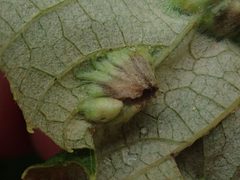
deposited via endophytic oviposition into leaves. Larvae are leaf miners, creating blotches on the adaxial leaf surface that enlarge as feeding progresses. Mature larvae cut the leaf lamina to construct dehiscent shields, moult into a final non-feeding instar, and pupate within these shields in soil litter.
Behavior
Larvae construct characteristic dehiscent shields by cutting leaf tissue, which serve as pupal cases. This shield-building is a defining trait of the Heliozelidae.
Ecological Role
Herbivore; on plants. Contributes to leaf damage and nutrient cycling in forest .
Similar Taxa
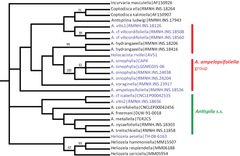
- AntispilaAlso in Heliozelidae with leaf-mining larvae; distinguished by and larval shield characteristics.
- CoptodiscaHeliozelidae with similar leaf-mining habit; separation requires examination of genitalia and wing venation.
More Details
Taxonomic significance
Heliozela pitangavora represents the first record of the in Brazil and the first worldwide record of Eugenia uniflora as a plant for Heliozelidae.