
Antispila cf-isabella
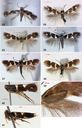
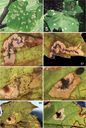
Antispila cf-isabella is a provisional designation within the Antispila, a group of leaf-mining in the Heliozelidae. The 'cf.' (confer) notation indicates morphological similarity to A. isabella without confirmed species identity. Antispila moths are commonly known as shield-bearer moths due to the oval cutouts their larvae make in leaves for . Species in this genus are specialized herbivores with larvae that create distinctive mines in the leaves of specific plants.
Pronunciation
How to pronounce Antispila cf-isabella: //ˌæn.tɪˈspaɪ.lə si ɛf ˌɪz.əˈbɛl.ə//
These audio files are automatically generated. While they are not always 100% accurate, they are a good starting point.
Identification
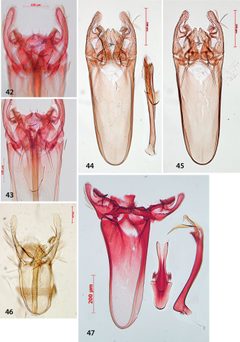
The 'cf.' designation indicates this specimen resembles A. isabella but lacks definitive confirmation. Accurate identification to level in Antispila typically requires examination of larval characters, genitalia , and . The provided context does not contain specific diagnostic features for this provisional .
Images
More Details
Taxonomic Note
The 'cf.' (confer) notation in 'Antispila cf-isabella' indicates a provisional identification based on morphological resemblance to A. isabella, pending definitive confirmation. This is standard practice when material cannot be confidently assigned to a described .
Context Limitation
The provided source material discusses other Antispila (A. treitschkiella and A. petryi) but contains no specific information about A. isabella or the cf-isabella designation. All field values above reflect this absence of data.