
Zatypota
Förster, 1869
Species Guides
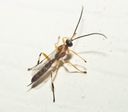
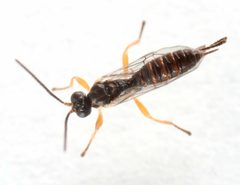
3Zatypota is a of ichneumonid wasps comprising at least 40 described , distributed across Europe, Asia, and the Americas. All species are koinobiont ectoparasitoids of spiders, primarily targeting theridiid spiders though some species parasitize linyphiids and araneids. The genus is notable for inducing behavioral manipulation in spiders, causing them to construct specialized "cocoon webs" that protect the developing larva. Several species have been documented as hosts for hyperparasitoid chalcidid wasps, forming complex three-trophic-level interactions.
Pronunciation
How to pronounce Zatypota: //zəˈtɪpətə//
These audio files are automatically generated. While they are not always 100% accurate, they are a good starting point.
Identification
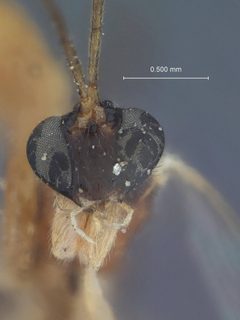
Members of Zatypota can be distinguished from other polysphinctine by their association with theridiid spiders and the characteristic cocoon web architecture induced in hosts. are small to medium-sized ichneumonids with the typical slender body form of Pimplinae. -level identification requires examination of morphological characters including wing venation, structure, and coloration patterns; regional keys are available for Japan and other areas.
Images
Habitat
Associated with supporting their spider , including forests, human dwellings, and vegetation where theridiid spiders construct webs. In Finland, Z. kerstinae has been collected from old Norway spruce forests by beating lower branches.
Distribution
Holarctic distribution with records from Europe (including Scandinavia, Czech Republic, Italy), Asia (Japan, Indonesia, Russia), and the Americas (Brazil, North America). The has been recorded from both Northern and Southern Hemispheres.
Seasonality
Varies by and latitude. Z. percontatoria in the Czech Republic produces an estimated 3.5 per year with emerging in early May. Z. albicoxa is multivoltine in northern Japan with adults emerging mid-May. Z. kerstinae in Finland appears to be .
Host Associations
- Theridiidae (cobweb spiders) - primary Most Zatypota parasitize theridiid spiders including Achaearanea, Anelosimus, Parasteatoda, Theridion, and Cryptachaea species
- Linyphiidae (sheet-web weavers) - Z. sulcata in Japan parasitizes linyphiid spiders
- Araneidae (orb-weavers) - Z. riverai has been documented parasitizing Cyclosa fililineata
Life Cycle
Koinobiont ectoparasitoid development: are laid on the spider (rarely prosoma), larvae remain attached to the through multiple instars using remains and a rigid brownish called a saddle. Second instar larvae are particularly notable for this attachment mechanism. Larvae overwinter attached to hosts in some . Development time varies: 9 days in Z. anomala and Z. riverai, 12 days in Z. baezae and Z. mulunguensis, with temperature-dependent rates up to 28°C. occurs in a cocoon, often within the modified cocoon web constructed by the manipulated host spider.
Behavior
Induces profound behavioral manipulation in spiders, causing them to construct specialized cocoon webs that differ architecturally from normal prey-capture webs. In theridiids, this often involves simplification to strong cable-like structures; in orb-weavers, increased complexity at specific locations. The manipulation appears to involve activation or retention of specific web-building subroutines rather than reproductive or . Oviposition behavior includes ambush-style (hanging on web threads until spider lifts ) and climbing-style approaches; Z. albicoxa exhibits a unique dorsum-lying behavior to entice hosts. Females assess host size to determine sex allocation, with larger hosts receiving female and smaller hosts male eggs.
Ecological Role
Primary in spider , potentially influencing spider and web architecture evolution. Serves as intermediate for hyperparasitoid chalcidid wasps (e.g., Conura baturitei), forming three-level parasitoid chains. The behavioral manipulation of hosts represents a striking example of extended phenotype evolution.
Human Relevance
Z. albicoxa parasitizes the common house spider Parasteatoda tepidariorum, bringing this into environments. The complex manipulation has made Zatypota a model system for studying behavioral and extended phenotypes.
Similar Taxa
- HymenoepimecisAlso polysphinctine of spiders that induce cocoon web construction; distinguished by range and specific web architecture modifications
- ReclinervellusRelated polysphinctine with similar manipulation; distinguished by taxonomic placement and specific morphological characters
- SchizopygaShares expulsion from abdominal tip rather than ovipositor tip; distinguished by associations and geographic distribution
Sources and further reading
- BugGuide
- Wikipedia
- GBIF taxonomy match
- iNaturalist taxon
- NCBI Taxonomy
- Catalogue of Life
- Life history of the spider parasitoidZatypota percontatoria(Hymenoptera: Ichneumonidae)
- Lying on the dorsum: unique host-attacking behaviour of Zatypota albicoxa (Hymenoptera, Ichneumonidae)
- Conura baturitei sp. nov. (Hymenoptera: Chalcididae): a hyperparasitoid of spiders through Zatypota riverai (Hymenoptera: Ichneumonidae)
- Two new species of Zatypota (Hymenoptera: Ichneumonidae, Pimplinae) sharing the same host spider in Northeast Brazil
- Modificación comportamental de la araña Cryptachaea jequirituba (Araneae: Theridiidae) inducida por el parasitoide Zatypota alborhombarta (Hymenoptera: Ichneumonidae)
- Descriptions of the Final Instar Larvae of Perithous septemcinctorius, Zatypota bohemani and Z. gracilis (Hymenoptera: Ichneumonidae: Pimplinae)
- Oviposition behavior of Zatypota albicoxa (Hymenoptera, Ichneumonidae), an ectoparasitoid of Achaearanea tepidariorum (Araneae, Theridiidae)
- Seasonal Life Cycle ofZatypota albicoxa(Hymenoptera: Ichneumonidae), an Ectoparasitoid ofParasteatoda tepidariorum(Araneae: Theridiidae), in Southwestern Japan
- Behavioral manipulation of a “Trashline Orb-weaving spider” Cyclosa fililineata (Araneidae) by the parasitoid wasp Zatypota riverai (Ichneumonidae: Pimplinae)
- Natural history and description of Zatypota kerstinae sp.nov. (Hymenoptera: Ichneumonidae) reared from Theridion palmgreni Marusik et Tsellarius (Araneae: Theridiidae) in Finland
- Host behavior modification of Achaearanea tingo (Araneae: Theridiidae) induced by the parasitoid wasp Zatypota alborhombarta (Hymenoptera: Ichneumonidae)
- A new record of Zatypota albicoxa (Hymenoptera: Ichneumonidae) from Indonesia, with description of a new species of its host spider (Araneae: Theridiidae)
- A revision of the genus Zatypota Förster of Japan, with descriptions of nine new species and notes on their hosts (Hymenoptera: Ichneumonidae: Pimplinae)
- Seasonal life cycle of Zatypota albicoxa (Hymenoptera: Ichneumonidae), an ectoparasitoid of Achaearanea tepidariorum (Araneae: Theridiidae), in northern Japan
- First record from Italy of Zatypota anomala (Ichneumonidae, Ephialtini), a parasitoid of the cribellate spider Dictyna pusilla (Araneae, Dictynidae)