
Cryptachaea
Archer, 1946
Species Guides
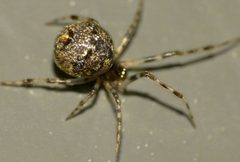
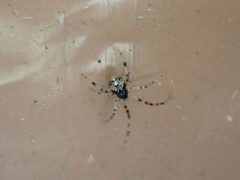
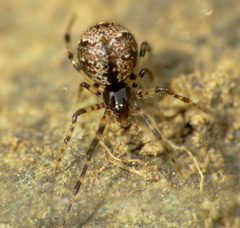
3A of tangle-web spiders in the Theridiidae, established by Archer in 1946 and elevated from subgeneric status. Many were transferred from the revised genus Achaearanea in 2008. The genus contains over 100 species distributed primarily in the New World tropics and subtropics, with some species achieving or widespread distributions through human-mediated transport. Several species exhibit tendencies, occurring in and around human structures. Members of this genus are notable for ichneumonid in the Polysphincta group, which induce behavioral modifications in web architecture.
Pronunciation
How to pronounce Cryptachaea: //ˌkrɪptəˈkiːə//
These audio files are automatically generated. While they are not always 100% accurate, they are a good starting point.
Identification
Distinguished from related theridiid by genitalic ; transferred from Achaearanea in 2008 revision based on phylogenetic analysis. -level identification requires examination of male and female . Cryptachaea gigantipes and C. veruculata are closely related and may be confused; C. blattea is and widespread.
Images
Habitat
Natural in tropical and temperate regions; some occur in forest formations including Atlantic Forest remnants. Several species are , commonly found around houses and built structures. Cryptachaea gigantipes occurs in natural habitats in south-eastern Australia and has established in human-modified environments.
Distribution
Primarily a New World with many in South America. Cryptachaea blattea is ; C. veruculata occurs throughout the Palearctic and was introduced to Europe from New Zealand; C. gigantipes is native to south-eastern Australia and introduced to New Zealand (North Island, earliest records 2000); one species restricted to China. GBIF records indicate presence in Denmark, Norway, and Sweden.
Seasonality
In Brazilian Atlantic Forest, and subadult spiders have been observed parasitized between April and May, with rates correlating negatively with temperature and positively with precipitation. Spider abundance patterns appear related to forest formation type and seasonal microclimate variation.
Host Associations
- Zatypota alborhombarta - Ichneumonidae (Pimplinae): induces behavioral modification in Cryptachaea jequirituba, causing construction of modified 'cocoon web' architecture
- Zatypota riverai - Ichneumonidae: parasitizes Cryptachaea pacoti in Atlantic Forest of Ceará, Brazil; more frequent April-May, correlated with temperature and precipitation
Life Cycle
Development includes , spiderling, and stages. Observations in C. pacoti suggest only adult and subadult spiders are parasitized by , indicating possible selectivity for more developed stages.
Behavior
Web-building spiders constructing tangle webs. Parasitized individuals exhibit modified web architecture termed 'cocoon web'—characterized by fewer total threads, reduced proportion of sticky threads, increased reinforced thread ends, and greater leaf reinforcement—apparently providing structural stability and protection for developing larvae. Some show tendencies, occurring in human-modified environments.
Ecological Role
for ichneumonid in the Polysphincta group; parasitoid-host interactions influenced by including temperature and precipitation. In Atlantic Forest systems, may contribute to dynamics linking spiders and parasitoid .
Human Relevance
Some are and occur in domestic environments. Cryptachaea gigantipes and C. veruculata have been introduced to new regions (New Zealand, Europe) through human activity, with C. gigantipes showing evidence of limited initial introduction based on homogeneous COI sequences in introduced .
Similar Taxa
Sources and further reading
- BugGuide
- Wikipedia
- GBIF taxonomy match
- iNaturalist taxon
- NCBI Taxonomy
- Catalogue of Life
- The cosmopolitan spider Cryptachaea blattea (Urquhart 1886) (Araneae: Theridiidae): Redescription, including COI sequence, and new synonymy
- Modificación comportamental de la araña Cryptachaea jequirituba (Araneae: Theridiidae) inducida por el parasitoide Zatypota alborhombarta (Hymenoptera: Ichneumonidae)
- Redescription and generic placement of the spider Cryptachaea gigantipes (Keyserling, 1890) (Araneae: Theridiidae) and notes on related synanthropic species in Australasia
- Cryptachaea pacoti, a new species of spider from Brazil (Araneae: Theridiidae), with notes on parasitoid-host interaction under the influence of abiotic factors