
Aptesis
Förster, 1850
Species Guides
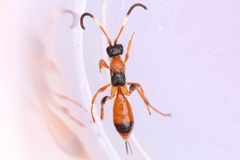
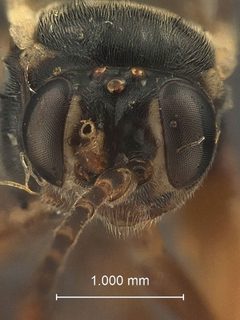
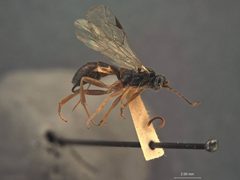
1Aptesis is a of in the Ichneumonidae, first described by Arnold Förster in 1850. The genus contains approximately 74 described with an almost distribution. Species within this genus are primarily ectoparasitoids of and cocoons, with some species serving as important agents. Well-studied species include Aptesis nigrocincta, a ectoparasitoid of apple sawfly cocoons, and Aptesis basizona, a parasitoid of pine sawflies used in programs.
Pronunciation
How to pronounce Aptesis: //æpˈtiː.sɪs//
These audio files are automatically generated. While they are not always 100% accurate, they are a good starting point.
Images
Habitat
in this are associated with where their occur. Aptesis nigrocincta has been observed in organically managed apple orchards in Switzerland, where females locate host cocoons at depths of 10–25 cm in the soil. Aptesis basizona is associated with pine forests in Europe where its diprionid sawfly hosts feed on pine trees.
Distribution
Almost distribution. Native to Europe, with Aptesis basizona documented from central, western, and northern Europe including Czechoslovakia, Hungary, and Sweden. Introduced established through programs, including propagation facilities in Belleville, Ontario, Canada. GBIF records confirm presence in Denmark, Norway, and Sweden.
Seasonality
Aptesis nigrocincta is , producing two per year. Field studies in Switzerland documented rates ranging from 12.1 to 39.7% within single generations, indicating discrete seasonal activity periods.
Diet
food requirements have been documented for Aptesis basizona; is reduced approximately 80% and longevity drastically shortened when mated females are deprived of food and provided only water. For Aptesis nigrocincta, food deprivation drastically reduces both longevity and lifetime fecundity.
Host Associations
- Hoplocampa testudinea - ectoparasitoidapple sawfly; cocoons parasitized at 10–25 cm soil depth; most important mortality factor of apple sawfly cocoons in Swiss orchards with rates of 12.1–39.7%
- Neodiprion sertifer - ectoparasitoidEuropean pine sawfly; rates of 30–80% in Czechoslovakia, 10–52% in Hungary, 17.5–40% in Sweden
- Diprion hercyniae - ectoparasitoidEuropean spruce sawfly; used in Canadian propagation program
- Diprion polytomum - ectoparasitoidspruce
- Diprionidae - ectoparasitoidpine sawflies and related
Life Cycle
Aptesis nigrocincta: Development from to takes 39.6 days for females and 38.0 days for males at 20°C. Females are nearly wingless and significantly smaller than males. Females mate immediately after ; copulation averages 21.7 seconds. Pre-oviposition period averages 5.8 days. Aptesis basizona: Development continues until feeding is completed and cocoons are spun; stages can be held in cold storage to retard development pending shipment to release areas. Temperature during immature stages affects adult reproductive capacity.
Behavior
Females of Aptesis nigrocincta exhibit , ovipositing on already parasitized by conspecifics despite being a solitary where only one offspring develops per host. Superparasitism decisions are condition-dependent: females with higher loads and lower host encounter rates are more likely to superparasitize. At 20°C, females require 29.3 minutes to deposit an egg on a host; at 25°C, 19.9 minutes. Females can discriminate between parasitized and unparasitized hosts but may still choose to superparasitize based on internal state and environmental conditions.
Ecological Role
Important mortality factor for . Aptesis nigrocincta constitutes the most important mortality factor of apple sawfly cocoons in studied Swiss orchards. Aptesis basizona rates vary from 3 to 90% on different diprionid and in different areas, demonstrating significant of pine sawflies.
Human Relevance
Used as a agent. Aptesis basizona was propagated at Belleville, Ontario for release against the European spruce sawfly (Diprion hercyniae), European pine sawfly (Neodiprion sertifer), and other Diprionidae. Laboratory rearing techniques were developed to allow propagation, cold storage for development retardation, and shipment to release areas.
Sources and further reading
- BugGuide
- Wikipedia
- GBIF taxonomy match
- iNaturalist taxon
- NCBI Taxonomy
- Catalogue of Life
- Effects of Temperatures of Rearing on Reproduction of Aptesis basizona (Grav.) (Hymenoptera: Ichneumonidae)
- The Life History of Aptesis basizona (Grav.) on Neodiprion sertifer (Geoff.) in Southern Ontario
- Superparasitism in the solitary ectoparasitoid Aptesis nigrocincta: the influence of egg load and host encounter rate
- Influence of Adult Food on Viability of Early Stages ofAptesis basizonia(Grav.) (Hyraenoptera: Ichneumonidae), a Parasite of Pine Sawflies (Diprionidae)
- Life history ofAptesis nigrocincta(Hymenoptera: Ichneumonidae) a cocoon parasitoid of the apple sawfly,Hoplocampa testudinea(Hymenoptera: Tenthredinidae)