
Microgaster
Latreille, 1804
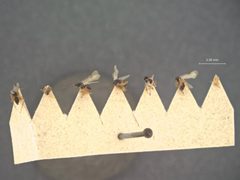
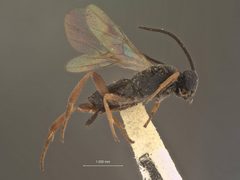
Microgaster is a of braconid wasps in the Microgastrinae containing more than 100 described with worldwide distribution. Species within this genus are koinobiont endoparasitoids of Lepidoptera larvae, with some exhibiting highly specialized . The genus includes the first documented microgastrine to dive underwater to parasitize (Microgaster godzilla) and species with distinctive morphological adaptations such as modified tarsal claws. Host associations vary widely, with records from multiple lepidopteran including Crambidae, Noctuidae, Depressariidae, and Hesperiidae.
Pronunciation
How to pronounce Microgaster: //ˌmaɪkroʊˈɡæstər//
These audio files are automatically generated. While they are not always 100% accurate, they are a good starting point.
Identification
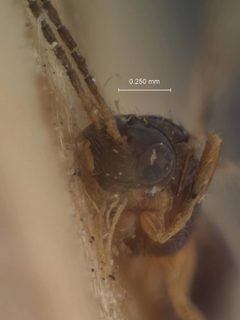
Microgaster are small , typically under 5 mm in length. Identification to species level requires examination of wing venation patterns, particularly the shape and inclination of r; tarsal claw structure (simple, lobed, or otherwise modified); ovipositor ; and facial proportions. Some species exhibit distinctive coloration, including metallic green, blue, or turquoise iridescence. of the COI gene is frequently used to confirm species identity, with some species showing 7% or greater divergence from closest relatives.
Images
Habitat
vary considerably among . Terrestrial species occupy diverse environments including grasslands, forests, and agricultural areas. Some species are associated with specific plants such as Ulex and Genista. At least one species (Microgaster godzilla) is aquatic, inhabiting freshwater environments with floating vegetation. species occupy Arctic and sub-Arctic regions at the interface of boreal forest and tundra vegetation.
Distribution
Worldwide distribution with recorded from all major biogeographic regions. Specific records include: Japan (including the aquatic species M. godzilla); the Philippines (M. manilae); Europe including Britain, Austria, France, Portugal, Spain, Sweden, Finland, and Poland; the Nearctic including Alaska, Canada (Manitoba, Northwest Territories, Yukon Territory), and the continental United States; Israel; and Mediterranean regions. Some species show Holarctic distribution patterns.
Host Associations
- Elophila turbata - Aquatic larvae in portable cases; of Microgaster godzilla
- Spodoptera litura - of Microgaster manilae; second instar preferred
- Agonopterix species - of Microgaster nervosae on Ulex and Genista
- Polychrysia monetae - Noctuidae of Microgaster monetae
- Hesperiidae: Pyrginae - Regular of Microgaster nobilis and M. australis in Mediterranean region
Life Cycle
Koinobiont endoparasitoid development within lepidopteran larvae. -larval development ranges from 7–13 days depending on instar and . Pupal period duration varies; typically emerge in the morning. Developmental success varies with host instar, with some species showing preference for or higher success in second instar hosts.
Behavior
Females search for using visual and chemical cues, with some exhibiting highly specialized searching strategies. Microgaster godzilla walks over floating vegetation and dives underwater for several seconds to force aquatic larvae from their cases, then parasitizes them above water. This represents the first documented case of diving in Microgastrinae. Some species probe host cases repeatedly with before oviposition. Oviposition is rapid, with the ovipositor inserted quickly into the host larva.
Ecological Role
agents of lepidopteran larvae, including agricultural pests such as cutworms. The aquatic M. godzilla contributes to regulation of aquatic caterpillar . As koinobiont , they allow to continue feeding and developing while the parasitoid larva consumes internal tissues, eventually killing the host.
Human Relevance
Used in programs against agricultural pests. Microgaster manilae has been studied for control of Spodoptera litura () in the Philippines. The unusual of M. godzilla has drawn scientific and public attention, demonstrating the value of combining taxonomic and behavioral research.
Similar Taxa
- Other Microgastrinae genera (e.g., Cotesia, Glyptapanteles)Similar size, wing venation, and general lifestyle; distinguished by specific wing configurations, tarsal claw structure, and molecular data
- Ichneumonidae: HybrizontinaeBoth are , but Hybrizontinae are specialized parasitoids with distinct morphological adaptations and associations
More Details
Taxonomic significance
Microgaster is a well-studied within Microgastrinae, with descriptions increasingly incorporating molecular data (), biological information, and behavioral observations rather than relying solely on of dead specimens.
Morphological diversity
The exhibits considerable variation in tarsal claw structure, ranging from simple claws to strongly curved and enlarged forms in aquatic , and distinctive lobed claws in aberrant species such as M. deductor.
Range shifts
Preliminary evidence from M. deductor suggests possible northward range shifts in between 1950 and present day, though this requires further corroboration with additional data.
Sources and further reading
- BugGuide
- Wikipedia
- iNaturalist taxon
- NCBI Taxonomy
- Catalogue of Life
- Death from below: the first video of a parasitic wasp attacking caterpillar underwater | Blog
- parasitic behavior | Blog
- Supplementary material 5 from: Fernandez-Triana J, Kamino T, Maeto K, Yoshiyasu Y, Hirai N (2020) Microgaster godzilla (Hymenoptera, Braconidae, Microgastrinae), an unusual new species from Japan which dives underwater to parasitize its caterpillar host (Lepidoptera, Crambidae, Acentropinae). Journal of Hymenoptera Research 79: 15-26. https://doi.org/10.3897/jhr.79.56162
- Figure 1 from: Fernandez-Triana J (2014) New records of Microgaster deductor Nixon, 1968 (Hymenoptera: Braconidae: Microgastrinae) for the Holarctic region, with comments on its historical distribution. Biodiversity Data Journal 2: e1040. https://doi.org/10.3897/BDJ.2.e1040
- New records of Microgaster deductor Nixon, 1968 (Hymenoptera: Braconidae: Microgastrinae) for the Holarctic region, with comments on its historical distribution
- Figure 2 from: Fernandez-Triana J (2014) New records of Microgaster deductor Nixon, 1968 (Hymenoptera: Braconidae: Microgastrinae) for the Holarctic region, with comments on its historical distribution. Biodiversity Data Journal 2: e1040. https://doi.org/10.3897/BDJ.2.e1040
- Distribution and Development of the Wasp, Microgaster manilae (Ashmead) [Hymenoptera: Braconidael, in the Cutworm, Spodoptera litura(F.)
- Parasitization behaviour and efficiency of the Braconid,Microgaster manilae(Ashmead), against the cutworm,Spodoptera litura(F.)
- Figure 3 from: Fernandez-Triana J (2014) New records of Microgaster deductor Nixon, 1968 (Hymenoptera: Braconidae: Microgastrinae) for the Holarctic region, with comments on its historical distribution. Biodiversity Data Journal 2: e1040. https://doi.org/10.3897/BDJ.2.e1040
- Figure 2 from: Fernandez-Triana J, Kamino T, Maeto K, Yoshiyasu Y, Hirai N (2020) Microgaster godzilla (Hymenoptera, Braconidae, Microgastrinae), an unusual new species from Japan which dives underwater to parasitize its caterpillar host (Lepidoptera, Crambidae, Acentropinae). Journal of Hymenoptera Research 79: 15-26. https://doi.org/10.3897/jhr.79.56162
- Two new species of European Microgaster Latreille, 1804 (Hymenoptera: Braconidae, Microgastrinae), with host data on some further species