
Feron
Kinsey, 1937
oak gall wasps
Species Guides
15- Feron amphorus
- Feron atrimentum(Striped Volcano Gall Wasp)
- Feron bakkeri(Pinched Leaf Gall Wasp)
- Feron caepula
- Feron crystallinum(Crystalline Gall Wasp)
- Feron gigas(Saucer Gall Wasp)
- Feron izabellae(Pink Bow-Tie Gall Wasp)
- Feron kingi(Red Cone Gall Wasp)
- Feron parmula(Disc Gall Wasp)
Feron is a of oak gall wasps in the Cynipidae, established by Alfred Kinsey in 1937 and re-established in 2023. These induce galls on oak trees (Quercus ) and are primarily distributed in the Nearctic region. The genus has undergone taxonomic revision, with some species previously placed in Feron now classified under Andricus. Members of this genus are part of the diverse of gall-forming insects associated with oaks.
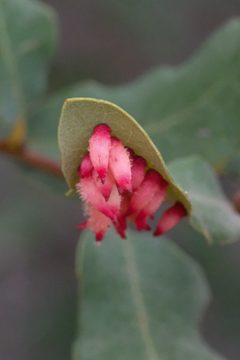
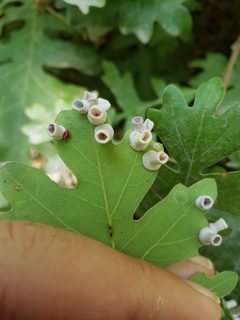
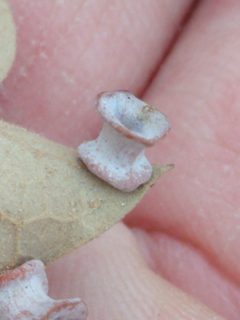
Pronunciation
How to pronounce Feron: /fəˈrɔːn/
These audio files are automatically generated. While they are not always 100% accurate, they are a good starting point.
Identification
Identification to requires examination of gall and oak association. Species-level identification often necessitates microscopic examination of morphology, including segmentation and wing venation patterns. The genus is distinguished from related cynipid genera by specific combinations of morphological characters related to the hypopygium and antennae.
Images
Habitat
Associated with oak-dominated including deciduous forests, woodlands, and urban areas where Quercus are present. Specific habitat requirements vary by species and are tied to the distribution of oak species.
Distribution
Nearctic region, with records from the United States including Vermont, and additional distribution data from Denmark, Norway, and Sweden suggesting possible broader distribution or introduced .
Seasonality
and gall formation timing varies by and is synchronized with oak . Most activity occurs during spring and early summer when oak leaves and buds are developing.
Diet
Larvae develop within plant tissue galls, feeding on gall tissue induced on oak . do not feed; they emerge to mate and oviposit.
Host Associations
- Quercus - gall Oak serve as for gall induction; specific oak species associations vary by Feron species
Life Cycle
Sexual females lay in oak tissue, inducing gall formation. Larvae develop within the gall, feeding on plant tissue. Development completes with from the gall. Some may have alternating generations between different gall types or oak species.
Behavior
Females oviposit into oak buds, leaves, or stems, chemically manipulating plant tissue to induce gall formation. Galls provide protected environment and nutrition for developing larvae. are short-lived and primarily focused on .
Ecological Role
Induces structural changes in oak plants through gall formation. Galls may serve as microhabitats for other organisms including , , and hyperparasitoids. Contributes to biodiversity of oak-associated .
Human Relevance
Of interest to entomologists studying gall wasp , evolution, and plant-insect interactions. No significant economic impact; galls may cause minor aesthetic damage to ornamental oaks but do not typically threaten tree health.
Similar Taxa
- AndricusHistorically included now placed in Feron; distinguished by morphological characters including hypopygium structure and antennal proportions
- DisholcaspisAnother Nearctic oak gall wasp ; differs in gall and specific associations
More Details
Taxonomic History
The was established by Alfred Kinsey in 1937, then synonymized with Andricus, and re-established as a valid genus in 2023 based on phylogenetic and morphological evidence. This revision reflects ongoing refinement of cynipid .
Research Significance
Feron contribute to understanding of gall induction mechanisms, plant specificity, and the evolutionary radiation of cynipid on oaks. The exemplifies the taxonomic complexity within the Cynipini tribe.