
Feron atrimentum
(Kinsey, 1922)
Striped Volcano Gall Wasp
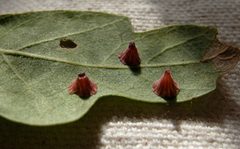
Feron atrimentum is a cynipid gall wasp that induces distinctive galls on blue oak (Quercus douglasii) leaves. The exhibits cyclical with alternating sexual and parthenogenic , each producing morphologically distinct gall types. The refers to the volcano-shaped galls with red stripes produced by the parthenogenic generation.
Pronunciation
How to pronounce Feron atrimentum: /fəˈrɒn ætrɪˈmɛntəm/
These audio files are automatically generated. While they are not always 100% accurate, they are a good starting point.
Identification
Distinguished from other oak gall wasps by specificity (blue oak) and gall . The sexual 's small round galls differ from the parthenogenic generation's conical, striped, volcano-shaped structures. Gall color progression (green/pink to brown) and seasonal timing aid identification. Microscopic examination of morphology required for definitive -level identification.
Images
Appearance
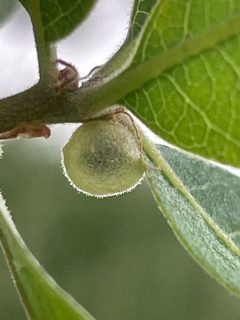
are small, typical of cynipid gall wasps. The is primarily identified by its gall rather than adult features. Sexual galls are round, 3–4 mm in diameter, initially green or pink before maturing to brown. Parthenogenic generation galls are conical, volcano-shaped, 4 mm tall, pale with distinct red longitudinal stripes.
Habitat
Associated with blue oak (Quercus douglasii) woodlands and savannas. Occupies the leaf tissue of trees, with galls forming on leaf surfaces. Thrives in Mediterranean climate zones characterized by hot, dry summers and cool, wet winters.
Distribution
to California, USA, within the range of its plant, blue oak. Distribution corresponds to the foothill and valley oak woodlands of the Coast Ranges, Sierra Nevada foothills, and interior valleys.
Seasonality
Bisexual active in spring, with galls forming March–May. Parthenogenic female generation active in summer, with galls forming June–August. timing corresponds with gall maturation and seasonal plant .
Diet
Larvae develop within plant tissue, inducing gall formation; specific nutritional mechanisms unreported. likely feed on nectar or honeydew, as is common in Cynipidae, though direct observations for this are lacking.
Host Associations
- Quercus douglasii - obligateBlue oak; sole known for gall induction
Life Cycle
Alternating : bisexual (sexual) generation produces males and females that reproduce sexually; parthenogenic (agamic) generation produces only females via . Each generation induces distinct gall morphologies on blue oak leaves. Larvae develop within galls, with emerging to initiate the subsequent generation.
Behavior
Females oviposit into blue oak leaf tissue, triggering gall induction through chemical manipulation of plant development. Gall formation provides protected microhabitat and nutrition for larval development. No observations of social or parental care.
Ecological Role
Gall induction modifies plant resource allocation and creates microhabitats for and . Serves as host for parasitoid and inquiline cynipids that exploit gall structures. Contributes to biodiversity of oak-associated .
Human Relevance
No direct economic importance. Subject of ecological and evolutionary research on gall wasp , cyclical , and plant-insect interactions. Documented by naturalists and studied for its complex .
Similar Taxa
- Other Feron speciesCongeneric induce galls on oaks; distinguished by specificity, gall , and -specific gall forms. Microscopic examination often required for definitive identification.
- Andricus speciesFormerly classified in Andricus; related cynipids induce similar oak galls. Differ in taxonomic assignment based on phylogenetic revisions and subtle morphological characters.
- Other blue oak gall waspsMultiple cynipid utilize Quercus douglasii; distinguished by gall shape, size, coloration, and position on plant (leaf, twig, or acorn).